Why streamline construction workflows for better UK projects
Discover how UK residential construction projects can eliminate the 30% waste caused by inefficient workflows and fragmented communication.
By James Shorter ·
Why streamline construction workflows for better UK projects
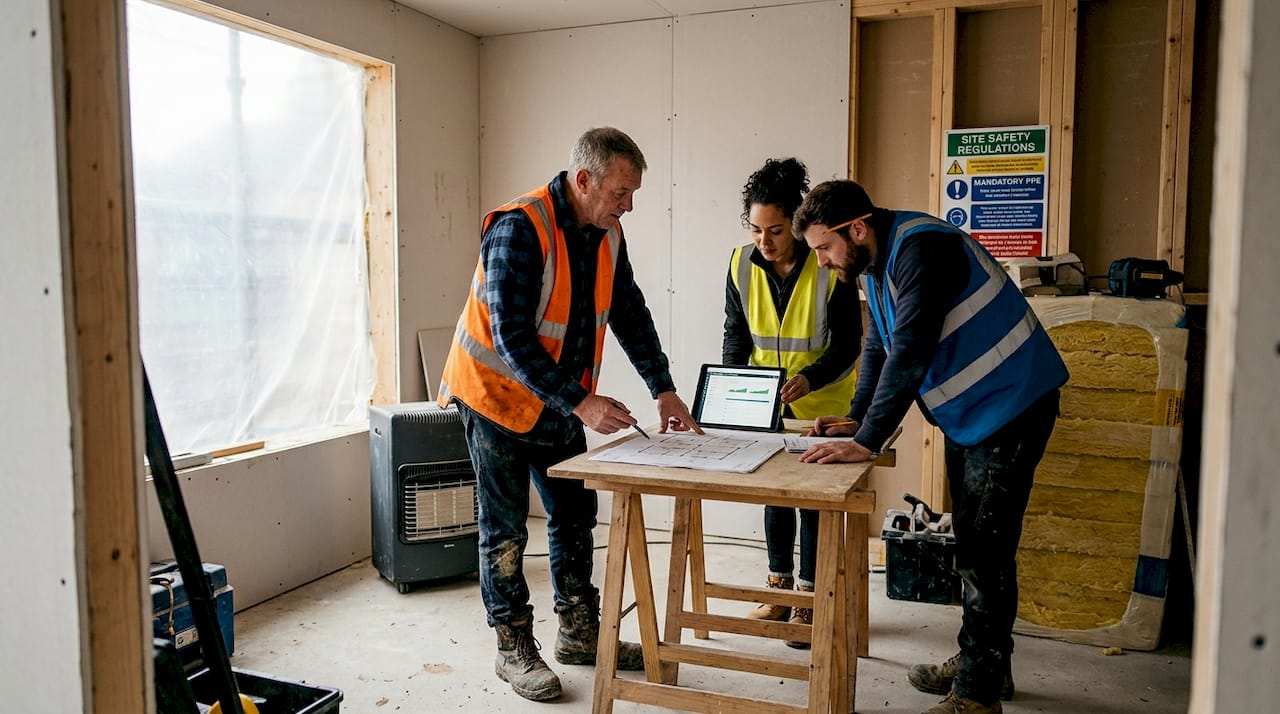 A purpose-built construction snagging software keeps these items tracked through to sign-off.
UK residential construction projects lose 20 to 30% of their costs to inefficient workflows, fragmented communication, and avoidable errors. For project managers and team leaders navigating skills shortages and mounting client expectations, streamlining workflows is no longer optional. This guide explains why inefficient processes hinder your projects, how streamlined workflows reduce errors and improve communication, and which digital tools and practices deliver measurable results. You will discover actionable strategies to optimise workflows, overcome adoption barriers, and build more productive teams in the UK residential sector.
Table of Contents
- Key takeaways
- Why inefficient workflows hinder UK residential construction projects
- How streamlining workflows reduces errors and improves communication
- Leveraging digital tools and off-site manufacturing for workflow optimisation
- Navigating challenges and best practices for workflow integration in UK residential projects
- Streamline your workflows with BRCKS construction software
- What are common questions about streamlining construction workflows
Key Takeaways
| Point | Details |
|---|---|
| Accountability through streamlined workflows | Streamlined workflows assign clear ownership for every task, reducing rework and improving accountability. |
| Real time collaboration | Digital tools enable real time collaboration and centralised information across teams. |
| Offsite manufacturing cuts waste | Offsite manufacturing increases labour uptime and cuts waste. |
| Integrated workflows reduce delays | Integrated workflows minimise fragmentation and provide a single source of truth to prevent delays. |
Why inefficient workflows hinder UK residential construction projects
UK construction productivity has grown only 0.4% annually over the past two decades, lagging far behind other sectors. This stagnation stems from fragmented workflows, where information travels through WhatsApp groups, emails, and disconnected spreadsheets. Mid-level experience loss compounds the problem, leaving junior teams without the institutional knowledge to spot inefficiencies early. The result is a sector that wastes 20 to 30% of project costs on avoidable mistakes, rework, and delays.
Skills shortages intensify these challenges. The UK needs 225,000 additional construction workers by 2027 to meet housing demand, yet recruitment struggles persist. Without enough experienced hands, teams rely on outdated manual processes that slow decision-making and increase error rates. Low productivity growth limits project delivery capacity, raising health and safety risks as teams rush to compensate for delays.
Fragmented workflows create communication breakdowns between site teams, subcontractors, and clients. When updates live in separate channels, critical information gets lost or arrives too late. A construction communication workflow that centralises project data cuts rework and keeps everyone aligned. Errors multiply when teams lack a single source of truth, leading to costly corrections and missed deadlines.
“Fragmented communication and manual processes cause the majority of avoidable errors and delays in UK residential construction, wasting up to 30% of project budgets.”
Key inefficiency drivers include:
- Disconnected communication tools spreading information across multiple platforms
- Manual data entry duplicating effort and introducing transcription errors
- Lack of real-time visibility into project status and task progress
- Inadequate handover processes between design, procurement, and site teams
- Poor coordination with subcontractors due to inconsistent information sharing
How streamlining workflows reduces errors and improves communication
Streamlining construction workflows creates accountability by assigning clear ownership for every task and decision. When team members know exactly what they are responsible for and when, rework drops significantly. Standardised processes ensure that quality checks happen at the right moments, catching mistakes before they escalate into expensive corrections. This clarity prevents the blame-shifting that often follows project failures.
Effective communication links clients, subcontractors, and project teams through shared platforms that update in real time. Instead of chasing information through phone calls and emails, everyone accesses the same current data. This transparency reduces misunderstandings and keeps stakeholders informed without constant manual updates. Clients gain confidence when they can see progress without pestering site managers, while subcontractors coordinate their work around accurate schedules.
Digitally enabled workflows provide real-time updates that eliminate the lag between site activity and office awareness. Project managers spot issues as they emerge rather than discovering them during weekly reviews. This immediacy allows faster problem-solving and prevents small issues from becoming major delays. Teams using construction snagging software document defects instantly with photos and locations, creating an audit trail that supports quality assurance and compliance.

Standardised processes help manage risks by embedding safety and quality checks into daily routines. When workflows include mandatory inspections and sign-offs, teams cannot skip critical steps even under time pressure. This structure protects both worker safety and project quality, reducing liability exposure. Clear documentation also simplifies regulatory compliance, particularly under the Building Safety Act requirements.
Pro Tip: Begin workflow improvements in safety and quality assurance areas where benefits appear quickly and visibly. Early wins build team confidence and demonstrate value before tackling more complex process changes.
Streamlined workflows improve communication through:
- Centralised project information accessible to all authorised stakeholders
- Automated notifications that alert relevant team members to status changes
- Structured handover processes ensuring nothing gets lost between project phases
- Digital approval workflows that accelerate decision-making without sacrificing oversight
- Integrated document management linking specifications, drawings, and site records
Research shows information sharing cuts construction errors dramatically when teams adopt unified communication systems. The reduction in miscommunication alone justifies the effort of workflow optimisation.
Leveraging digital tools and off-site manufacturing for workflow optimisation
Digital tools streamline processes by automating repetitive tasks and enabling real-time collaboration across distributed teams. Building Information Modelling systems coordinate design and construction data, reducing clashes and improving stakeholder alignment. Artificial intelligence analyses project patterns to predict delays and suggest optimisations, while integrated project management platforms centralise communication and task tracking. These technologies address skills shortages by reducing the manual workload on experienced staff.
BIM improves information accuracy by creating a single digital representation of the project that all disciplines reference. When architects, engineers, and contractors work from the same model, coordination errors drop significantly. Changes propagate automatically, ensuring everyone works from current information. This coordination extends to subcontractors, who receive precise specifications and installation details without ambiguity.
Off-site manufacturing transforms workflow efficiency by moving construction activities into controlled factory environments. Off-site manufacturing achieves 83% labour uptime compared to traditional on-site methods, dramatically improving productivity. Crane-erect systems reduce construction time, minimise defects, and lower health and safety risks by eliminating much of the dangerous on-site work. Waste decreases because factory processes optimise material use and recycle offcuts more effectively.
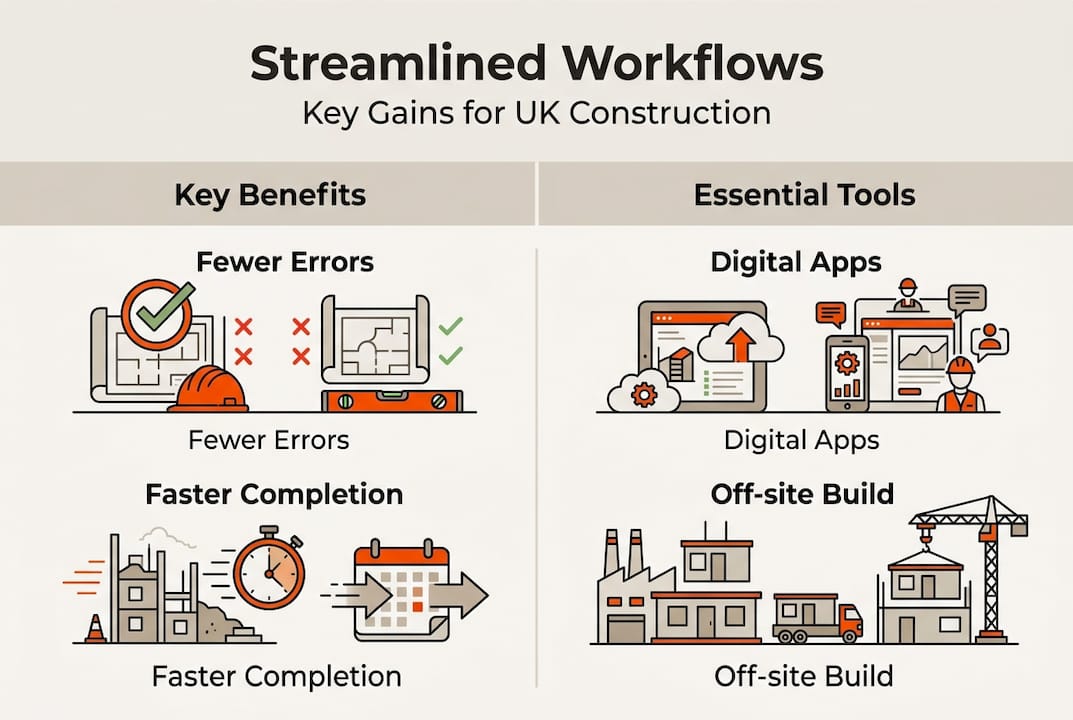
The quality gains from off-site manufacturing offset higher initial costs through reduced rework and faster project completion. Components arrive on-site ready for installation, eliminating weather delays and site storage challenges. This predictability improves schedule reliability, helping teams meet tight deadlines. However, logistics require careful planning to coordinate deliveries with site readiness and crane availability.
| Method | Labour uptime | Defect rate | Timeline | Safety risk |
|---|---|---|---|---|
| Traditional on-site | 40-50% | Higher | Longer | Elevated |
| Off-site manufacturing | 83% | Lower | Shorter | Reduced |
Pro Tip: Evaluate site access and local crane availability before committing to off-site manufacturing. Remote locations may face delivery challenges that erode the time savings.
Digital workflow benefits include:
- Automated progress tracking eliminating manual status updates
- Cloud-based file sharing ensuring teams access current documents
- Mobile apps enabling site teams to update information without returning to the office
- Digital checklists standardising inspections and reducing oversight gaps
- Integration with accounting systems streamlining cost tracking and invoicing
Project managers using software for builders in UK residential construction report significant time savings and improved team coordination. The construction workflow management guide explains how to select and implement these tools effectively.
Navigating challenges and best practices for workflow integration in UK residential projects
Cultural resistance remains the primary barrier to digital workflow adoption. Despite the digital push, 50% of UK firms still rely on paper-dependent processes. Teams accustomed to traditional methods view new systems as burdensome rather than helpful. This resistance intensifies when training is inadequate or when systems add complexity without clear benefits. Supply chain collaboration suffers when subcontractors use incompatible systems, forcing manual data transfer that reintroduces inefficiency.
Skills gaps compound adoption challenges. Many site teams lack digital literacy, making smartphone apps and cloud platforms intimidating. Without proper training and support, these workers revert to familiar paper-based methods, undermining workflow improvements. Leadership must invest in comprehensive training and provide ongoing technical support to build confidence and competence.
Manual Building Safety Act processes cause delays despite their importance for compliance. Paper-based documentation slows approvals and complicates the creation of required audit trails. However, digital systems that automatically capture and organise safety information help teams meet regulatory requirements while maintaining project momentum. The Building Safety Regulator’s delays in processing applications make efficient internal workflows even more critical.
Phased digital adoption from high-impact areas like safety inspections and quality checks delivers quick wins that build team buy-in. Starting with tasks that cause visible frustration demonstrates value without overwhelming teams. As confidence grows, expand digital workflows to scheduling, procurement, and client communication. This gradual approach allows teams to adapt while maintaining productivity.
“Successful workflow integration requires clear communication about why changes matter, comprehensive training, and visible leadership support to overcome cultural resistance and skills gaps.”
Best practices for workflow integration:
- Start with pain points where teams already recognise inefficiency
- Involve site workers in system selection to ensure tools match real-world needs
- Provide hands-on training with realistic project scenarios
- Designate digital champions within teams to support peers
- Integrate new systems with existing tools to minimise disruption
- Measure and share improvements to maintain momentum
Integrated workflows reduce fragmentation by connecting previously isolated processes. When procurement, scheduling, and site management share data automatically, coordination improves and errors decrease. Teams spend less time hunting for information and more time solving problems. Understanding why digital construction collaboration fails helps avoid common pitfalls. Be aware of hidden costs in construction software when evaluating solutions.
Clear communication and training are vital for successful change management. Explain how new workflows benefit individual team members, not just the company. Address concerns openly and adjust implementations based on feedback. Leadership commitment signals that workflow improvements are priorities, not passing fads.
Streamline your workflows with BRCKS construction software
UK residential project managers face unique workflow challenges that generic software cannot address. BRCKS offers integrated project communication designed specifically for builders and trades working in the UK market. The platform replaces fragmented WhatsApp groups, emails, and spreadsheets with a single organised hub for all project information.

BRCKS simplifies workflow management by centralising meetings, updates, tasks, checklists, files, and conversations in one place. Real-time collaboration keeps site teams, subcontractors, and clients aligned without constant manual updates. The software reduces errors and delays by ensuring everyone works from current, accurate information. Setup takes just five minutes, and the intuitive interface requires minimal training.
Designed for the UK residential sector’s specific needs, BRCKS helps you apply the workflow optimisation principles discussed in this guide. Construction software for builders and construction software for plumbers demonstrates how different trades benefit from centralised communication. Try construction project communication software free for 14 days to experience better project control and smoother delivery.
What are common questions about streamlining construction workflows
What is workflow streamlining in construction?
Workflow streamlining organises construction processes to eliminate waste, reduce errors, and improve communication. It replaces fragmented manual tasks with integrated digital systems that automate repetitive work and provide real-time project visibility.
How do digital tools help reduce construction errors?
Digital tools create a single source of truth that prevents miscommunication and outdated information. Automated checklists ensure critical steps are not skipped, while instant documentation with photos and locations makes issues trackable and resolvable.
What barriers exist in adopting streamlined workflows?
Cultural resistance from teams comfortable with traditional methods is the main barrier. Skills gaps in digital literacy, inadequate training, and incompatible systems across the supply chain also slow adoption. Leadership commitment and phased implementation help overcome these challenges.
How does off-site manufacturing improve project timelines?
Off-site manufacturing achieves 83% labour uptime compared to 40 to 50% on-site, dramatically accelerating construction. Factory-built components arrive ready for installation, eliminating weather delays and reducing on-site coordination complexity. This predictability shortens overall project duration.
Where to start implementing workflow changes in UK residential projects?
Begin with safety inspections and quality checks where inefficiencies cause visible frustration. These areas deliver quick wins that demonstrate value and build team confidence. Gradually expand to scheduling, procurement, and client communication as adoption grows.
Recommended
- BRCKS | Construction Project Communication Software
- BRCKS | Construction Project Communication Software
- BRCKS | Construction Project Communication Software
- BRCKS | Construction Project Communication Software
How BRCKS Can Help
Streamlining construction workflows is no longer just an operational advantage but a necessity for delivering successful UK projects on time and within budget. By centralising communication and automating manual tasks, BRCKS empowers site managers and developers to overcome traditional bottlenecks and focus on high-quality delivery. Our platform is purpose-built to simplify these complexities, ensuring your team stays synchronised from initial planning through to completion. We invite you to discover how BRCKS can transform your project management approach by exploring our features today. Learn more at BRCKS.