Why project updates matter in UK construction
Effective project updates are more than just admin; they are essential for maintaining team alignment, managing risks, and supporting contractual claims in the UK construction industry.
By James Shorter ·
Why project updates matter in UK construction
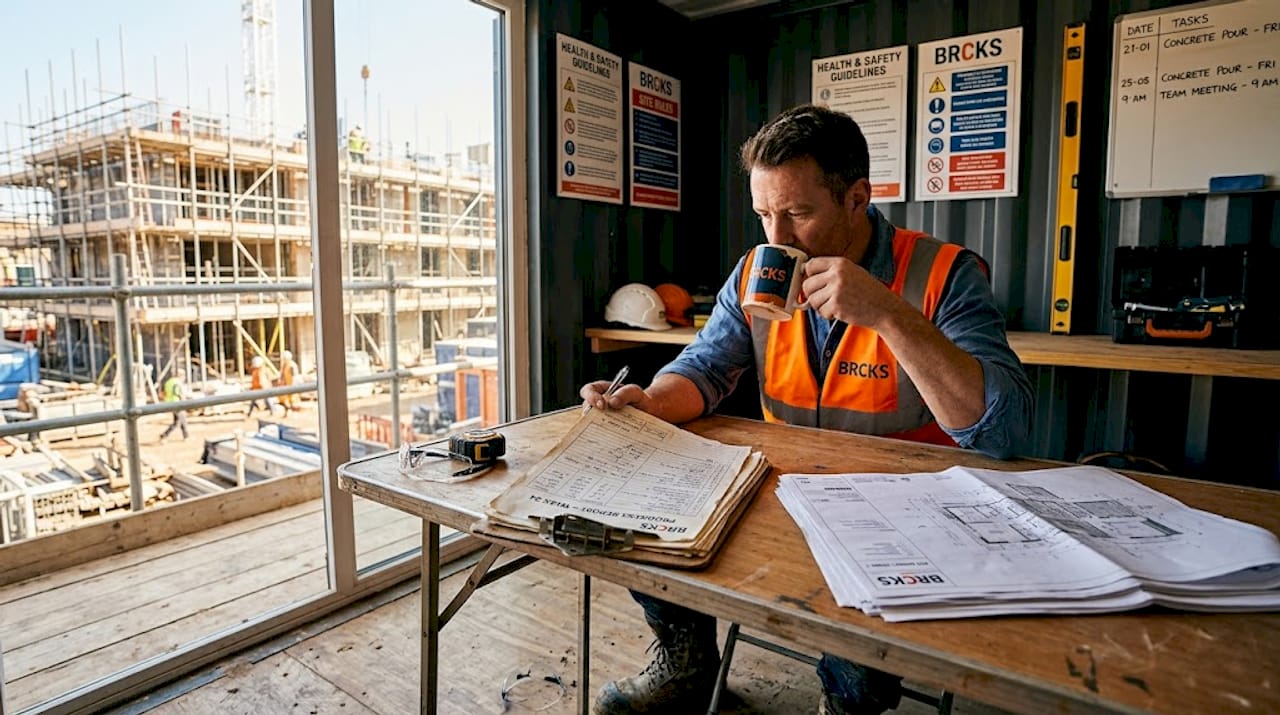 A purpose-built construction snagging software keeps these items tracked through to sign-off.
TL;DR:
- Effective project updates are essential for maintaining team alignment, managing risks, and supporting contractual claims. Regular, structured, and honest reporting enables faster decision-making, protects legal and financial positions, and enhances client trust. Digital tools streamline updates, making them continuous, accurate, and integral to project management.
Project updates get dismissed as admin. Many site managers and project managers in the UK treat them as something to tick off before the real work begins. That thinking is expensive. Understanding why project updates matter is not about following procedure for its own sake. It is about keeping teams aligned, protecting your position under contract, and giving clients the visibility they need to make timely decisions. Done well, updates are one of the most powerful tools you have for controlling a project.
Table of Contents
- Key takeaways
- Why project updates matter: the operational case
- Updates, risk, and your contractual position
- Structuring updates that actually work
- How updates improve team communication
- Digital tools and update management on UK sites
- My view on why most updates fail
- Better project updates start with better tools
- FAQ
Key takeaways
| Point | Details |
|---|---|
| Updates are operational controls | Regular project updates create shared context across diverse teams, not just a paper trail. |
| Poor reporting creates legal risk | Inconsistent or vague updates weaken your position under NEC contracts and during dispute resolution. |
| Frequency must match project phase | Monthly reporting is standard, but critical phases require weekly updates to catch problems early. |
| Updates drive faster decisions | Clear progress reports surface blockers and decision demands, enabling clients and leadership to act quickly. |
| Digital tools reduce reporting effort | Platforms with real-time communication cut the time spent preparing updates and improve accuracy across teams. |
Why project updates matter: the operational case
There is a common misconception in UK construction that project updates exist primarily for clients and management. The reality is that they serve the whole project team. Updates maintain shared understanding across subcontractors, main contractors, surveyors, and site managers who all carry different priorities and work from different information.
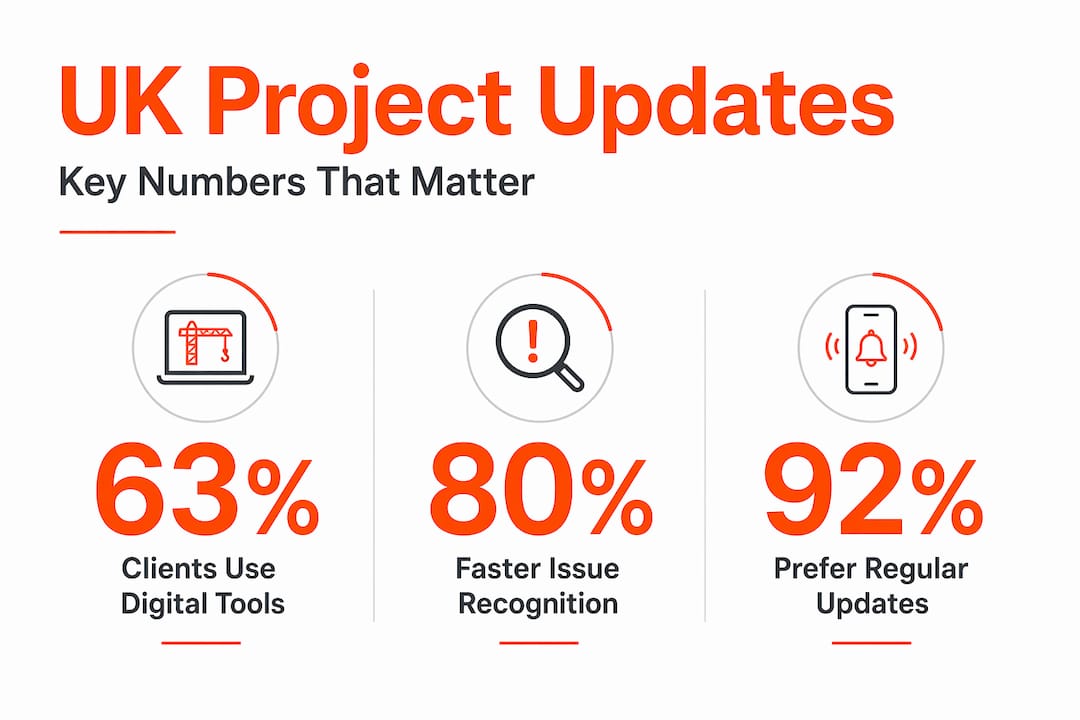
The construction industry is increasingly digital. 63% of UK built-environment clients use project monitoring tools as their primary digital information source, according to a 2026 survey of over 100 clients by Construction Management and the CIOB. That figure tells you something important: clients are not waiting for updates to arrive. They are actively monitoring projects. If your updates are not consistent, accurate, and timely, you are creating an information gap that clients will fill with their own assumptions.
The move towards ISO 19650 as the information management standard for UK construction has reinforced the idea that structured, consistent reporting is not optional. Projects operating under this framework require clear information delivery responsibilities and defined update cycles. This is not bureaucracy. It is a recognition that a project without a shared information baseline is a project running on guesswork.
Key reasons why updates function as operational controls:
- They create a documented baseline for programme progress and cost position
- They force the project team to actively assess what is on track and what is not
- They surface resource constraints before they become programme delays
- They provide the contemporaneous record needed for valuations, extensions of time, and dispute resolution
Updates, risk, and your contractual position
Good reporting protects you. Poor reporting exposes you. Construction progress reporting creates contemporaneous records that directly support risk and dispute management. When a delay arises or a compensation event is assessed, the quality of your reporting history determines whether your account of events holds up.
Under NEC contracts, which are widely used across UK public sector and infrastructure projects, programme discipline is tied directly to time and cost assessments. Programme discipline in NEC updates affects how compensation events are assessed, including the accepted programme baseline at the dividing date for sequential events. If your updates have been irregular or your programme submissions inconsistent, you lose the paper trail that supports your claims. That is a commercial risk many project managers underestimate until they are in the middle of a dispute.
Beyond contracts, poor reporting causes confusion and distrust at a human level. When a subcontractor misses a milestone and no one recorded the early warning signs, the question of who knew what and when becomes unanswerable. That uncertainty damages working relationships and makes resolution harder.
Pro Tip: Never wait until the next formal report to flag a risk. Record early warnings in writing as soon as they are identified. In an NEC environment, this is a contract requirement, but the habit benefits every project type.
Strong update practice in terms of risk management involves:
- Logging early warnings with dates, descriptions, and the team member responsible for resolution
- Linking any change in programme to a corresponding cost consequence in the same update
- Keeping report formats consistent so that reviewers can spot changes against the previous period at a glance
- Retaining every update, even informal ones, as part of the project record
The impact of project progress reports on dispute outcomes is well documented in construction case law. Contemporaneous records that demonstrate what was known, when it was known, and what action was taken consistently prove more persuasive than retrospective accounts.
Structuring updates that actually work
Most project update failures are not about frequency. They are about content. An update that reports everything as green while the programme slips week after week is worse than no update at all. It creates false confidence and delays corrective action.
The most important part of a construction update is the decision demand: what does the project need from leadership or the client, right now, with a named owner and a date. Without that, updates become passive status reports rather than active project controls.
Here is a framework for structuring effective updates at each phase:
- Status at a glance. Mark each workstream as on track, at risk, or delayed. Use consistent language and colour coding across all reports so readers can assess position in seconds.
- Programme update. Report actual progress against the baseline programme. Show float consumption and identify any activities on the critical path that have moved.
- Cost position. Summarise expenditure against budget, including any anticipated variations. Link cost changes to programme changes where they are connected.
- Blockers and risks. List current blockers with the person responsible and the action being taken. Separate blockers from risks so the team understands what is already affecting progress versus what might.
- Decision demands. Name what you need, from whom, and by when. This is the section that drives action.
- Next period plan. Confirm what is planned for the coming week or month so the team can prepare and resourcing can be confirmed.
On scheduling, monthly reporting is standard for most UK construction projects, with weekly reporting recommended during critical phases such as pre-completion, handover, or periods with multiple concurrent compensation events. Treating reporting frequency as a fixed parameter, agreed at the start of the project and reflected in the contract programme, removes ambiguity about when updates are due.
| Phase | Recommended frequency | Primary focus |
|---|---|---|
| Preconstruction | Fortnightly | Design freeze, procurement, approvals |
| Mobilisation | Weekly | Programme baseline, resource confirmed |
| Construction | Monthly (weekly if critical) | Progress, cost, risk log |
| Pre-completion | Weekly | Snagging, commissioning, handover milestones |
| Handover | Weekly | Defects, O&M documentation, client sign-off |
How updates improve team communication
Regular status updates reduce miscommunication by providing a consistent, single source of truth for all stakeholders. That sounds straightforward, but the practical implications are significant on a construction project with multiple trades, a main contractor, a client team, a design team, and possibly a clerk of works all operating simultaneously.

Without a shared update mechanism, each group builds its own picture of project progress. The result is conflicting narratives. The client believes handover is on schedule because no one told them otherwise. The M&E subcontractor thinks the blockwork will be complete two weeks earlier than the programme shows. The project manager is managing three different versions of the programme across three different email threads.
Updates cut through that. Project updates support faster, informed decision-making by surfacing risks and next steps in a format that senior leadership and clients can act on without needing to call a meeting. That time saving compounds over a project’s life.
Pro Tip: Send updates at the same time and in the same format every reporting period. Predictability in reporting builds more trust with clients than any amount of polish in the document itself.
The client communication dimension deserves specific attention. Clients rely on updates because they cannot see site reality directly. A client who receives a clear, honest update every week, even one that flags a problem, will trust you more than one who receives infrequent updates that always report good news. Transparency builds confidence. It also creates a decision record that protects both parties when scope changes arise.
Communicating project milestones clearly, with confirmed dates and named responsible parties, gives clients the information they need to plan their own obligations. Fit-out contractors cannot mobilise without a firm handover date. Tenants cannot plan relocations without confidence in completion dates. Your update is the mechanism that connects site reality to their planning.
Digital tools and update management on UK sites
The gap between how updates are produced and how they should be produced is largely a technology problem. Many UK construction teams still rely on email threads, shared drives, and manually assembled spreadsheets to produce reports. That process is slow, error-prone, and makes it difficult to maintain construction site monitoring across multiple projects simultaneously.
Frequent reporting aligned with contract requirements provides early warnings before issues escalate. Digital tools make that frequency achievable without the reporting effort becoming a project burden in itself.
The shift is already happening. 63% of UK built-environment clients now use digital project monitoring tools, but integration with facilities management systems remains a challenge across the sector. The opportunity for project managers is to adopt platforms that make updates a continuous, embedded process rather than a periodic exercise.
Effective digital update tools for UK construction should offer:
- Real-time posting from site without requiring a desktop or extensive data entry
- A consolidated view that replaces scattered email chains and messaging apps
- Searchable records that can be retrieved quickly during contract reviews or disputes
- Client portal access so stakeholders can check progress without requesting updates manually
Digital communication strategies that embed updates into daily site activity, rather than treating them as separate reporting tasks, are consistently more effective than those that rely on periodic manual collation.
My view on why most updates fail
I’ve worked with a lot of project teams who understand intellectually that updates matter but still produce reports that deliver almost no value. The pattern I see most often is this: the update is written to reassure rather than to inform.
In my experience, the single biggest mistake in construction reporting is hiding bad news until it becomes unavoidable. A delay that is flagged at two weeks has options. The same delay flagged at six weeks has consequences. I’ve seen projects where the programme slipped by months while every monthly report said “minor delays being managed.” By the time the reality was visible in the update, the client had lost faith entirely and the contractual position was difficult to defend.
The second mistake is inconsistency. Changing format, frequency, or the level of detail from one period to the next makes it impossible for readers to track trends. What I’ve found actually works is treating the update format as fixed for the life of the project and varying only the content within it. This sounds rigid but it creates the kind of predictability that builds trust quickly.
The best project managers I’ve seen use updates as their primary management tool, not as a reporting obligation. They write the update and then use the act of writing it to identify what they need to chase, what decisions they need from the client, and where the programme is genuinely at risk. The update becomes the management conversation.
— James
Better project updates start with better tools
If your team is still managing project communication across WhatsApp groups, email threads, and shared spreadsheets, the reporting process itself becomes an obstacle. Brcks is built specifically for UK construction teams who need clear project communication without adding hours of admin to the week.

Brcks brings project updates, team chat, file sharing, and client portals into a single platform. Because it works natively with WhatsApp, your site teams can post updates directly from their phones without learning new software. For project managers juggling multiple sites, the consolidated feed means you always have an accurate, real-time picture of what is happening and where attention is needed. Construction software for builders from Brcks includes a 14-day free trial with no obligation. If your current update process is costing you time and creating gaps in your project record, it is worth seeing what a purpose-built tool changes.
FAQ
Why do project updates matter in construction?
Project updates maintain shared understanding across all teams and create the contemporaneous records needed for programme control, valuations, and dispute resolution. Without them, teams operate on different assumptions and errors compound.
How often should project updates be sent?
Monthly reporting is standard for most UK construction projects, with weekly updates recommended during critical phases such as pre-completion and handover periods.
What should a construction project update include?
An effective update covers programme status, cost position, current blockers, risks, decision demands, and the plan for the next period. The decision demand section is the most critical for driving timely action.
How do project updates help with NEC contracts?
Under NEC contracts, programme discipline in updates directly affects how compensation events are assessed. Consistent, accurate updates protect your contractual position and support time and cost claims.
How do updates improve client communication?
Clients cannot see site reality directly, so regular updates reduce uncertainty and build trust. Clients who receive honest, timely updates are better placed to make decisions and far less likely to raise disputes.
Recommended
- Digital Solutions in UK Construction: 5 Key Gains | BRCKS
- How a project feed transforms construction communication | BRCKS
- Construction Document Management: Solving the £21bn Problem | BRCKS
- UK Construction Project Coordination Best Practices 2026 | BRCKS
How BRCKS Can Help
Consistent project updates are the backbone of successful UK construction delivery, ensuring every stakeholder remains aligned and risks are mitigated early. BRCKS simplifies this process by providing a centralised platform that automates reporting and keeps your site data organised in real time. By removing the manual burden of communication, our software allows your team to focus on quality builds rather than chasing paperwork. We invite you to see how BRCKS can transform your project transparency by booking a demo or exploring our features today. Learn more at BRCKS and explore our full feature set.