Why digital tools matter in residential construction: 5-8% savings
Traditional site management is no longer enough for the UK's housing targets. Learn how digital tools centralise data to boost profitability and ensure Building Safety Act compliance.
By James Shorter ·
Why digital tools matter in residential construction: 5-8% savings
 A purpose-built construction snagging software keeps these items tracked through to sign-off.
TL;DR:
- Traditional site management methods are inadequate for UK’s rising housing targets and new safety regulations.
- Digital tools centralise data, improve real-time collaboration, and reduce errors in residential construction.
- Adoption benefits include less rework, faster approvals, better compliance, and increased project profitability.
The assumption that traditional site management methods still serve residential construction well is one the industry can no longer afford. With the UK government targeting 1.5 million new homes by 2029, and the Building Safety Act introducing tighter compliance requirements, the old ways of running projects carry real risk. Missed deadlines, costly rework, and scattered paperwork are not just inconveniences; they are business threats. This guide walks through exactly what digital tools deliver for UK residential construction professionals, from day-to-day workflow improvements to long-term compliance assurance.
Table of Contents
- How digital tools transform residential construction workflow
- Core benefits for residential builders and project managers
- From the ground up: What digital tools look like day-to-day
- Nuances and challenges: Digital inclusion, SME adoption, and culture
- Why the industry’s slow pace with digital tools is costing everyone
- Ready to see digital tools in action?
- Frequently asked questions
Key Takeaways
| Point | Details |
|---|---|
| Boosted efficiency | Digital tools streamline workflows, shrink admin time and reduce costly site rework. |
| Improved compliance | Platforms provide traceable records for UK Building Safety Act compliance and evidence. |
| Fewer project errors | Centralised and real-time data sharing reduces miscommunication and prevents mistakes. |
| Smarter SME adoption | Targeting pressure points and providing digital support helps smaller firms keep pace competitively. |
How digital tools transform residential construction workflow
Fragmented workflows are one of the costliest habits in residential construction. When drawings live in one place, progress notes in another, and client approvals arrive by text message, mistakes are almost inevitable. Digital solutions in UK construction address this directly by centralising communication, documentation, and data into a single accessible environment.
Common data environments (CDEs), mobile apps, and BIM platforms are now standard options for project managers who want to reduce errors and improve coordination. The key shift is moving from reactive problem-solving to proactive visibility. When your field team logs a snag on a mobile app, it appears instantly for the project manager in the office. No phone calls, no paper forms, no delays.
Digital platforms enable real-time collaboration, reduce rework, and provide transparency that paper-based systems simply cannot match.
The areas where digital tools make the biggest immediate difference include:
- Drawings and revisions: Everyone works from the latest version, reducing on-site errors from outdated plans.
- Progress updates: Real-time updates on site keep the whole team aligned without daily catch-up calls.
- Change management: Variation orders are logged, approved, and traceable in moments.
- Snagging: Field staff capture issues with photos and notes directly on their devices.
- Handover: Structured digital records make client handover faster and more professional.
- Client communication: Clients receive timely, accurate updates without burdening the project manager.
Proper information sharing cuts errors significantly across residential projects, and the evidence supports this at scale.
Pro Tip: Start digitising your approvals and documentation process first. These deliver the fastest return on investment because they eliminate delays that compound across every stage of a build.
The transition does not need to be wholesale. Introducing one digital tool for a high-pressure area of your workflow can produce immediate gains and build team confidence for broader adoption.
Core benefits for residential builders and project managers
Digitisation does more than tidy up communication. It produces measurable improvements across the metrics that matter most to builders and project managers.
| Metric | Without digital tools | With digital tools |
|---|---|---|
| Rework rate | High, due to outdated information | Significantly reduced |
| Compliance evidence | Paper-based, difficult to retrieve | Fully traceable, audit-ready |
| Time spent on admin | 2 or more hours daily | Automated and streamlined |
| Client communication | Ad hoc, inconsistent | Structured, real-time updates |
| Regulatory traceability | Inconsistent | Compliant with Building Safety Act |
One of the most important compliance requirements introduced in recent years is the Building Safety Act’s ‘golden thread’ obligation. Housebuilders must maintain traceability for regulations throughout the entire lifecycle of a building. Digital platforms make this achievable by logging every decision, change, and approval in one auditable trail.
The three most immediate benefits reported by site managers who have made the switch are:
- Less rework: Errors caught earlier through real-time data sharing mean far fewer expensive corrections on site.
- Faster sign-off: Digital approval workflows cut the time between raising a variation and getting it authorised.
- Better compliance records: Every stage of the build is documented automatically, reducing risk during inspections.
Effective snagging management software alone can remove hours of back-and-forth from each project cycle. And understanding the common digital pitfalls upfront helps teams avoid the mistakes that slow adoption down.

With the UK’s target of 1.5 million homes by 2029 requiring a significant increase in build rates, digitisation is not optional infrastructure. It is the operational backbone that makes that ambition possible.
From the ground up: What digital tools look like day-to-day
Understanding the theory is one thing. Knowing what actually changes on a Monday morning is another.
| Task | Paper or manual approach | Digital platform approach |
|---|---|---|
| Snag reporting | Handwritten notes, photos on personal phone | Logged instantly via mobile app with location and photo |
| Document access | Printed drawings, risk of outdated versions | Latest files available on any device, any time |
| Variation orders | Phone call, email chain, risk of disputes | Raised, approved, and recorded in the platform |
| Progress updates | Weekly meeting or phone call | Live dashboard accessible to all stakeholders |
| Client communication | Informal, inconsistent | Structured updates via client portal |
Mobile apps for snagging and tracking are particularly valuable because they bridge the gap between field teams and the office without requiring anyone to stop work and write a report later.
Offline-capable tools are especially useful on sites with poor connectivity. Real-time data sharing reduces miscommunication between trades, subcontractors, and project managers, meaning fewer surprises at the end of each week.
The day-to-day tasks that benefit most from digital tools include:
- Snagging and defect tracking with photo evidence
- Handover documentation and sign-off
- Variation order management and client approval
- RFI (Request for Information) tracking and response logging
- Subcontractor scheduling and task assignment
- Client-facing progress reports
For project managers, the shift means less time chasing updates and more time making decisions. For site teams, it means fewer interruptions and clearer task priorities.
Nuances and challenges: Digital inclusion, SME adoption, and culture
The business case for digital tools is clear. Yet adoption across the UK residential construction sector remains uneven, particularly among small and medium-sized enterprises.
Barriers SMEs face in technology adoption include cost concerns, uncertainty about which tools to choose, and the challenge of bringing mixed-ability teams along for the change. The digital inclusion gap is real, and older workers or those less confident with technology need structured support rather than an assumption that they will simply adapt.
Firms that invest in training and start with simple, high-impact digitisation consistently outperform those that wait for a ‘perfect’ moment to go fully digital.
The most effective strategies for SMEs include:
- Start with high-pressure tasks: Approvals, snagging, and compliance records are good entry points because the ROI is immediate.
- Identify digital champions: Staff who are already comfortable with apps can help less confident colleagues get up to speed.
- Avoid tool overload: Introducing one or two focused platforms is more effective than rolling out ten tools at once.
- Measure quick wins: Track time saved or errors reduced in the first month and share that data with the team.
- Offer informal training: Short walkthroughs on site, not lengthy classroom sessions, work better for busy trades.
Pro Tip: Pair a digital champion with each less confident team member for the first two weeks of any new tool rollout. Practical, peer-led support reduces resistance far more effectively than top-down instruction.
Culture change takes time. But firms that start with incremental adoption tend to build momentum naturally, as teams notice the improvements and begin requesting more functionality.
Why the industry’s slow pace with digital tools is costing everyone
Here is an uncomfortable truth: digital adoption in UK residential construction is not slow because the tools are inadequate. It is slow because the culture values familiarity over evidence.
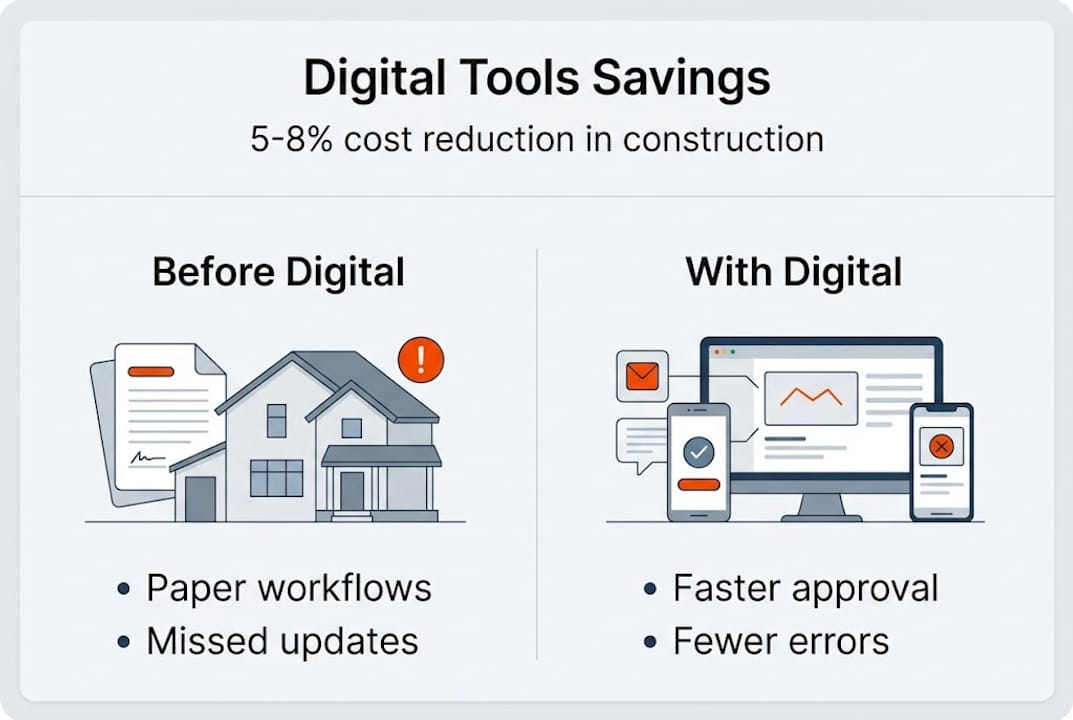
Poor documentation and communication failures cost 5 to 8% of project value on average. On a £500,000 residential project, that is up to £40,000 lost to rework, disputes, and inefficiency. That is not a technology problem; it is a business decision problem.
The firms we see cutting rework in UK projects are not the largest or the best-funded. They are the ones that chose to act. Digital tools do not require a digital transformation strategy or a technology director. They require a project manager willing to log a snag on an app instead of a clipboard.
The reputational cost matters too. Clients increasingly expect transparency and structured communication. Firms that cannot provide this lose preferred client relationships, often without knowing why. Digital tools are not gadgets. They are the infrastructure of professional practice in 2026.
Ready to see digital tools in action?
If you are managing residential builds and still relying on scattered emails, paper sign-offs, or informal WhatsApp threads to keep projects moving, there is a more effective way to work.
 BRCKS.io">
BRCKS is built specifically for construction teams in the UK, combining task management, snagging, file sharing, client portals, and team chat in one platform. Whether you are a small software for builders operation or scaling a larger site team, BRCKS reduces admin time, improves compliance records, and keeps every stakeholder informed. Explore the construction communication platform and try BRCKS free for 14 days to see how it fits your workflow.
Frequently asked questions
What are the most important digital tools for residential builders?
Key tools include common data environments, mobile apps for field teams, and BIM platforms that support efficient collaboration, document control, and traceability across the project lifecycle.
How do digital tools help with UK residential compliance?
Digital platforms create an auditable record of every decision and change, which is essential for Building Safety Act compliance and maintaining the ‘golden thread’ of evidence required by UK regulations.
Do smaller firms need different digital adoption strategies?
Yes. For SMEs, the most effective approach is to start with admin-heavy tasks such as approvals and snagging, then scale gradually while investing in practical training for less tech-confident staff.
What is the main business benefit of digital construction tools?
The biggest gains are reduced rework, faster communication, and improved compliance records, all of which contribute directly to higher project profitability and stronger client relationships.
Recommended
- Digital Solutions in UK Construction: 5 Key Gains | BRCKS
- BRCKS | Construction Project Communication Software
- BRCKS | Construction Project Communication Software
- Construction Document Management: Solving the £21bn Problem | BRCKS
How BRCKS Can Help
Realising a 5-8% saving on your project costs is more than just a financial gain; it is about reclaiming control over your margins and reducing the daily friction of site management. BRCKS was designed specifically to bridge these digital gaps, providing residential builders with the streamlined workflows and real-time data needed to eliminate costly inefficiencies. By integrating our platform into your process, you can ensure every pound is accounted for and every project remains on track. We invite you to discover how BRCKS can transform your next build by exploring our features today. Learn more at BRCKS and explore our full feature set.