Variation orders in construction: a practical guide
A formal variation order is essential for capturing project changes and protecting your commercial position. Learn the workflows that separate well-run projects from expensive disputes.
By James Shorter ·
Variation orders in construction: a practical guide
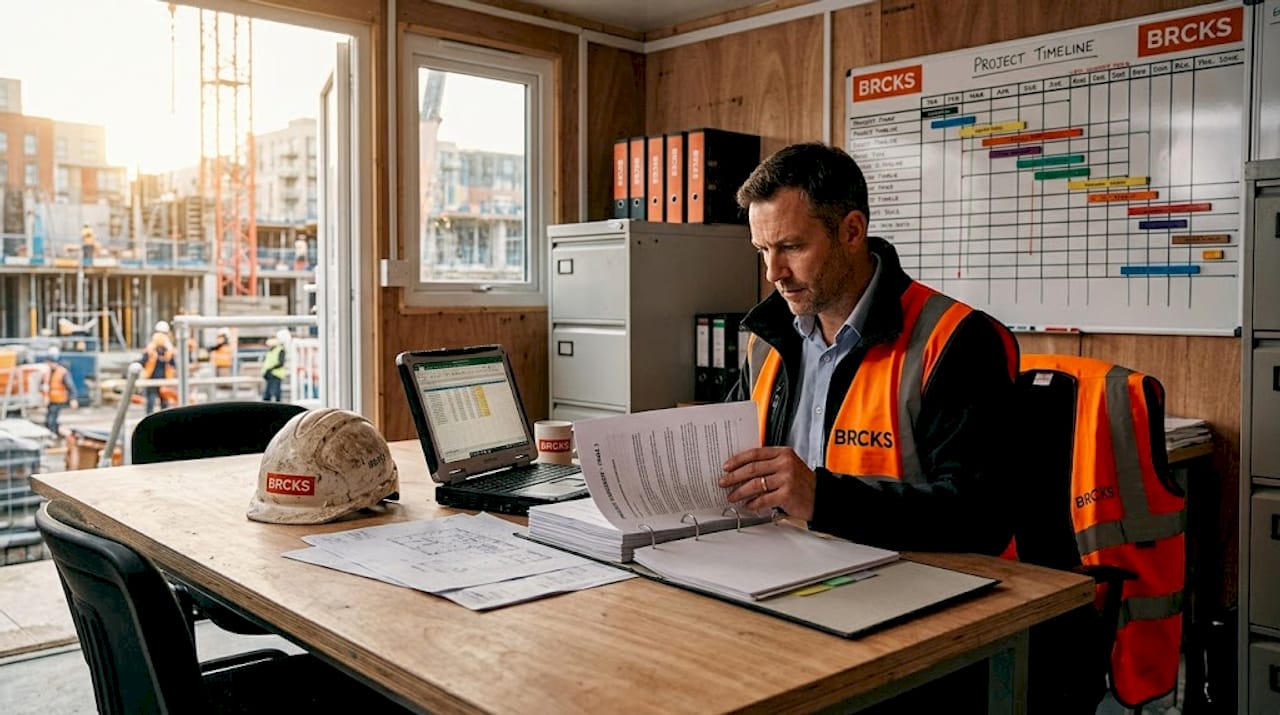 A purpose-built construction snagging software keeps these items tracked through to sign-off.
TL;DR:
- A variation order is a formal instruction that alters the scope or timing of construction works, creating a contractual entitlement to payment. Proper documentation, timely notifications, and clear authority are essential to manage costs, programme impacts, and dispute risks effectively. Using digital tools helps maintain an audit trail, reduce errors, and ensure full entitlement recovery throughout the project lifecycle.
Every construction project changes. The client wants an extra window, ground conditions differ from the surveys, or the engineer revises a structural detail mid-build. A variation order in construction is the formal mechanism that captures those changes, protects your commercial position, and keeps the contract valid. Get the process right and you recover your costs. Get it wrong and you are heading for adjudication, payment disputes, or worse. This guide covers the contractual foundations, cost and programme impacts, and the practical workflows that separate well-run projects from expensive ones.
Table of Contents
- Key takeaways
- What a variation order in construction actually is
- How variations affect cost, programme, and your contractual rights
- Best practice for managing construction changes
- Common pitfalls and legal nuances
- Using technology to control variation order risk
- My honest take on variation discipline in UK construction
- Handle variations better with Brcks
- FAQ
Key takeaways
| Point | Details |
|---|---|
| Variations require written instructions | Oral changes are rarely enforceable. Always obtain formal written instructions before commencing varied work. |
| Critical path impact determines EOT | A variation justifies an extension of time only if it demonstrably delays project completion on the critical path. |
| Documentation is your commercial defence | Contemporaneous records of cost, labour, and programme impact are the foundation of every successful variation claim. |
| Double recovery is a common dispute trigger | Overheads in contract rates must be separated from prolongation costs to avoid overlapping claims. |
| Early notification protects entitlement | Late notices can forfeit your right to claim time and cost, regardless of how valid the underlying variation is. |
What a variation order in construction actually is
A variation order is a formal contractual instruction that alters the scope, quality, sequence, or timing of works agreed under the original contract. That might sound straightforward, but construction professionals routinely confuse informal change requests, site instructions, and variation orders as if they were interchangeable. They are not.
Under standard UK contracts, the distinction matters enormously. FIDIC contracts require a formal written instruction from the Engineer to alter scope or quality, and that instruction creates a legal entitlement to payment. JCT and NEC4 contracts operate similarly, though the terminology and notice requirements differ. The common thread is that NOM clauses require written signed approval to make any change valid. Verbal agreements, WhatsApp messages, and site conversations rarely cut it.
Variations typically fall into several categories:
- Additions — new work not included in the original scope, such as an additional drainage run or a revised external staircase
- Omissions — removal of work from scope, which may entitle the contractor to loss of profit under certain contracts
- Substitutions — replacement of a specified material or system with an alternative, often at the client’s request
- Design changes — revised drawings or specifications issued by the architect or engineer after contract execution
- Sequence or schedule changes — instructions to carry out work in a different order or accelerate a specific phase
Who can instruct a variation also matters. Under most standard forms, only the Employer’s Representative, the Contract Administrator, or the Engineer has authority to issue valid variation instructions. A site manager verbally requesting additional work is not the same as a formal contractual instruction, regardless of how the relationship has operated in practice.
Pro Tip: Before commencing any variation work, check your contract to confirm exactly who has authority to instruct variations. Proceeding on instructions from an unauthorised individual can undermine your entitlement to payment.
How variations affect cost, programme, and your contractual rights
The financial and programme consequences of construction project variations extend far beyond the direct cost of the additional work. This is where many contractors underestimate their exposure.
Cost entitlement
Variation claims in construction are priced using contract rates where applicable, agreed daywork rates, or fair market value where no relevant rate exists. Inadequate documentation makes it extremely difficult to prove variation claim costs and justify additional payments. You need labour allocation sheets, plant records, materials invoices, and site diaries capturing the exact resources deployed on the varied work.
Programme and extension of time
The link between variations and extension of time (EOT) is where disputes become complex. A variation justifies EOT only if it delays project completion by affecting activities on the critical path. A variation that adds two weeks of work to a non-critical activity grants no EOT entitlement, even if it consumes contractor resources. This is why critical path method (CPM) analysis is not an optional extra for large projects. It is the evidence base for your time entitlement.
The steps to establish time and cost entitlement for a variation are:
- Identify the variation instruction and confirm it is formally authorised
- Map the varied work against the current baseline programme to identify critical path impact
- Quantify the delay to project completion caused by the variation
- Calculate direct costs including labour, plant, materials, and subcontractor accounts
- Assess prolongation costs separately, covering site overheads incurred during the delay period
- Submit the variation claim with supporting contemporaneous records attached
The double recovery trap
Double recovery of overheads is a frequent dispute source in variation and EOT claims. Contract rates already include a contribution to overheads. When you also claim prolongation overheads as a separate head of cost for the same period, you risk recovering the same overhead twice. Adjudicators and courts recognise this. Separating the two requires solid evidential discipline from day one.

Pro Tip: Keep a dedicated variation cost file for each instruction, capturing resources separately from your standard cost codes. Merging variation costs into your general project accounts is a common error that makes it almost impossible to disentangle costs at final account stage.
Best practice for managing construction changes
A structured variation order process is what separates teams that recover their full entitlement from those that spend months arguing over final accounts. The good news is that the process is not complicated. It just requires consistency.
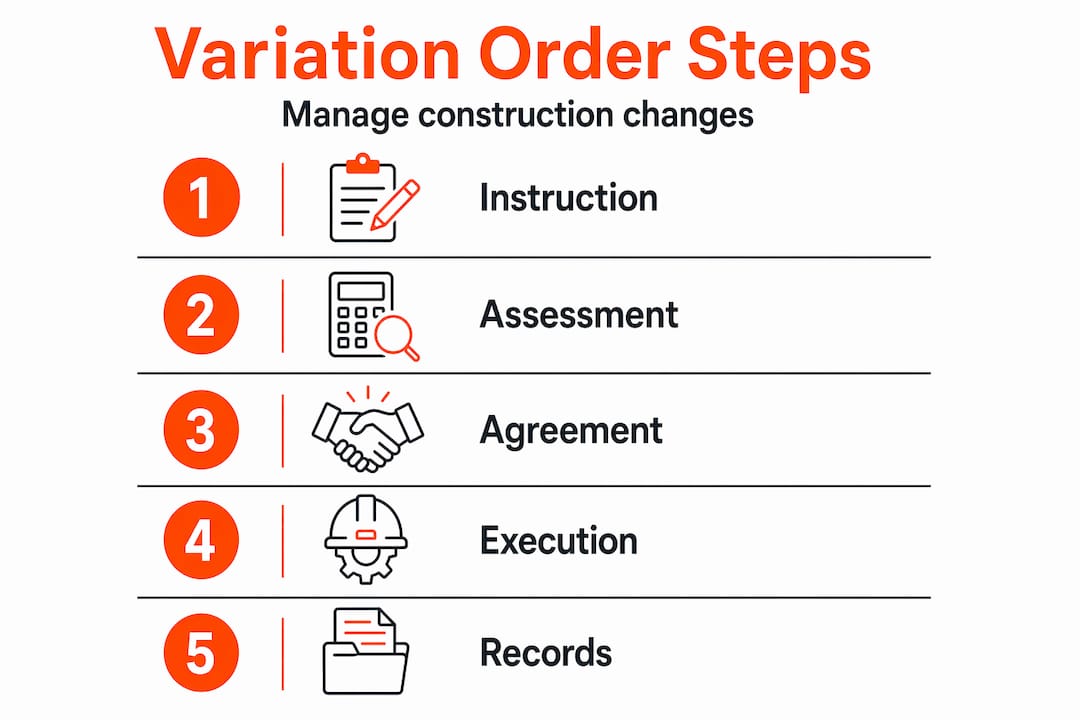
The variation order process step by step
Start the moment a change is identified. The integrated evidence trail from instruction through impact analysis is the foundation of robust claims and dispute avoidance. That trail begins on day one, not at final account stage.
Key disciplines to embed in your variation management workflow:
- Record the instruction source — date, who gave it, in what form, and under which clause it is issued
- Issue early notification — most contracts require notice of the intention to claim additional time or cost within a defined period, often 14 to 28 days
- Maintain contemporaneous records throughout execution: daily diaries, labour timesheets, plant logs, and photographic evidence
- Circulate a change register that tracks every variation by number, instruction date, description, quoted cost, approved cost, and programme impact
- Follow the formal sign-off procedure specified in the contract before treating a variation as complete
The risks of informal variations deserve special attention. Uncontrolled variation documentation can start as a minor administrative lapse but escalate into serious commercial disputes requiring legal intervention. Variation by conduct, where a party acts as though a change is agreed without formal instruction, is notoriously difficult to enforce and rarely recovers full costs. The safest position is always to refuse commencement until a formal instruction is in hand.
For a detailed look at NEC4 written variation requirements and change control workflows, the BRCKS guide to construction change orders covers the procedural requirements clearly.
Common pitfalls and legal nuances
Understanding where variation claims go wrong is just as valuable as knowing what to do right. These are the errors that appear most consistently in adjudication decisions and tribunal proceedings.
- Poor scope definition in the instruction — vague wording creates disputes about what was actually instructed and what falls within the original contract
- Late or absent notices — missing contractual notice windows is a technical but enforceable ground for rejecting a claim, regardless of its underlying merit
- Merging overhead recovery — as discussed above, failing to separate rates-based overheads from prolongation costs is a common route to losing money
- Accepting verbal variations — proceeding without written instruction exposes you to a client later disputing that the instruction was ever given
“Disputes often hinge on whether variation instructions are sufficiently clear, formal, and authorised. Paperwork matters more than informal agreements.” — Construction glossary FIDIC delay & UAE claims
On the legal side, estoppel can in some circumstances override a NOM clause where one party has relied to their detriment on a representation by the other. Courts have accepted this argument, but it is an uncertain and expensive road. Do not rely on estoppel as a substitute for proper variation procedure.
Adjudicators assess EOT claims prospectively, placing themselves at the point in time when the notice should have been given and asking what a reasonable contractor would have known then. This means your contemporaneous documents, written at the time, carry far more weight than any expert narrative written after the event. Your site diary from the week of the instruction is worth more than a 40-page retrospective report at adjudication.
One final consideration: when a project accumulates dozens of variations, you face a choice between managing them individually or consolidating them. Consolidation into a global claim requires a direct causal link between each variation and its alleged impact, which is difficult to establish where effects overlap. The safer approach is to keep each variation as a self-contained dossier, linked to its specific instruction, cost, and programme impact.
Using technology to control variation order risk
The difference between a construction team that handles managing construction changes professionally and one that does not often comes down to how they capture and communicate information. Scattered emails, WhatsApp threads, and shared drives may feel workable on a small project. On anything of scale, they become a liability.
Centralised digital tools address this directly. With the right platform in place, your teams can:
- Log variation requests against specific contract instructions in real time
- Attach supporting documents, photographs, and drawings to each variation record
- Track approval status across the client, contract administrator, and contractor without chasing email threads
- Maintain a clear audit trail of who approved what and when
- Flag unapproved variations before work commences, preventing costly assumptions
Proper document control in construction is the practical mechanism that turns good variation procedure into an enforceable commercial record. When variation records are fragmented across inboxes and messaging apps, the audit trail that adjudicators rely on simply does not exist in usable form.
Research shows that structured communication workflows cut rework by 52%, and much of that rework stems directly from miscommunicated or poorly documented changes. The financial case for investing in proper variation control is not theoretical.
My honest take on variation discipline in UK construction
I’ve reviewed enough final account disputes to say this plainly: the contractors who lose are almost never the ones who did the wrong work. They are the ones who did the right work without the right paperwork.
In my experience, the single most damaging habit on UK sites is the assumption that a good working relationship with the client or their representative makes formal variation procedure unnecessary. It doesn’t. Relationships change. Project directors get replaced. Disputes reach people who were never on site and have no reason to honour informal understandings.
What I’ve seen work, consistently, is treating every variation as its own miniature claim file from the moment the instruction arrives. Date it, record it, cost it, map it to the programme, notify it. That discipline takes minutes at the time and saves days at final account stage.
The difference between a change order and variation matters too. In UK contracts, you are working within a defined contractual framework with notice periods and valuation rules. Miss the notice, lose the entitlement. It really is that binary in adjudication.
The teams I respect most are the ones who are commercially literate at site level, not just in the commercial department. When your site manager understands why contemporaneous records matter, you have a genuinely defensible position when disputes arise.
— James
Handle variations better with Brcks
Managing variation orders across emails, spreadsheets, and WhatsApp threads creates the exact conditions disputes need to take hold. Missing approvals, undocumented instructions, and fragmented records are not just administrative inconveniences. They are commercial risks.

Brcks is built for construction teams who want a single place to manage project communication, document approvals, and maintain a clear audit trail across every change on site. From logging a variation request to tracking client sign-off, the platform keeps your records structured and your team aligned. WhatsApp integration means your site teams are not excluded from the workflow. For builders who want to get variation control right, Brcks construction software is worth 14 days of your time, free.
FAQ
What is a variation order in construction?
A variation order is a formal written instruction under a construction contract that alters the agreed scope, quality, sequence, or timing of works. It creates a contractual entitlement to additional payment or programme adjustment when properly issued and documented.
What is the difference between a change order and a variation?
The terms are often used interchangeably, but in UK construction the term “variation order” is the standard contractual term, while “change order” is more common in US practice. Both refer to a formal instruction altering the original contract scope, but the procedural requirements depend on the specific contract form in use.
When does a variation justify an extension of time?
A variation justifies an EOT only if it demonstrably delays project completion by affecting the critical path. Variations that add work to non-critical activities do not automatically grant additional time.
Can a verbal instruction count as a valid variation?
Under most standard UK contracts, including NEC4 and JCT forms, oral variations are invalid without written signed approval. Commencing work on a verbal instruction places your payment entitlement at serious risk.
What records do you need to support a variation claim?
You need contemporaneous documentation including the original instruction, daily site diaries, labour and plant records, materials invoices, and a programme impact analysis. Inadequate documentation makes it difficult to prove variation claim costs and recover additional payments at final account stage.
Recommended
- Construction Project Management Insights | BRCKS Blog
- Remote Construction Management: Best Practices for Success
- BRCKS | Construction Project Communication Software
- UK Construction Project Management Terminology Guide | BRCKS
How BRCKS Can Help
Managing variation orders effectively is essential for maintaining project profitability and avoiding disputes on site. By centralising documentation and streamlining the approval process, BRCKS provides the real-time visibility needed to handle scope changes without losing momentum. Our platform ensures that every adjustment is tracked and communicated clearly, allowing your team to focus on delivery rather than paperwork. We invite you to discover how BRCKS can simplify your project management and keep your margins secure. Learn more at BRCKS and explore our full feature set.