How project management transforms UK construction success
69% of UK construction projects overrun. Discover how structured project management and the RIBA Plan of Work can eliminate systemic failures and boost site delivery.
By James Shorter ·
How project management transforms UK construction success
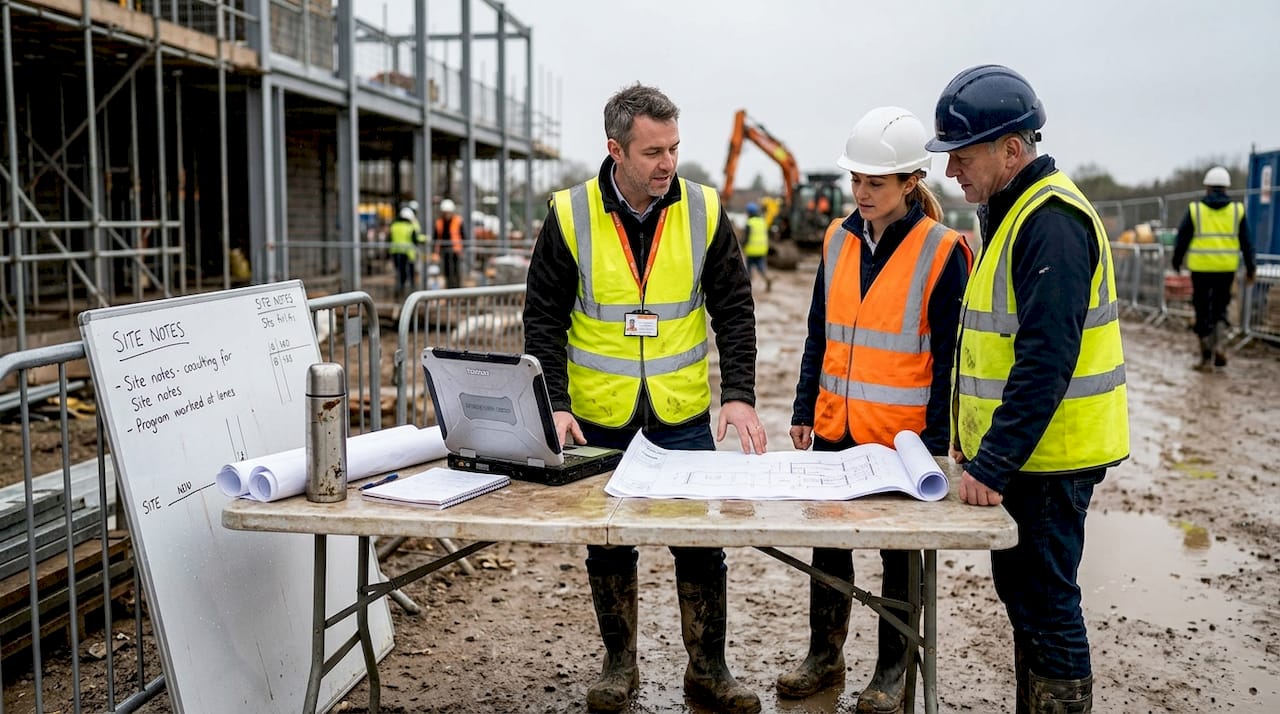 A purpose-built construction snagging software keeps these items tracked through to sign-off.
Most people assume construction projects overrun because of what happens on site: bad weather, late deliveries, or difficult ground conditions. The reality is more uncomfortable. 69% of UK projects go over budget, with average disputes reaching £27.7M, and the root causes are almost always systemic. Poor planning, unclear roles, fragmented communication, and weak risk controls create the conditions for failure long before a single brick is laid. This guide explains what construction project management truly involves, how it maps to UK industry frameworks, and which strategies and tools give site leaders the best chance of delivering on time and on budget.
Table of Contents
- The fundamentals: what is project management in construction?
- The RIBA Plan of Work: the UK framework for project stages
- Key roles and responsibilities: who does what?
- Core methodologies: strategies for successful delivery
- Common challenges and modern solutions
- Emerging trends: digital transformation and the future of project management
- Practical next steps: tools for better project management
- Frequently asked questions
Key Takeaways
| Point | Details |
|---|---|
| Project management defined | It involves planning, coordinating, and controlling every phase of a construction project to deliver on time, within budget, and to high standards. |
| UK follows RIBA stages | The RIBA Plan of Work provides an eight-stage framework that structures project delivery from inception to completion. |
| Clear roles boost success | Distinguishing roles like project manager and site manager prevents confusion and improves project outcomes. |
| Adapt methods for resilience | Selecting the right methodology and adapting to current challenges ensures projects are better prepared for risks and market changes. |
| Digital tools are essential | Modern construction management increasingly depends on advanced digital solutions for communication, compliance, and efficiency. |
The fundamentals: what is project management in construction?
Project management in construction is the structured process of planning, coordinating, and overseeing all aspects of a construction project, from inception through to completion and handover. It is not the same as site management, and confusing the two is a costly mistake many teams make.
Site management is about daily on-site execution: directing labour, managing safety, and keeping work moving. Project management operates at a higher level, covering the full project lifecycle, stakeholder relationships, budget control, procurement, and regulatory compliance. Think of it this way: the site manager runs the engine room, while the project manager steers the ship.
In the UK context, construction project management typically covers:
- Defining scope, objectives, and deliverables at the outset
- Managing time, cost, and quality across all project phases
- Coordinating stakeholders, including clients, contractors, and consultants
- Ensuring compliance with CDM regulations, planning conditions, and building regulations
- Handling risk through structured identification and mitigation processes
Construction is uniquely complex. Projects involve dozens of contributors, long timescales, shifting regulations, and significant financial exposure. Learning to save money with project management starts with understanding this scope clearly. Without structured workflows in construction, even well-resourced projects drift.
“The difference between a project that delivers and one that doesn’t is rarely talent. It’s almost always structure.”
The RIBA Plan of Work: the UK framework for project stages
UK construction projects follow the RIBA Plan of Work 2020, which defines eight stages from strategic definition to post-occupancy evaluation. This framework gives project managers a shared language and a clear sequence of deliverables, making it far easier to plan project workflows and track project success at each milestone.
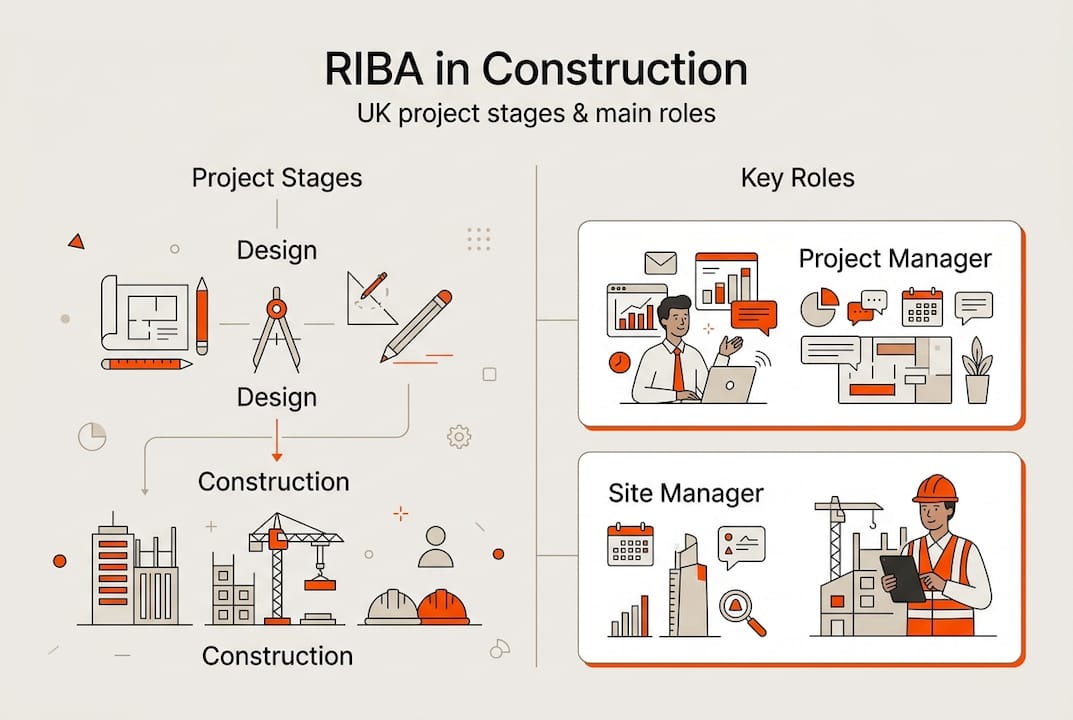
Here is how the eight stages break down in practice:
| Stage | Name | Key focus |
|---|---|---|
| 0 | Strategic definition | Establish business case and project brief |
| 1 | Preparation and briefing | Define requirements, appoint team |
| 2 | Concept design | Initial design proposals, feasibility |
| 3 | Spatial coordination | Coordinated design, planning application |
| 4 | Technical design | Detailed specifications, tender documents |
| 5 | Manufacturing and construction | On-site delivery, quality control |
| 6 | Handover | Completion, commissioning, client sign-off |
| 7 | Use | Post-occupancy evaluation, lessons learned |
For each stage, a project manager should be completing specific actions:
- Stage 0: Confirm the project is viable and aligns with client goals
- Stage 1: Assemble the right team and agree on the project brief
- Stage 2: Review design options against budget and programme
- Stage 3: Coordinate consultant inputs and submit planning
- Stage 4: Finalise procurement and issue tender packages
- Stage 5: Monitor progress, manage variations, and control costs
- Stage 6: Manage snagging, obtain certificates, and hand over documentation
- Stage 7: Review outcomes and capture lessons for future projects
You can explore the full RIBA stages guide for detailed deliverables at each point.
Pro Tip: Use each RIBA stage boundary as a formal trigger for risk review and stakeholder engagement. Do not wait until problems surface. A structured review at the end of Stage 3, for example, catches design coordination issues before they become costly on-site changes.
Key roles and responsibilities: who does what?
One of the most common sources of confusion on UK construction projects is role overlap. When responsibilities are unclear, decisions stall, compliance gaps appear, and costs rise. Getting this right from day one is not optional.
Here is a direct comparison of the two most frequently confused roles:
| Responsibility | Project manager | Site manager |
|---|---|---|
| Scope | Full project lifecycle | On-site construction phase |
| Decision-making | Strategic and commercial | Operational and safety |
| Stakeholder management | Client, consultants, contractors | Subcontractors, trades, inspectors |
| Primary focus | Budget, programme, risk | Daily progress, quality, safety |
| Reporting | To client and board | To project manager |
Beyond these two roles, a well-functioning UK construction project also depends on:
- The client: Sets objectives, approves budgets, and makes key decisions
- Main contractor: Delivers the works and manages subcontractors
- Subcontractors: Provide specialist trades and are accountable for their scope
- Architect: Leads design and administers the building contract
- Quantity surveyor: Controls costs, manages valuations, and handles disputes
Distinguishing project management from site management is not just an academic exercise. When these boundaries blur, overruns and compliance risks follow. Knowing how to manage subcontractors effectively is a direct extension of having clear role definitions from the outset.
Core methodologies: strategies for successful delivery
The procurement route you choose shapes everything: cost certainty, risk allocation, programme control, and client involvement. There is no single best approach, but there is always a best fit for a given project.
Here are the four main methodologies used in UK construction:
- Traditional (Waterfall): Design is completed before tendering. The client retains control but carries more risk if design changes occur during construction.
- Design and Build: A single contractor takes responsibility for both design and construction. Transfers risk to the contractor and suits clients who want cost certainty.
- Management contracting: A management contractor is appointed early to manage specialist subcontractors. Suits complex, fast-track projects where design evolves.
- Construction management: The client directly employs trade contractors and appoints a construction manager to coordinate. Offers maximum control but requires a sophisticated client.
Procurement route selection directly affects cost, time, and risk allocation across the project. RICS guidance recommends a structured approach to risk: identify it, assess its likelihood and impact, then deal with it through avoidance, transfer, or reduction. This applies regardless of which methodology you choose.
Pro Tip: In periods of inflation or market downturn, avoid locking into fixed methodologies too early. Maintaining pipeline visibility and building flexibility into your procurement strategy protects both programme and margin. Reviewing workflow best practice before committing to a route is time well spent.
Common challenges and modern solutions
Even with the right methodology and clear roles, UK project managers face a set of persistent, structural challenges. Recognising them early is the first step to managing them.
The most significant challenges in 2026 include:
- Labour shortages: Post-Brexit workforce gaps continue to affect availability of skilled trades across the UK
- Material price volatility: Supply chain disruptions and inflation make cost planning harder
- CDM and building regulations compliance: The Building Safety Act 2022 has added new layers of accountability
- Planning delays: Local authority resourcing issues slow approvals, particularly for larger schemes
- Mental health and wellbeing: Construction has one of the highest rates of work-related stress in any UK sector, and support for workforce wellbeing is increasingly a project management responsibility
Productivity in construction is 21% below the national average, and fragmentation across supply chains is a major contributing factor. Integrated teams, where design, management, and delivery functions work closely together, consistently outperform fragmented, subcontract-heavy models.
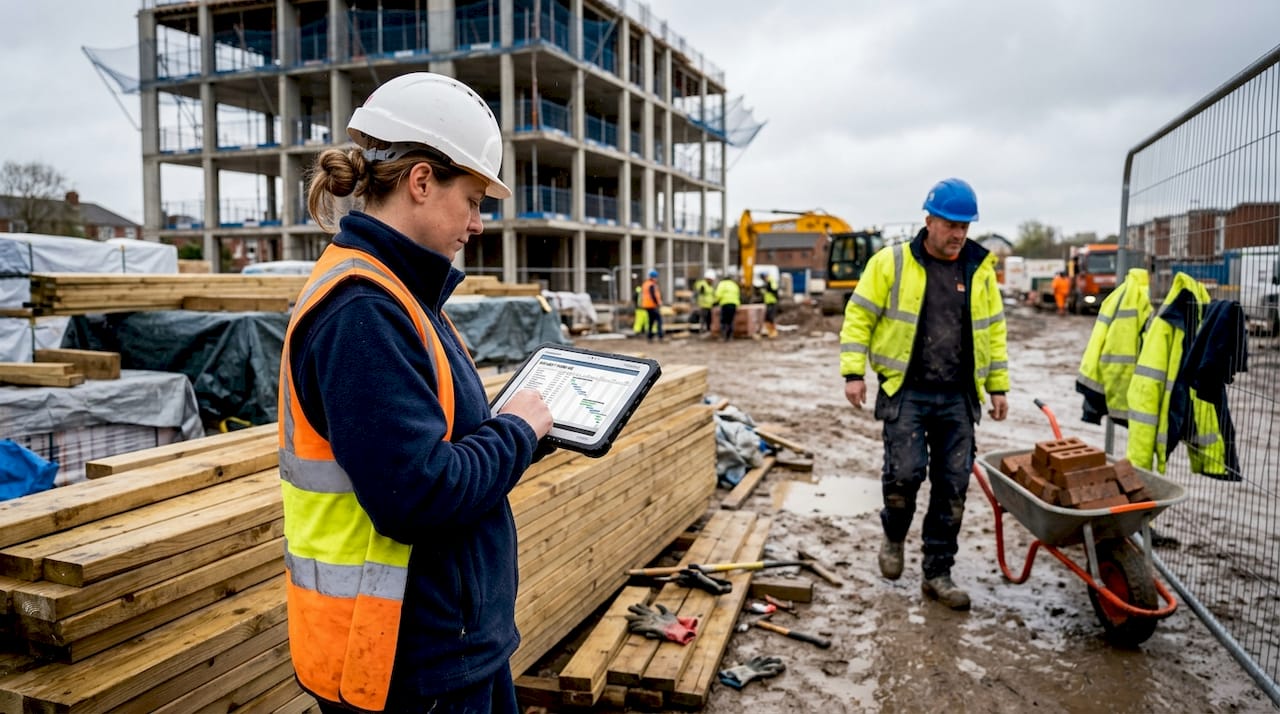
Modern solutions are closing this gap. Advanced project management software, AI-powered compliance tools, and digital twins are moving from novelty to necessity. Understanding the real costs of software helps you make informed investment decisions, while improving site communication remains one of the highest-return actions any project manager can take.
Emerging trends: digital transformation and the future of project management
The construction industry is changing faster than at any point in the last two decades. Digital tools are no longer a competitive advantage. They are becoming a baseline expectation.
Key trends reshaping UK construction project management right now:
- Digital twins: Real-time virtual models of physical assets allow project managers to simulate scenarios, track progress, and identify clashes before they occur on site
- Real-time dashboards: Live data on cost, programme, and quality replaces weekly spreadsheet updates and reduces the lag between problem and response
- AI-powered compliance checks: Automated tools flag regulatory issues, missing documentation, and safety gaps faster than manual review
- ESG reporting: Clients and funders increasingly require environmental, social, and governance data as part of project delivery
“AI is evolving from an optional tool to a compliance requirement. Pipeline visibility and ESG performance are no longer nice-to-haves in a downturn. They are survival requirements.”
To futureproof your approach, focus on these steps:
- Audit your current tools and identify where data is siloed or duplicated
- Invest in platforms that integrate communication, documentation, and reporting
- Build digital literacy across your team, not just among senior managers
- Align your reporting processes with ESG and Building Safety Act requirements now
Understanding digital collaboration pitfalls before you invest in new technology saves both time and money. The goal is not more tools. It is fewer, better-connected ones.
Practical next steps: tools for better project management
The strategies and frameworks in this guide only deliver results when you have the right tools to put them into practice. Knowing the RIBA stages matters less if your team is still chasing updates across email threads and WhatsApp groups.
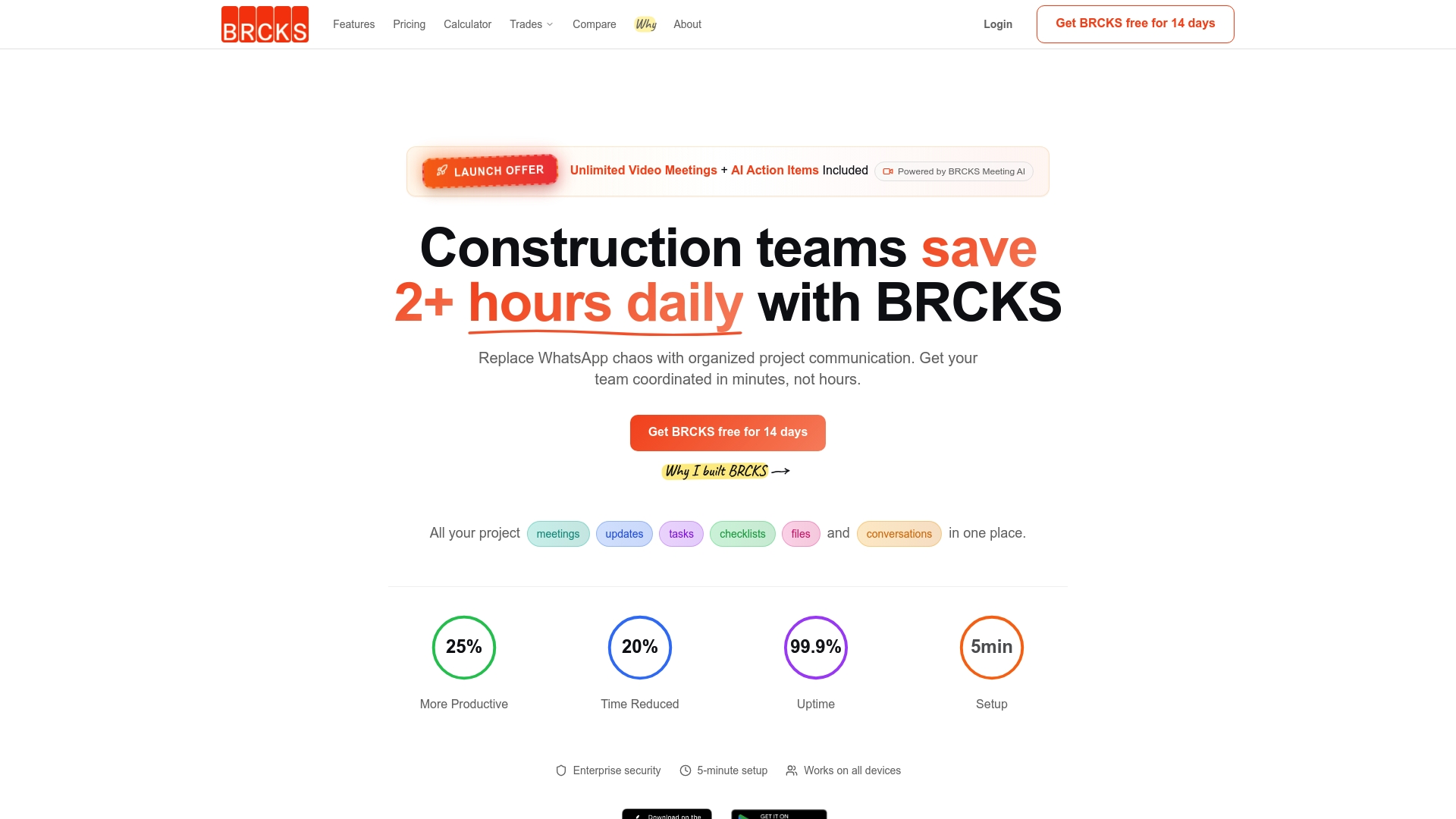
BRCKS is built specifically for construction professionals who need one platform to manage communication, tasks, documentation, and client updates without the chaos of juggling multiple disconnected tools. It supports the kind of structured, stage-based delivery this guide describes, with features including project checklists, file sharing, team chat, meeting recordings, and client portals. The project communication platform integrates with WhatsApp and uses AI-powered search to cut the time your team spends hunting for information. Teams using BRCKS save over two hours daily. If your current setup is not keeping pace with the demands of modern UK construction, it is worth seeing what a purpose-built platform can do. Try BRCKS free for 14 days and find out.
Frequently asked questions
What is the difference between project management and site management in construction?
Project management covers the entire project lifecycle, including strategy, procurement, and stakeholder oversight, while site management focuses on executing work safely and efficiently on site day to day.
Which framework structures project stages for UK construction projects?
Most UK projects follow the RIBA Plan of Work 2020, which defines eight stages from strategic definition through to post-occupancy evaluation, giving teams a shared structure for delivery.
What are the main challenges in UK construction project management?
Labour shortages, material inflation, CDM and Building Safety Act compliance, and productivity levels 21% below the national average are the most pressing challenges facing UK project managers in 2026.
How can digital tools improve project outcomes?
Integrated technology supports real-time communication, risk management, and compliance tracking, reducing the information gaps that cause delays and disputes on UK construction projects.
Recommended
- BRCKS | Construction Project Communication Software
- BRCKS | Construction Project Communication Software
- BRCKS | Construction Project Communication Software
- BRCKS | Construction Project Communication Software
- Top construction insurance trends for smarter risk management
How BRCKS Can Help
Effective project management is no longer just an advantage but a necessity for navigating the complexities of the modern UK construction landscape. By integrating BRCKS into your daily operations, you can streamline communication and gain real-time insights that ensure your projects remain on track and within budget. Our platform is purpose-built to simplify these management challenges, allowing your team to focus on delivering quality results. We invite you to explore how BRCKS can elevate your next project by booking a demo or starting a free trial today. Learn more at BRCKS.