Essential checklist: plumbing project meetings for UK site managers
A single overlooked detail in a plumbing meeting can trigger days of rework. Master your coordination with this essential checklist for UK construction site managers.
By James Shorter ·
Essential checklist: plumbing project meetings for UK site managers
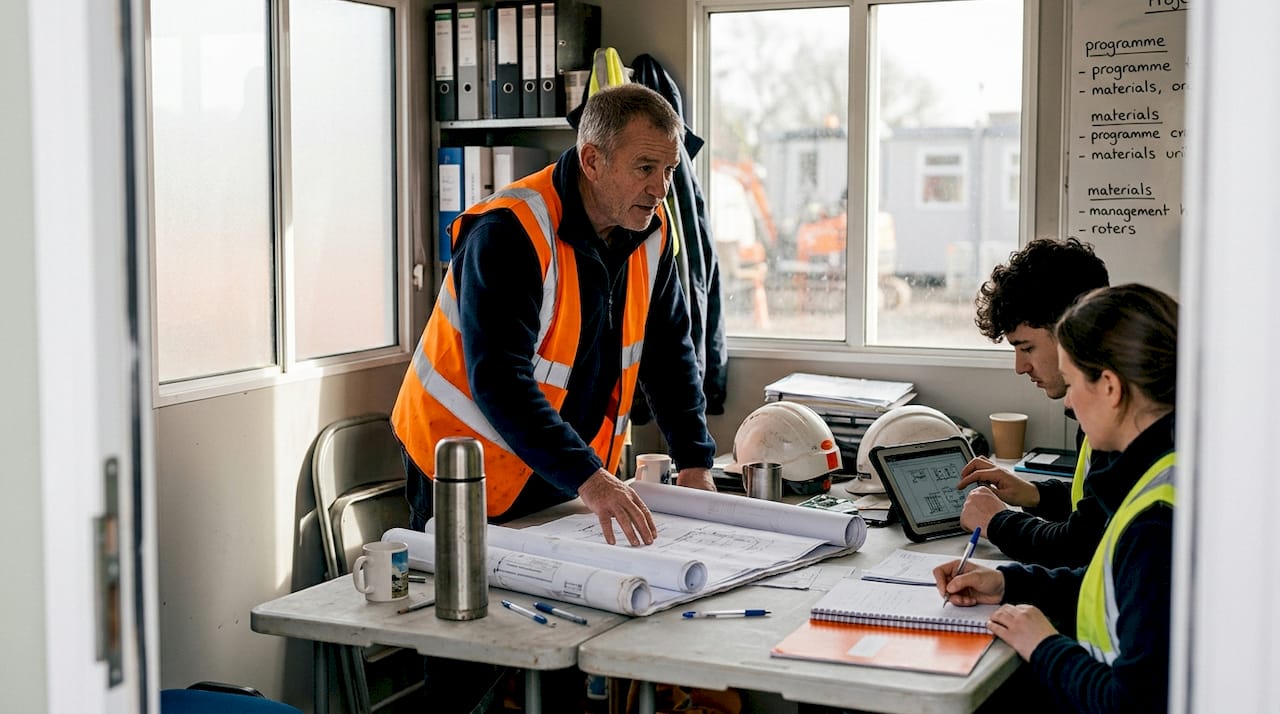 A purpose-built construction snagging software keeps these items tracked through to sign-off.
TL;DR:
- Effective plumbing meetings require clear objectives, relevant attendees, and thorough preparation.
- Bringing current documents and tracking decisions ensure smooth coordination and regulatory compliance.
- Using digital tools and structured follow-up actions reduces rework and keeps projects on schedule.
A single overlooked detail in a plumbing meeting can trigger days of rework, costly material reorders, and scheduling knock-on effects across an entire site. For UK construction project managers and site supervisors, running a focused, well-structured plumbing meeting is not optional. It is the difference between a project that flows smoothly and one that haemorrhages time and budget. This guide gives you a field-tested checklist and practical steps to sharpen every plumbing meeting you run, from preparation through to post-meeting follow-up, all grounded in UK site realities and current regulatory standards.
Table of Contents
- Establishing clear objectives and required attendees
- Key documentation for plumbing meetings
- Coordination points and compliance in UK plumbing projects
- Driving actionable outcomes and follow-up
- Why traditional meeting approaches fall short and how UK teams can fix them
- Streamline your plumbing project meetings with digital support
- Frequently asked questions
Key Takeaways
| Point | Details |
|---|---|
| Define objectives early | Set clear meeting goals and invite only those directly involved for best results. |
| Bring the right documents | Have all necessary drawings, schedules, and compliance paperwork to avoid delays. |
| Focus on compliance | Regularly revisit UK standards and coordinate with all trades to prevent regulatory lapses. |
| Drive action and accountability | End meetings with SMART action items and clear ownership for every task. |
Establishing clear objectives and required attendees
Every productive plumbing meeting begins before anyone walks into the room. Without a defined purpose, meetings drift into general conversation, and the real coordination work never gets done. Start by asking a simple question: what does this meeting need to decide or resolve? Your answer shapes everything that follows.
The three most common objectives for plumbing project meetings are coordination between trades, problem-solving around site issues, and confirming regulatory compliance. Each requires a different set of attendees and a different agenda structure. Mixing all three without clear separation is where most meetings lose their focus.
When selecting attendees, keep the list tight and relevant. A typical plumbing coordination meeting might include the plumbing supervisor, the main contractor’s site manager, relevant subcontractors such as drainage or HVAC trades, and the client’s representative if design decisions are on the table. Inviting people who have no active role in the agenda wastes their time and dilutes the meeting’s energy.
Sending the agenda and inviting relevant attendees 24 to 48 hours ahead is essential. This gives everyone time to review drawings, check their own programme, and flag any conflicts before the meeting starts. Attach any documents that attendees need to review in advance, and be explicit about what preparation you expect from each person.
Responsibility clarity is another area where meetings frequently break down. When two people both assume the other is handling a task, nothing gets done. Good plumbing meeting prep includes confirming who owns each agenda item before the meeting begins.
Key attendees to consider:
- Plumbing supervisor or lead plumber
- Main contractor’s site manager
- Drainage and HVAC subcontractors where interfaces exist
- Design team representative for technical queries
- Client or client’s agent when approvals are needed
Pro Tip: Use a RACI matrix (Responsible, Accountable, Consulted, Informed) to map out roles before the meeting, especially when your plumbing work interfaces with other trades. It prevents the classic situation where everyone leaves the room assuming someone else is handling a critical task.
Key documentation for plumbing meetings
Once objectives and attendees are confirmed, the quality of your meeting depends heavily on the documents in front of you. Arriving without current drawings or an updated programme is like navigating a site without a plan. You will make decisions based on outdated information, and those decisions will cost you later.
For any plumbing project meeting, you should bring the latest issued-for-construction drawings, drainage layout plans, the current project programme, material approval records, and any outstanding RFIs (Requests for Information) related to plumbing. If testing has begun, include pressure test records and any inspection sign-off sheets.
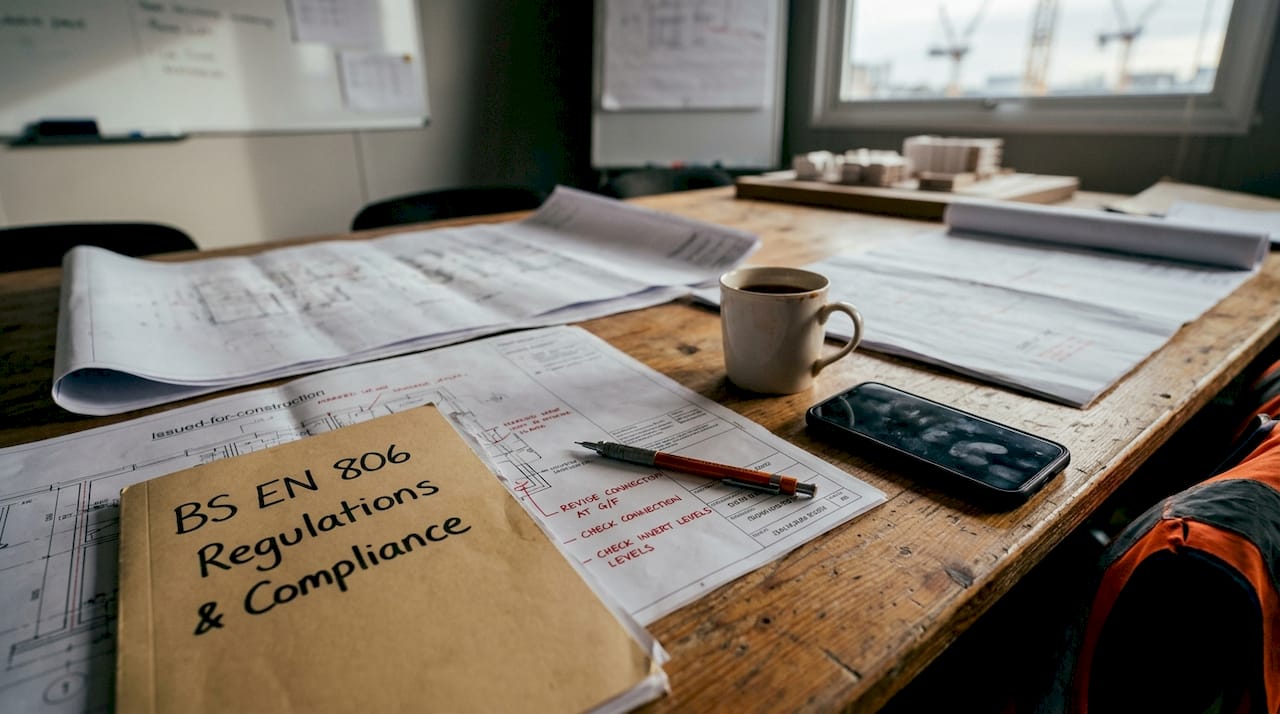
UK regulatory standards must also be at hand. Meetings should cover regulatory compliance including BS EN 806 for drinking water installations and the Water Supply (Water Fittings) Regulations 1999. Local authority requirements and building control conditions specific to your project should also be referenced where relevant.
Good document control best practices mean that every attendee is working from the same revision of every document. Version confusion is a surprisingly common cause of rework on UK sites.
| Document | Meeting relevance |
|---|---|
| Latest plumbing drawings | Confirm scope and design intent |
| Drainage layout plans | Coordinate with groundworks and structure |
| Project programme | Track progress and flag delays |
| BS EN 806 compliance notes | Confirm regulatory adherence |
| Material approval records | Verify specified products are on site |
| Pressure test certificates | Evidence of completed work stages |
| Outstanding RFIs | Resolve design queries blocking progress |
Capturing decisions during the meeting is just as important as arriving prepared. Assign someone to maintain a live decision log and circulate it within 24 hours of the meeting closing. Effective construction coordination depends on a clear record of what was agreed and by whom.
Pro Tip: Digital tools that centralise documents and allow real-time access on site cut out the paper errors and version confusion that plague traditional meeting setups. When everyone can pull up the same live document on a tablet or phone, disputes about which revision is current disappear entirely.
Coordination points and compliance in UK plumbing projects
With the paperwork ready, discussions must cover both trade coordination and regulatory checks. This is the technical core of any plumbing meeting, and it is where the most costly errors are prevented or created.
The key coordination items to work through include drainage layout interfaces with groundworks, pipework routes that cross HVAC or electrical zones, pressure testing requirements (typically 1.5 times the working pressure for cold water systems), material approval status, and commissioning sequences. Each of these has knock-on effects for other trades, so the conversation needs to be specific and recorded.
Effective meetings address both legal compliance and site interfacing to prevent downstream issues.
On the compliance side, plumbing meetings must include coordination with drainage, pressure testing protocols, and adherence to UK standards. This is not a box-ticking exercise. Failing a pressure test after walls are boarded costs significantly more than catching the issue at the meeting stage.
Understanding drainage system function is also useful context when discussing below-ground drainage coordination, particularly on sites with complex gradients or shared drainage infrastructure.
| Regulatory requirement | Discussion topic in meeting |
|---|---|
| BS EN 806 | Drinking water installation standards |
| Water Fittings Regulations 1999 | Approved materials and installation methods |
| Building Regulations Part G | Sanitation, hot water, and water efficiency |
| Pressure testing protocol | Test pressure, duration, and sign-off process |
| CIBSE guidance | Mechanical services coordination |
Steps to confirm compliance and coordination on site:
- Review all current drawings for trade interface clashes before the meeting.
- Confirm pressure test schedule and assign responsibility for witnessing tests.
- Check material approval status against the specification.
- Identify any outstanding building control conditions related to plumbing.
- Agree on a coordination drawing review date with HVAC and electrical leads.
- Log any unresolved compliance queries as actions with deadlines.
Exploring project management strategies that integrate compliance tracking directly into your workflow helps ensure nothing slips through between meetings. Using plumber coordination tools that allow you to tag tasks by trade and regulatory requirement makes this process far more reliable.
Driving actionable outcomes and follow-up
After covering coordination and compliance details, meetings must ensure follow-up translates into real site progress. A meeting that ends without clear actions is little more than a conversation. The measure of a good plumbing meeting is not what was discussed but what changed on site as a result.
Every action logged in the meeting should be SMART: Specific, Measurable, Achievable, Relevant, and Time-bound. Vague actions like “check the drainage” are useless. A SMART action looks like: “Plumbing supervisor to confirm drainage fall on Grid C by Thursday 14:00 and update the site manager via the project platform.”
SMART actions and accountability with a RACI framework drive effective follow-up. When every action has a named owner, a deadline, and a defined output, accountability becomes automatic rather than assumed.
Examples of actionable meeting outcomes:
- Pressure test on first-floor cold water circuit to be completed by Wednesday, witnessed by site manager
- Drainage layout drawing revision to be issued by design team within 48 hours
- Material approval for specified copper fittings to be confirmed with procurement by end of week
- Coordination meeting with HVAC subcontractor to be booked for the following Monday
- Outstanding RFI on hot water cylinder location to be responded to within 24 hours
Steps to drive follow-up after the meeting:
- Distribute the action log within two hours of the meeting closing.
- Assign each action a single named owner, not a team or company.
- Set a review point for outstanding actions at the start of the next meeting.
- Use plumbing snagging software to log and track physical defects identified during the meeting.
- Monitor communication workflow benefits by tracking how quickly actions are closed versus how often they roll over.
Pro Tip: Summarise all action points in a single message and distribute it automatically through your project platform immediately after the meeting. Teams that receive action summaries within two hours are significantly more likely to complete them on time than those who receive them the following day.
Why traditional meeting approaches fall short and how UK teams can fix them
Most plumbing meetings on UK sites still run on habit rather than structure. Someone chairs the meeting, a few issues get raised, and everyone leaves with a rough sense of what needs doing. The problem is that “rough sense” does not build pipework or pass pressure tests.
The uncomfortable truth is that unstructured meetings actively increase project risk. When there is no agenda, discussions expand to fill the time. When there is no decision log, the same issues resurface at the next meeting. When actions are not assigned with named owners and deadlines, they simply do not happen.
What we have seen across real projects is that a structured checklist, combined with a digital workflow, transforms meeting outputs almost immediately. Teams that previously spent 90 minutes covering the same ground start resolving issues in 40 minutes and leaving with clear, circulated actions.
The construction management savings from this shift are tangible. Less rework, fewer delays, and fewer disputes. The key is to challenge the “we’ve always done it this way” mindset and replace it with a repeatable, accountable process that every trade can trust.
Streamline your plumbing project meetings with digital support
If you are ready to put a checklist-driven strategy into practice, technology can take your meetings to the next level. Running effective plumbing meetings consistently requires more than good intentions. It requires a system that makes preparation, documentation, and follow-up simple for every person on the team.
 BRCKS.io">
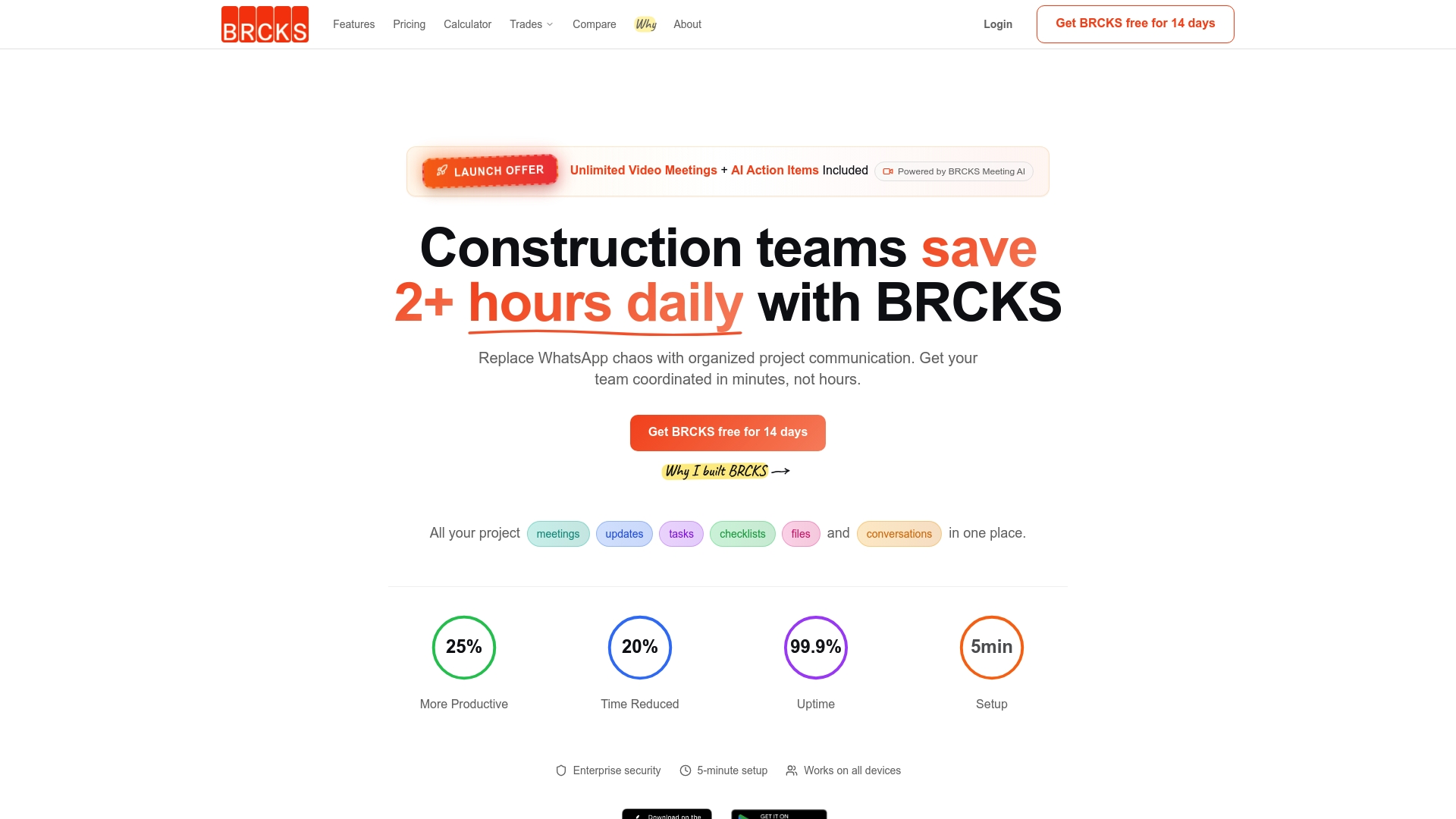
BRCKS is built specifically for construction teams like yours. With BRCKS, you can set up meeting agendas, share documents digitally, assign and track actions, and give every subcontractor visibility of their responsibilities, all from one platform. The project management software saves teams over two hours daily by cutting the manual effort out of coordination. If you want a construction communication tool that keeps your plumbing meetings focused and your site moving, try BRCKS free for 14 days.
Frequently asked questions
What is the most important step when preparing for a plumbing project meeting?
The most important step is to define clear objectives and ensure all relevant stakeholders are invited with enough time to prepare. Sending the agenda and inviting relevant attendees 24 to 48 hours prior is essential for a productive session.
What documents should always be brought to a plumbing meeting?
Bring current project drawings, drainage layouts, programme updates, and regulatory compliance documents including BS EN 806. Meetings should cover plumbing-specific items and compliance with UK standards to ensure nothing is missed.
How can site managers ensure actions are followed up after the meeting?
Use a RACI matrix to assign clear ownership and circulate action points immediately after the meeting. SMART actions and accountability with RACI drive effective follow-up and reduce the risk of tasks rolling over.
How often should plumbing project meetings be held on a UK site?
Meetings should be scheduled according to the project’s scale, often weekly for active builds or at key project milestones such as first fix, pressure testing, and commissioning sign-off.
Recommended
- Construction Software for Plumbers | BRCKS
- UK Construction Project Coordination Best Practices 2026 | BRCKS
- BRCKS | Construction Project Communication Software
- Improve Site Communication: 5 Steps for UK Construction | BRCKS
How BRCKS Can Help
Effective plumbing coordination relies on clear communication and meticulous record-keeping, ensuring that every pipe and fitting meets the required standards. By integrating these checklists into the BRCKS platform, site managers can automate progress tracking and centralise essential documentation in real time. This digital approach reduces the risk of costly rework and keeps your mechanical packages on schedule. We invite you to explore how BRCKS can streamline your site meetings and improve project delivery across your entire portfolio. Learn more at BRCKS and explore our full feature set.