Meaning of project collaboration for site teams
Explore why true project collaboration is a delivery mechanism, not just a buzzword, and how it prevents costly delays on UK construction sites.
By James Shorter ·
Meaning of project collaboration for site teams
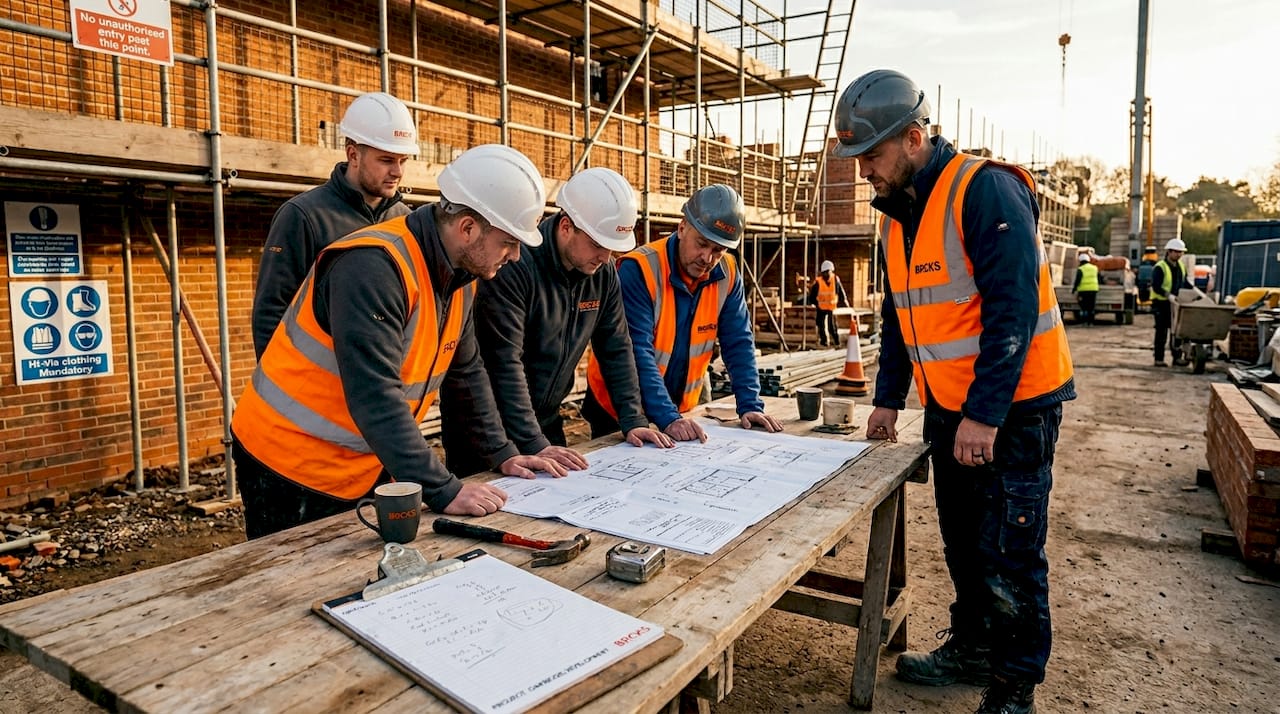 A purpose-built construction snagging software keeps these items tracked through to sign-off.
TL;DR:
- Effective project collaboration involves shared responsibility, active decision-making, and structured communication, unlike mere cooperation or coordination. Building clear roles, norms, and psychological safety on-site reduces delays, cost overruns, and conflict, with early team alignment being crucial. digital tools like Brcks support this by integrating communication, file sharing, and accountability within a structured process, enhancing construction project performance.
Understanding the meaning of project collaboration is not about defining a buzzword. It is about recognising why some construction sites run smoothly while others haemorrhage time and money through avoidable confusion. Poor collaboration costs organisations an average of 26 wasted hours per matter, and 80% face cost overruns as a direct result. For UK construction project managers, that is not an abstract statistic. It is the difference between a project that delivers on time and one that ends in snagging lists, disputed variations, and frustrated clients.
Table of Contents
- Key takeaways
- What project collaboration actually means
- Tuckman’s team stages on a construction site
- Structural elements for effective collaboration
- Common barriers that undermine collaboration
- Practical steps to build collaboration on your site
- My take on what collaboration actually costs when you get it wrong
- How Brcks supports construction collaboration in practice
- FAQ
Key takeaways
| Point | Details |
|---|---|
| Collaboration is not cooperation | True project collaboration means shared ownership and accountability, not just working alongside each other. |
| Structure prevents failure | Collaboration fails without defined communication norms, clear roles, and deliberate processes. |
| Team stages are predictable | Understanding Tuckman’s forming to performing model helps managers reduce friction at the right moments. |
| Barriers are cultural, not technical | Software alone does not fix collaboration. Process, trust, and role clarity do the heavy lifting. |
| Continuity compounds performance | Keeping proven team combinations together across projects accelerates collaboration and reduces early-stage conflict. |
What project collaboration actually means
The project collaboration definition most people reach for is something like “people working together on a project.” That is cooperation, not collaboration. The distinction matters in practice.
Collaboration carries a specific meaning. It is a structured working arrangement where team members share responsibility for outcomes, actively contribute to decisions outside their narrow remit, and hold each other accountable. Collaboration is a delivery mechanism, not a soft skill, and it fails when left entirely to chance.
Here is how the three related terms map out in a construction context:
- Cooperation is a subcontractor completing their section of work to spec without holding up the following trade. They do their job. Conflict is minimal. But there is no shared ownership.
- Coordination is the site manager scheduling groundworkers, electricians, and plumbers so they do not clash. It is logistical. Someone manages the sequence, but there is still no shared problem-solving.
- Collaboration is those same trades flagging to each other when something changes, agreeing a revised approach on site, and jointly communicating the impact to the project manager before it becomes a delay. Everyone owns the outcome.
The core of what is collaborative working in construction is that shared ownership piece. It demands constructive tension and professional debate, not full agreement or conflict avoidance. On a well-functioning site, a structural engineer who spots an issue with an architect’s drawings should feel able to raise it directly and quickly, not route it through three layers of management.
“Project collaboration is a structured delivery approach that requires defined communication and accountability, not just informal cooperation.” — Project Management Formula
Tuckman’s team stages on a construction site
One of the most practical frameworks for understanding team collaboration in projects is Bruce Tuckman’s model of team development. If you have managed a site before, you have lived through every one of these stages, even if you did not have a name for them.
- Forming. The team assembles. People are professional, a little guarded, and unclear on exactly how decisions will be made. On a new build, this is the period before groundwork starts, when the design team, main contractor, and key subcontractors are still figuring out each other’s communication styles.
- Storming. Friction emerges. Clashes happen between the structural engineer and the M&E designer. The site manager and the quantity surveyor disagree on how variations should be flagged. This stage is normal, but without intervention it stalls a project.
- Norming. The team finds its rhythm. Protocols are agreed. People know who to call and when. Decisions start moving faster because trust has been built.
- Performing. The team operates with minimal friction. Problems are solved at the right level without escalation. This is where the real benefits of project collaboration become visible in programme performance and cost control.
- Adjourning. The project closes. Lessons are captured, or they are not. Teams that run retrospectives here carry their learning forward to the next job.
The importance of project teamwork in understanding these stages is that each one requires a different management response. Forming needs clarity. Storming needs structured dialogue and someone willing to name the tension. Norming needs reinforcement of what is working. Performing needs you to get out of the way.
Pro Tip: Use RACI workshops during the forming stage to assign accountability before the storming stage surfaces confusion. Teams that settle roles early fight far less about process later on.
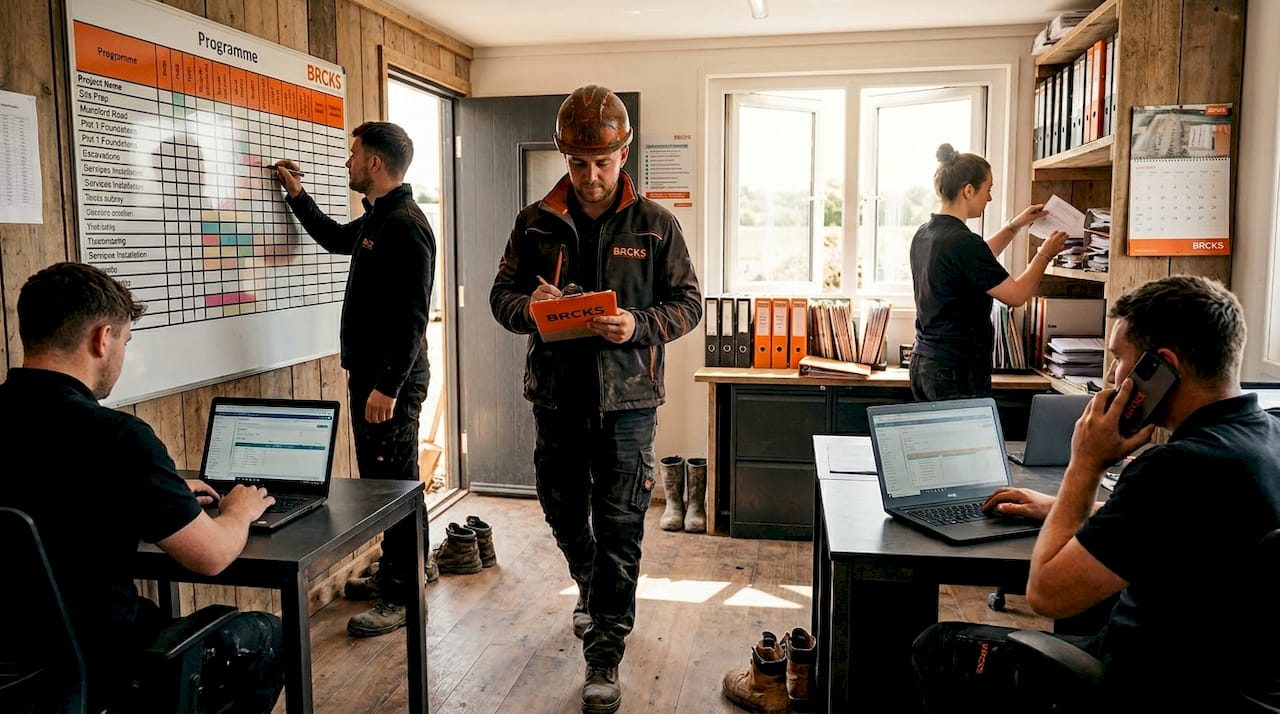
Structural elements for effective collaboration
Knowing what effective project collaboration looks like in theory is one thing. Building it on a UK construction site, with subcontractors on day rates and a programme that has already been squeezed, is something else. These are the elements that actually hold it together.
Role clarity using RACI matrices. A RACI matrix assigns every decision or deliverable to someone who is Responsible, Accountable, Consulted, or Informed. The mistake most site teams make is creating this document once at project start and filing it. Treat it as a living workshop tool instead. Bring the team together in the first two weeks, walk through key decisions collaboratively, and revisit it when scope changes.
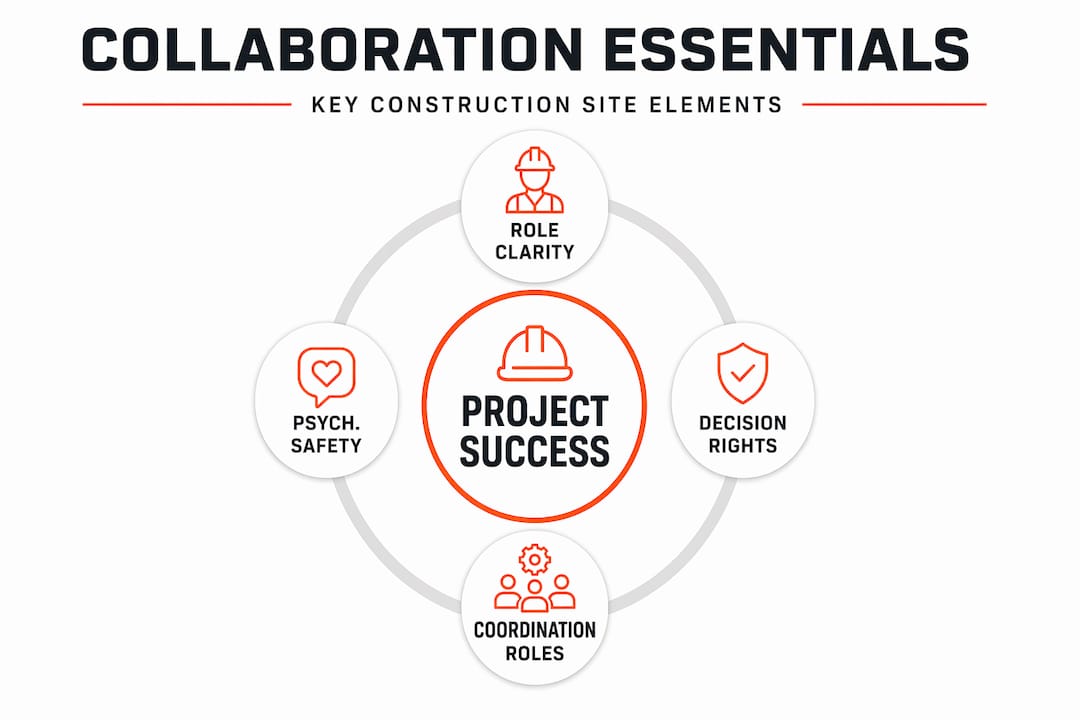
Communication norms and decision rights. Decide explicitly: which decisions can a site manager make without sign-off? What requires the project manager? What goes to the client? Undocumented decision rights are one of the most common sources of delay on UK SME construction projects. When everyone assumes someone else is authorised to act, nothing moves.
Dedicated coordination roles. Dedicated coordination staff on projects valued above £8 million reduce schedule delays by 30 to 40% compared with ad-hoc coordination. That is a significant return on a single appointment. On smaller projects, this role often falls to the project manager, which is fine, provided it is intentional rather than reactive.
Psychological safety. This sounds like HR jargon, but on a site, it means a junior engineer feeling safe to say, “I think we’ve set this level wrong,” without being shouted down. If people are afraid to flag errors early, those errors become expensive defects later. Collaboration requires the safety to be wrong.
Common barriers that undermine collaboration
If collaboration is so beneficial, why is it so hard to maintain? Usually, it is because of three specific barriers.
- The “Software as a Solution” Fallacy. Buying a project management tool does not create collaboration. If your team has no agreed process for how to use that tool, you have just moved your confusion to a digital platform. Software supports collaboration; it does not generate it.
- Fragmented Subcontracting. When every trade is on a fixed-price contract with narrow margins, their incentive is to protect their own profit, not the project’s success. Overcoming this requires the main contractor to build a culture where helping the next trade actually benefits everyone (e.g., through faster sign-offs or smoother site access).
- Information Silos. When the architect is using one system, the QS another, and the site team is relying on WhatsApp, information gets lost. Collaboration dies in the gaps between systems.
Practical steps to build collaboration on your site
You can improve the collaborative output of your site team by focusing on three practical areas.
1. Early team alignment
Do not wait for the first site meeting to start collaborating. Hold a “pre-start” session specifically focused on how the team will work together. Discuss communication channels, response times for RFIs, and how conflict will be resolved. This moves the team through the “Forming” stage faster.
2. Structured communication channels
Stop the endless email chains. Use a centralised platform for project-critical communication. If your team prefers WhatsApp (and most site teams do), use a tool that integrates WhatsApp into a structured project environment so that decisions are recorded and searchable.
3. Regular retrospectives
Every fortnight, ask the team: “What is slowing us down?” and “What communication is missing?” This is not a progress meeting; it is a process meeting. Fixing a broken communication loop in week 4 can save thousands of pounds in week 20.
My take on what collaboration actually costs when you get it wrong
In my experience, the cost of poor collaboration is rarely a single large event. It is a “death by a thousand cuts.” It is the three hours a site manager spends looking for a specific drawing version. It is the electrician having to redo a run because the plumber moved a pipe and didn’t tell anyone. It is the client losing trust because they get three different answers to the same question.
When you add those up, they represent the difference between a 10% margin and a 2% margin. True project collaboration is not a “nice to have”; it is your primary tool for margin protection.
How Brcks supports construction collaboration in practice
We built Brcks because we saw site teams struggling to collaborate using tools that were too complex or too disconnected from how they actually worked. Brcks bridges the gap by:
- Centralising communication. It brings WhatsApp messages, files, and tasks into one place, so everyone has a single source of truth.
- Automating accountability. By making it easy to assign tasks and track progress, it removes the “I thought you were doing that” excuse.
- Reducing friction. It doesn’t ask site teams to change their habits; it just makes those habits more structured and visible to the project manager.
If you want to see how structured collaboration can improve your site’s performance, explore how Brcks works here.
FAQ
What is the difference between collaboration and teamwork?
Teamwork is the general act of working together. Collaboration is a specific, structured approach involving shared accountability, joint decision-making, and defined communication protocols to achieve a specific project goal.
Why is collaboration important in construction?
Construction projects are inherently complex with many moving parts. Effective collaboration reduces delays, prevents cost overruns, improves safety, and ensures that errors are caught and corrected before they become expensive defects.
How can I improve collaboration on a small site?
Start with role clarity. Even on a small job, ensure everyone knows who is responsible for what. Use a single, shared communication channel and hold a five-minute “stand-up” meeting every morning to align the day’s tasks.
Does software improve project collaboration?
Only if it is paired with a clear process. Software is a tool that facilitates collaboration, but the team must first agree on how they will use it, who is responsible for updating it, and what information belongs there.
logical safety. This is not a cultural nicety. Psychological safety is the top predictor of team success, outperforming individual talent and experience. On a construction site, it means a labourer can flag a safety concern to the site manager without fear, and a junior QS can challenge a variation without being dismissed.| Element | Without it | With it |
|---|---|---|
| Role clarity (RACI) | Delays from duplicated or missed decisions | Faster sign-off and clearer accountability |
| Communication norms | Constant misalignment between disciplines | Consistent updates and fewer surprises |
| Dedicated coordination | Clashes found late, costly rework | Issues caught early, programme protected |
| Psychological safety | Problems hidden until they become crises | Early escalation and faster resolution |
Pro Tip: Schedule a 30-minute weekly coordination call with all discipline leads. Not to report progress, but to surface conflicts before they hit the programme. This one habit is the fastest way to improve how to collaborate on projects at site level.
Common barriers that undermine collaboration
The benefits of project collaboration are clear, but they do not materialise automatically. These are the barriers that derail even experienced teams.
- The tool trap. Buying collaboration software and expecting things to improve is one of the most common mistakes in construction management. Software alone does not equal real collaboration without clear frameworks and consistent reinforcement. The platform does not build trust or resolve role ambiguity. You do.
- Unresolved design clashes. In construction, resolving design clashes between disciplines requires dedicated coordination and real diplomatic skill. When no one owns the clash resolution process, delays cascade through the programme and the blame game begins.
- Unclear roles and scope gaps. When two parties both assume the other is responsible for something, that task gets done last or not at all. This is particularly common at the interface between main contractor and subcontractor scopes.
- Absence of psychological safety. Teams where people are afraid to flag problems early are expensive. Issues surface as full-blown delays instead of five-minute conversations.
- Poor data management. 80% of organisations experience cost overruns driven by collaboration data inefficiencies. On a construction project, that means buried emails, misplaced drawings, and decisions made on out-of-date information.
“The tool trap is a misconception where software is assumed to solve collaboration; real collaboration requires clear frameworks and consistent reinforcement.” — What Is Collaboration, Really?
The way through these barriers is not to ignore the digital side, but to pair the right tools with the right processes. Technology confirms and records what humans have already agreed to do.
Practical steps to build collaboration on your site
Understanding the theory of effective project collaboration tips is one thing. Translating it into day-to-day practice on a UK site is another. Here is where to start.
- Run a team alignment session in week one. Before a single foundation is dug, bring the core team together to agree on communication channels, escalation paths, and decision rights. This session pays for itself many times over. You are buying yourself out of the storming stage before it starts.
- Use your digital tools as process enforcers, not replacements. Platforms like Brcks allow you to centralise file sharing, task management, and site communications in one place so that agreed processes are actually followed. The construction communication software becomes the record of your collaboration agreements, not the replacement for them.
- Maintain team continuity where possible. High-performing teams that keep proven combinations together across projects skip the forming and storming stages almost entirely. When you find a subcontractor or discipline lead who works well in your team’s culture, treat that relationship as a project resource worth protecting.
- Run project retrospectives. At practical completion, spend 90 minutes with the team reviewing what worked and what did not in terms of collaboration. Not the programme. Not the budget. Specifically the working relationships and communication patterns. This feeds directly into your next project’s setup.
Only 57% of projects finish within their original budget, and 11% of total project investment is wasted through poor performance linked to inadequate collaboration. These are not inevitable figures. They reflect teams that did not build the structure to collaborate well from the start.
Pro Tip: When using project collaboration tools, define which channel is used for which type of communication before the project starts. Site issues in one thread, design queries in another, client updates in a portal. The structure prevents the chaos that buries critical information.
My take on what collaboration actually costs when you get it wrong
I have reviewed enough post-project reports to know that most cost overruns in construction do not start with a bad design or an unrealistic programme. They start with a team that was never properly aligned in week one. No one agreed on who owned what. No one named the tension when two disciplines were heading for a clash. By the time the problem was visible, the programme had already absorbed the damage.
What I have learned is that collaboration is genuinely rigorous when it is done properly. It is not about getting everyone to like each other or sit in more meetings. It is about defining who decides what, who needs to know, and how fast information needs to move. That structure is what separates a team that performs from one that merely functions.
The projects I have seen run well shared one common characteristic: the project manager treated early team alignment as seriously as they treated the programme. They ran the RACI workshop. They set the communication norms. They named the storming stage when it arrived and moved the team through it deliberately. That is not soft skills work. That is delivery.
Psychological safety and mutual accountability differentiate high-performing teams from merely functional groups. In my experience, that gap shows up most clearly under pressure, which is precisely when construction teams are tested.
— James
How Brcks supports construction collaboration in practice
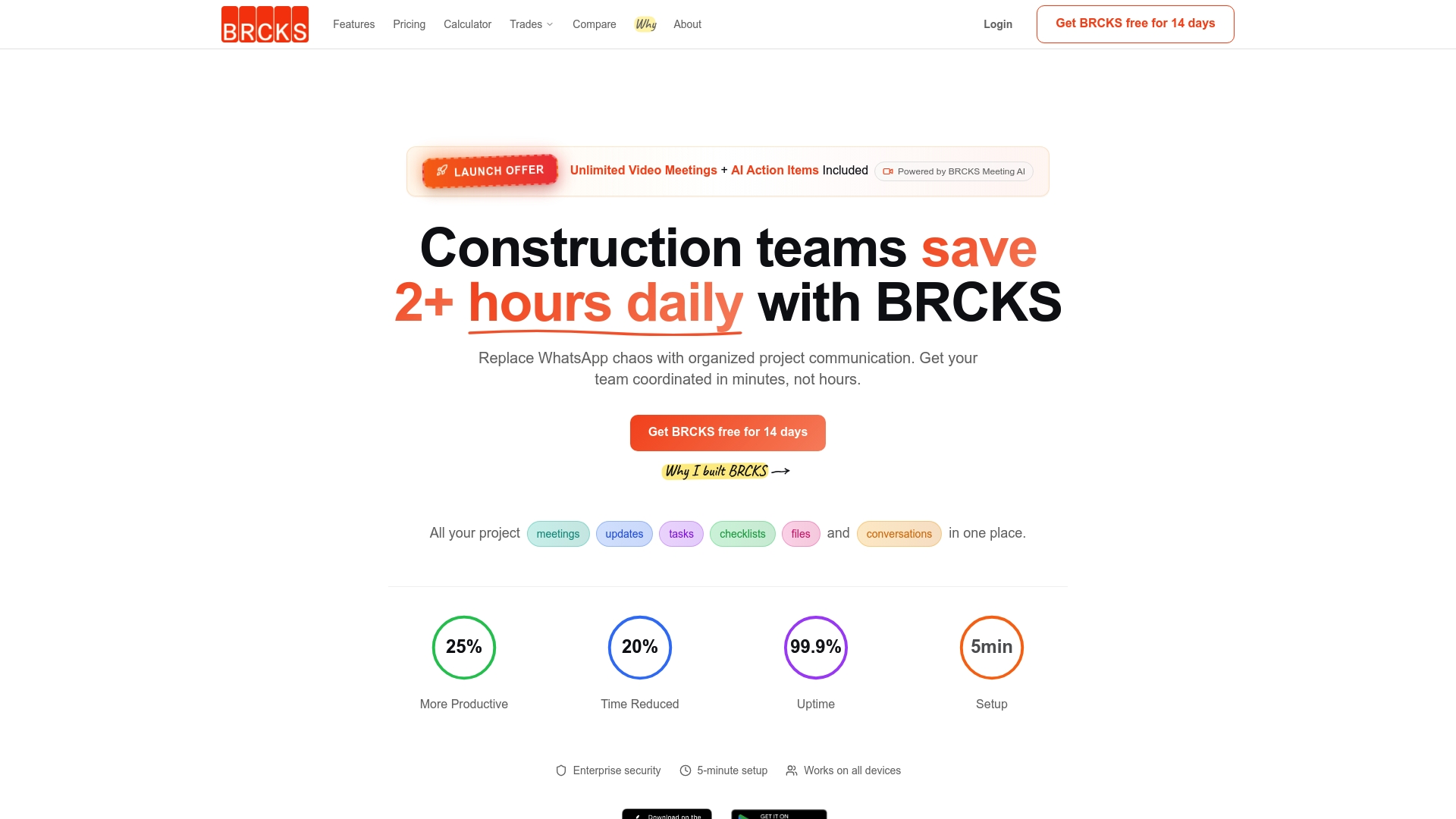
Brcks is built specifically for UK construction teams who need their collaboration tools to work the way a site actually operates. It integrates with WhatsApp so your team does not need to change how they communicate, they just gain structure around it. File sharing, task checklists, team chat, client portals, and meeting recordings are all held in one place, so agreed processes are followed and nothing disappears into someone’s inbox.
For builders, site managers, and project managers running multiple subcontractors, Brcks reduces the daily communication overhead that drains time and causes errors. Teams using Brcks report saving over two hours per day through reduced duplication and clearer task accountability. If you are serious about improving project coordination on site, explore what Brcks offers your team.
Get Brcks free for 14 days and see how structured collaboration tools work in a real construction context.
FAQ
What is the meaning of project collaboration?
Project collaboration is a structured working arrangement where team members share accountability for outcomes, actively contribute to decisions, and communicate openly to deliver a project goal. It goes beyond cooperation or coordination by requiring shared ownership of results.
How does project collaboration differ from teamwork?
Teamwork describes people working alongside each other towards a common goal. Project collaboration specifically requires shared decision-making, mutual accountability, and defined communication structures. All collaboration involves teamwork, but not all teamwork reaches the level of true collaboration.
Why does project collaboration fail in construction?
Collaboration most commonly fails because roles are unclear, communication norms are undocumented, and teams rely on software to substitute for structured processes. Collaboration without structure is left to chance and consistently produces delays and cost overruns.
What tools support effective project collaboration on site?
Digital platforms that centralise communication, file sharing, and task management reduce the friction that undermines collaboration. The key is pairing the tool with defined processes. Brcks, for example, is built for UK construction teams and integrates with WhatsApp to keep communication structured without changing existing habits.
How quickly can a construction team improve its collaboration?
A focused team alignment session in the first week of a project, combined with a clear RACI matrix and agreed communication channels, produces measurable improvement within the first fortnight. High-performing teams that maintain consistent combinations across projects see even faster results by skipping the early conflict stages entirely.
Recommended
- Improve Site Communication: 5 Steps for UK Construction | BRCKS
- Site Communication Workflow: UK Project Manager’s Guide | BRCKS
- Smarter File Sharing for Construction Efficiency | BRCKS | BRCKS
- UK Construction Project Coordination Best Practices 2026 | BRCKS
How BRCKS Can Help
True collaboration on site is about more than just communication; it is about ensuring every team member has access to the right information at the right time. BRCKS simplifies this process by providing a centralised platform that bridges the gap between the office and the field, reducing errors and saving valuable time. By streamlining your workflows and digitising site records, we help your team focus on delivering quality work rather than chasing paperwork. We invite you to explore how BRCKS can transform your project delivery and bring a new level of efficiency to your next build. Learn more at BRCKS and explore our full feature set.