Enhance coordination in UK construction for smoother workflows
Poor coordination triggers project delays of up to 15% in UK construction. Discover practical strategies and digital tools to streamline your residential project delivery.
By James Shorter ·
Enhance coordination in UK construction for smoother workflows
 A purpose-built construction snagging software keeps these items tracked through to sign-off.
Poor coordination costs UK construction teams dearly, triggering project delays of up to 15% and cost overruns of 10%. For project managers and site supervisors in residential construction, these inefficiencies translate directly to client dissatisfaction and damaged reputations. This guide delivers practical strategies to strengthen communication channels, clarify team roles, and leverage modern tools that reduce workflow bottlenecks. You’ll discover how proven methodologies and purpose-built software transform chaotic coordination into streamlined project delivery.
Table of Contents
- Why Coordination Challenges Persist In UK Construction
- Core Principles And Methods For Effective Project Coordination
- Leveraging Technology To Enhance Coordination And Communication
- Best Practices For Applying Coordination Tools To Your UK Construction Projects
- Streamline Your Project Coordination With BRCKS Software
Key takeaways
| Point | Details |
|---|---|
| Coordination impact | Robust coordination reduces project delays by 15% and cost overruns by 10%, directly improving profitability. |
| Essential foundations | Clear communication protocols and precisely defined roles prevent overlaps and eliminate workflow gaps. |
| Technology advantage | Digital platforms like One.site and VoIP telephony enhance data visibility, speed decision-making, and support scalable team collaboration. |
| Methodology benefits | Agile and Lean principles improve workflow adaptability, minimise waste, and strengthen project control throughout delivery. |
| Client satisfaction link | Poor coordination damages client relationships and reputational standing, whilst effective systems build trust and repeat business. |
Why coordination challenges persist in UK construction
The UK construction industry faces a persistent productivity deficit, with performance 21% below the national economy average. This gap stems from systemic coordination failures that ripple through every project phase. Fragmented communication channels force teams to juggle WhatsApp groups, email threads, and phone calls, creating information silos that delay critical decisions.
Unclear role definitions compound these problems. When responsibilities overlap or fall between team members, tasks get duplicated or ignored entirely. Site supervisors waste hours clarifying who handles what, whilst subcontractors wait for instructions that never arrive through the right channel.
Construction projects in the UK frequently experience cost and time overruns due to ineffective project control practices. These overruns aren’t random, they follow predictable patterns rooted in coordination breakdowns. When a plumber can’t access updated drawings because they’re buried in an email chain, rework becomes inevitable.
The human cost matters too. Construction remains a high-risk environment where coordination failures can compromise safety. Poor coordination leads to increased client dissatisfaction and reputational damage that extends far beyond individual projects. Word travels fast in local construction markets, particularly around London where competition runs fierce.
Common coordination pain points include:
- Information scattered across multiple platforms with no single source of truth
- Delayed responses to site queries causing work stoppages
- Version control issues leading to teams working from outdated plans
- Lack of visibility into subcontractor progress and dependencies
- Manual processes for tracking materials, labour, and quality checks
These challenges create a vicious cycle. Teams spend more time managing communication chaos than actual construction work. Productivity suffers, margins shrink, and client relationships deteriorate. Breaking this cycle requires understanding what drives effective coordination and implementing structured solutions that address root causes rather than symptoms. For deeper insights into resolving these issues, explore proven approaches to construction communication problems that UK teams face daily.
Core principles and methods for effective project coordination
Coordination relies on clear communication channels, defined roles, and technology working in concert. These three pillars form the foundation for any successful coordination strategy. Without clear channels, messages get lost. Without defined roles, accountability disappears. Without technology, manual processes bog down even the best teams.
Start by establishing formal communication protocols that specify exactly how information flows. Designate primary channels for different message types: urgent site issues, progress updates, document sharing, and stakeholder reporting. This structure eliminates the guesswork that wastes hours each day.
Role definition goes beyond job titles. Document precise responsibilities for every team member, from project managers to apprentices. Specify decision-making authority, reporting lines, and handoff points between trades. This clarity prevents the overlap and gaps that derail coordination.
Implementing these principles follows a logical sequence:
- Map your current communication landscape to identify redundancies and gaps.
- Design streamlined channels that consolidate information into accessible hubs.
- Assign clear ownership for each communication type and project deliverable.
- Select technology platforms that centralise project data in real time.
- Train teams thoroughly on new systems and protocols before rollout.
- Monitor adoption rates and gather feedback to refine processes continuously.
Lean construction principles improve workflow and team coordination by eliminating waste at every step. Lean thinking identifies activities that don’t add value, from duplicate data entry to unnecessary approval layers. Removing these bottlenecks accelerates project velocity without compromising quality.
Agile methodologies complement Lean by building adaptability into project delivery. Rather than rigid waterfall planning, Agile encourages iterative cycles with frequent check-ins. This flexibility proves invaluable when site conditions change or client requirements evolve mid-project.
Pro Tip: Hold brief daily stand-up meetings where each team member shares progress, upcoming tasks, and blockers in under 15 minutes. This simple practice maintains alignment without lengthy status meetings that drain productivity.
Continuous improvement separates effective coordination from static systems. Regularly review what works and what doesn’t. Analyse recurring delays or communication failures to spot patterns. Adjust protocols based on real project data rather than assumptions. This iterative approach ensures your coordination methods evolve alongside your projects.
For practical guidance on applying these principles with subcontractors, review strategies for managing subcontractors in UK construction projects that maintain tight coordination across multiple trades.
Leveraging technology to enhance coordination and communication
Digital tools transform coordination from reactive firefighting to proactive management. Bancon Homes enhanced efficiency and data visibility with One.site, successfully managing sign-ins and man hours across multiple sites. This shift from paper-based tracking to digital platforms eliminated manual errors and provided real-time insights into workforce allocation.
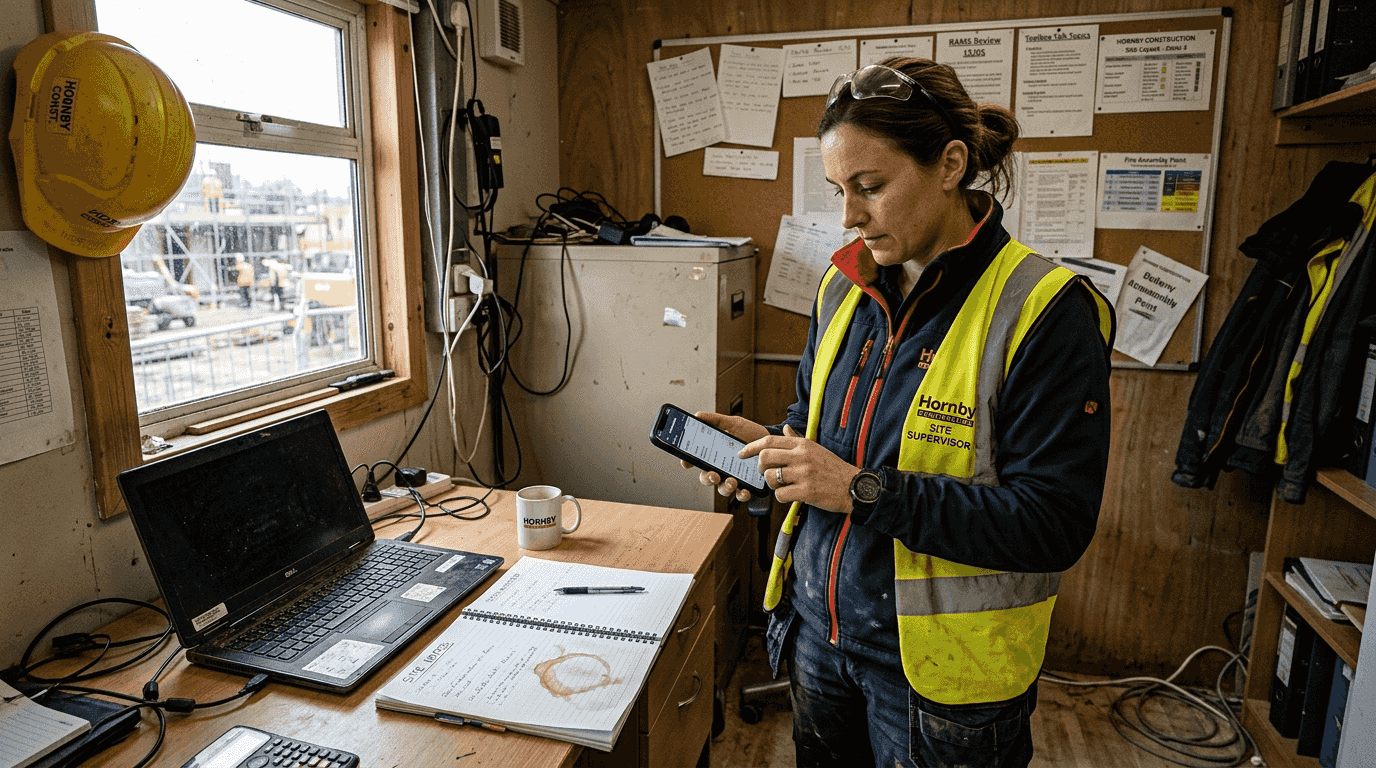
The tangible benefits extended beyond simple record keeping. Site managers gained instant visibility into who was onsite, how long tasks actually took, and where bottlenecks emerged. This data enabled smarter resource allocation and faster problem resolution.
Taylor Wimpey achieved substantial cost savings and rapid VoIP deployment within 10 days using UK Connect’s solution. Traditional phone systems required weeks of installation and hefty upfront costs. VoIP telephony changed the equation completely, offering enterprise-grade communication that scales effortlessly as projects grow.
| Technology | Primary Benefit | Implementation Time | Typical ROI |
|---|---|---|---|
| One.site | Real-time workforce and progress visibility | 2-3 weeks | 15-20% efficiency gain |
| VoIP Telephony | Scalable communication with advanced features | 10 days | 30% cost reduction |
| Cloud Project Platforms | Centralised document and task management | 1-2 weeks | 25% fewer delays |
| Mobile Site Apps | Instant field-to-office communication | 1 week | 40% faster issue resolution |
Cloud-based VoIP solutions offer scalability, cost savings, and advanced features beneficial to construction communication. Call monitoring lets managers review conversations for quality assurance and training. Detailed reporting reveals communication patterns, helping identify overloaded team members or underutilised resources.
Key technology capabilities that directly improve coordination:
- Centralised document repositories ensuring everyone accesses current drawings and specifications
- Automated notifications alerting relevant parties when tasks complete or issues arise
- Mobile accessibility allowing site teams to update progress without returning to the office
- Integration between scheduling, communication, and reporting tools creating seamless workflows
- Audit trails documenting decisions and changes for accountability and dispute resolution
Implementing technology successfully requires more than purchasing software. Change management becomes critical when teams have relied on traditional methods for years. Start with pilot projects that demonstrate value before rolling out site-wide. Identify tech-savvy team members who can champion adoption and support colleagues during the transition.
Pro Tip: Choose platforms offering robust mobile apps with offline capability, ensuring site teams can access and update information even in areas with poor connectivity. This reliability builds trust in the technology.
Integration challenges often arise when new tools must work alongside existing systems. Evaluate how platforms connect with your current scheduling software, accounting systems, and client portals. Seamless integration prevents the data silos you’re trying to eliminate. For comprehensive approaches to site oversight that leverage these technologies, explore this construction site monitoring guide for UK builders.
While WhatsApp dominates casual construction communication, it falls short for professional project coordination. Understand why WhatsApp falls short in UK construction client communication before relying on consumer messaging apps for business-critical workflows. For teams managing web presence alongside projects, consider specialised CMS development in Dubai expertise that understands construction sector requirements.
Best practices for applying coordination tools to your UK construction projects
Successful implementation starts with a comprehensive project communication plan developed before breaking ground. This plan assigns specific roles, designates communication tools for each purpose, and establishes clear protocols that every team member understands. Without this foundation, even the best technology fails to deliver results.
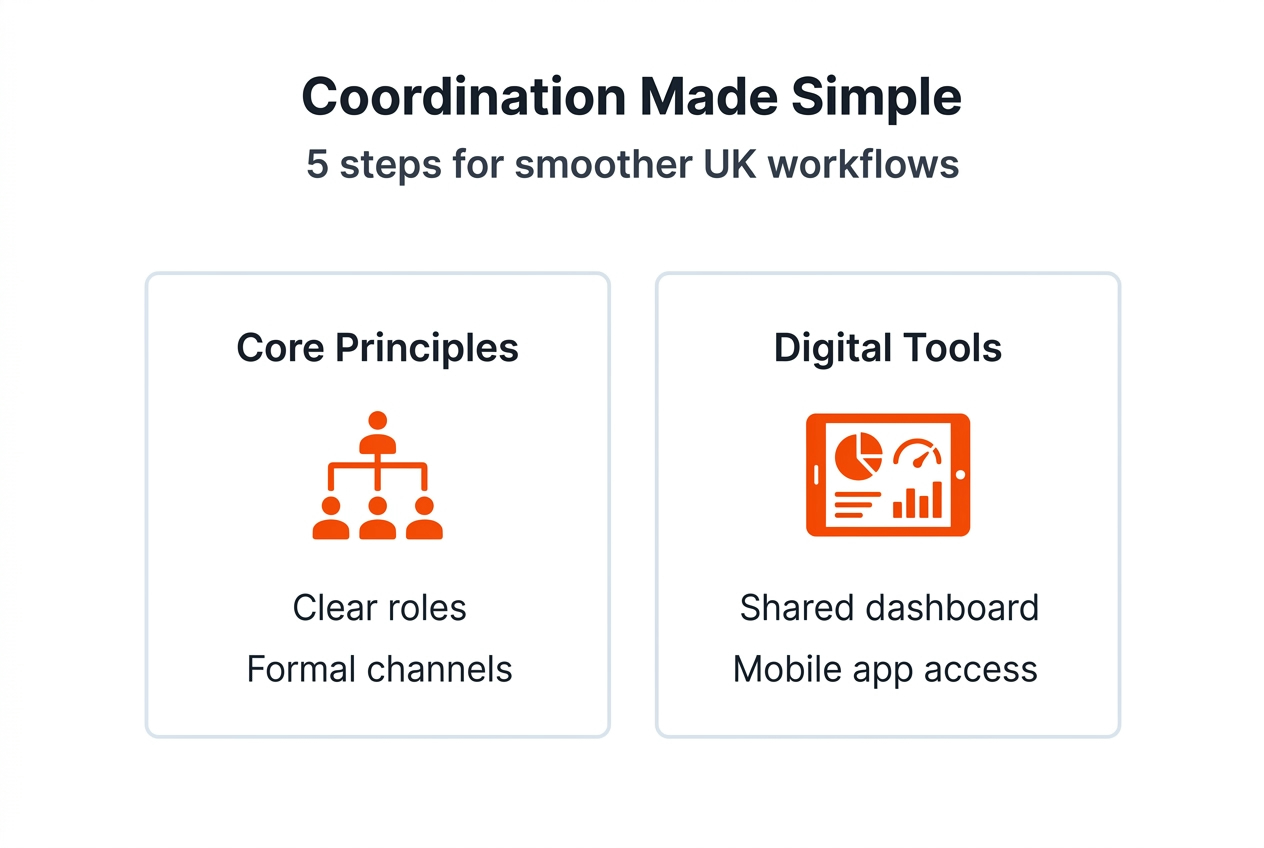
Effective project control involves planning, monitoring, reporting, and analysing with numerous recommendations to improve implementation. These interconnected activities create a control loop that keeps projects on track. Planning sets expectations, monitoring tracks reality, reporting communicates status, and analysis identifies improvement opportunities.
Follow this sequence to embed coordination tools into your workflow:
- Conduct a coordination audit identifying current pain points and inefficiencies across your projects.
- Select digital communication software that centralises messages, documents, and updates in one accessible platform.
- Define escalation paths specifying how urgent issues get flagged and resolved quickly.
- Establish regular check-in rhythms including daily site briefings, weekly progress reviews, and monthly stakeholder updates.
- Train all team members on tool usage through hands-on sessions rather than theoretical presentations.
- Implement feedback mechanisms encouraging teams to suggest process improvements based on field experience.
- Track key metrics like response times, task completion rates, and rework incidents to measure coordination effectiveness.
- Iterate on processes quarterly, incorporating lessons learned and adapting to changing project needs.
Digital platforms excel at transparency. Use shared dashboards displaying project health metrics that stakeholders can access anytime. This visibility reduces status update requests and builds client confidence through proactive communication.
| Aspect | Traditional Coordination | Modern Digital Coordination |
|---|---|---|
| Information Access | Fragmented across emails, calls, and paper | Centralised in single platform |
| Update Speed | Hours to days for status changes | Real-time updates visible instantly |
| Decision Making | Delayed by communication lag | Faster with immediate data access |
| Accountability | Unclear ownership and audit trails | Clear assignment and complete history |
| Team Training | Minimal, relies on experience | Structured onboarding and ongoing support |
| Cost of Errors | High due to rework and delays | Reduced through early issue detection |
Regular progress monitoring transforms from administrative burden to strategic advantage when supported by proper tools. Automated reporting generates status updates without manual compilation, freeing managers to analyse trends rather than gather data. Look for platforms offering customisable reports that address different stakeholder needs, from detailed task lists for site supervisors to high-level summaries for clients.
Team training determines whether technology investment pays off. Schedule dedicated training sessions where team members practise using tools with real project scenarios. Provide quick reference guides and designate superusers who colleagues can consult when questions arise. Ongoing training matters as much as initial onboarding, particularly when platforms release new features or teams expand.
Continuous optimisation separates good coordination from great execution. Review processes monthly, examining metrics like communication response times, task completion rates, and client satisfaction scores. Identify patterns in delays or errors, then adjust protocols accordingly. This data-driven approach ensures your coordination systems evolve based on performance rather than guesswork.
For specific strategies reducing rework through better communication, explore how a refined construction communication workflow cuts rework by 52% in UK projects. Access purpose-built construction software for builders designed to implement these best practices without extensive customisation.
Streamline your project coordination with BRCKS software
Managing coordination challenges demands purpose-built tools that understand construction workflows. BRCKS centralises all project communication, replacing the chaos of multiple apps with a single organised platform. Whether you specialise in general building, electrical installations, or plumbing systems, BRCKS offers tailored features addressing your specific coordination needs.

The platform integrates scheduling, task management, and real-time messaging alongside document sharing and progress reporting. Mobile apps for iOS and Android ensure site teams stay connected without laptop dependency. With five-minute setup and intuitive design, your team can transition smoothly without lengthy training cycles. BRCKS helps you deliver projects on time and on budget through coordination that actually works. Explore specialised solutions for builders, electricians, and plumbers that transform how UK construction teams collaborate.
FAQ
What are the key communication challenges in UK construction projects?
Fragmented communications across multiple platforms create information silos that delay decisions and cause errors. Unclear role definitions lead to duplicated effort or tasks falling through gaps entirely. These coordination failures directly cause the cost and time overruns plaguing UK residential projects.
How does technology improve project coordination onsite?
Digital tools centralise project information in accessible platforms, eliminating the delays inherent in email chains and phone tag. Real-time updates ensure everyone works from current data, whilst mobile access lets site teams report progress and issues instantly. VoIP telephony enhances communication quality whilst reducing costs compared to traditional phone systems. For comprehensive oversight strategies, review this construction site monitoring guide for UK builders.
What practical steps can managers take to enhance coordination?
Start by defining precise roles and responsibilities, then establish formal communication channels for different message types. Train staff thoroughly on digital coordination tools and lean principles that eliminate workflow waste. Implement regular progress monitoring using established project control methods that track planning, execution, and outcomes. For subcontractor-specific strategies, explore approaches to managing subcontractors in UK construction projects effectively.
How long does it take to see coordination improvements after implementing new tools?
Most teams notice measurable improvements within two to three weeks of adopting digital coordination platforms. Initial gains come from reduced time spent searching for information and faster response to site queries. Deeper benefits like reduced rework and improved client satisfaction emerge over subsequent months as processes mature and teams optimise workflows based on data insights.
Recommended
- BRCKS | Construction Project Communication Software
- BRCKS | Construction Project Communication Software
- BRCKS | Construction Project Communication Software
- BRCKS | Construction Project Communication Software
- Lightning subcontractors: collaborative management – LPS Manager
How BRCKS Can Help
Improving coordination across UK construction sites is essential for reducing delays and ensuring project success. By integrating BRCKS into your daily operations, you can bridge the gap between site teams and the office through real-time updates and centralised communication. Our platform is designed to simplify complex workflows, allowing you to focus on delivering quality results rather than managing administrative friction. We invite you to discover how BRCKS can transform your project management by exploring our features today. Learn more at BRCKS.