Digital communication strategies for construction teams
Learn how to build a robust digital communication framework that bridges the gap between the site and the office while ensuring regulatory compliance.
By James Shorter ·
Digital communication strategies for construction teams
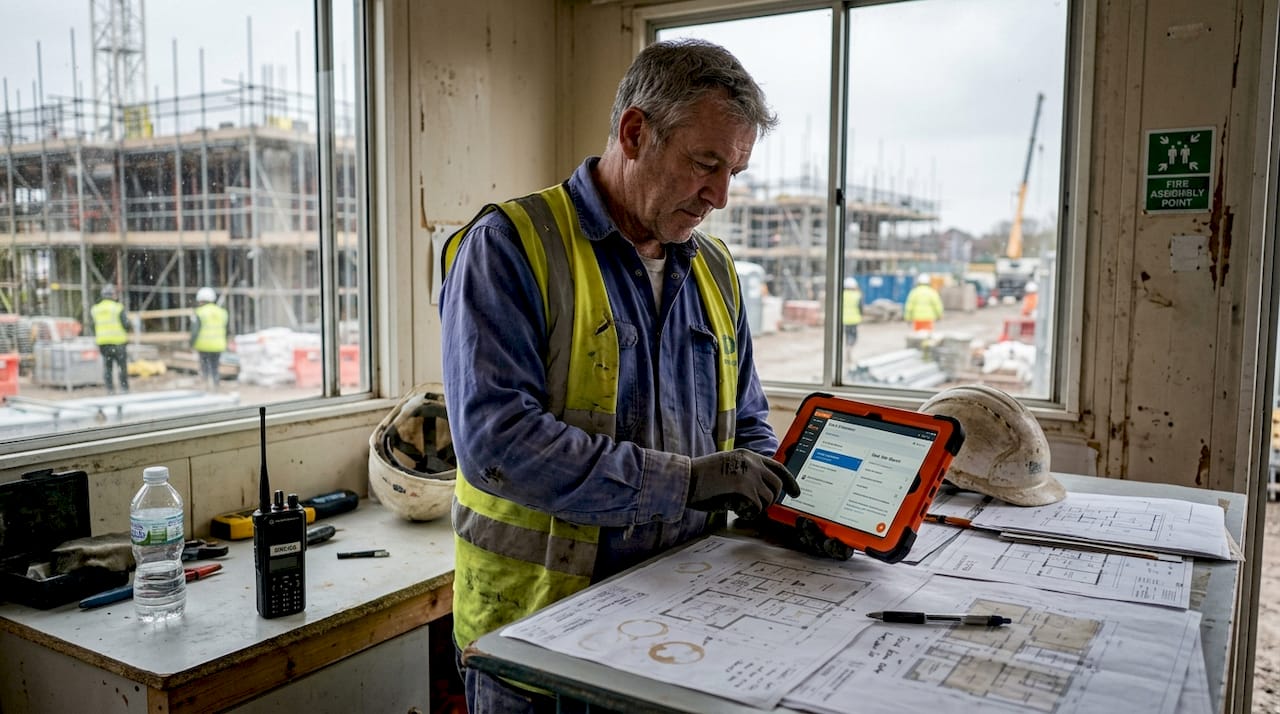 A purpose-built construction snagging software keeps these items tracked through to sign-off.
TL;DR:
- Choosing the right digital communication strategies in construction requires establishing a clear framework before selecting tools to prevent data loss and process confusion.
- Implementing a tiered approach and considering site realities, compliance, and user adoption are essential for effective project coordination.
Choosing the right digital communication strategies in construction can make or break a project. When critical information gets lost across emails, WhatsApp chats, and verbal updates on site, communication breakdown causes rework that costs time and money. UK construction teams face added pressures: patchy mobile signals, Building Safety Act compliance, subcontractor coordination, and client expectations that have never been higher. This article gives you a clear framework to evaluate your options, compare the leading tools, and build a strategy that actually works on site and in the office.
Table of Contents
- Key takeaways
- 1. Why digital communication strategies in construction need a framework
- 2. Top digital communication tools for UK construction projects
- 3. Comparing tools against criteria for UK construction SMEs
- 4. How to implement digital communication strategies on site
- My honest view on digital communication in construction
- How Brcks supports your digital communication strategy
- FAQ
Key takeaways
| Point | Details |
|---|---|
| Process before platform | Define escalation protocols and channel rules before choosing any tool. |
| Use a tiered approach | Separate formal documentation from real-time coordination to prevent data loss. |
| Plan for site realities | Mobile-first tools must include SMS or PTT fallback for weak-signal areas. |
| Compare on fit, not features | Assess tools against UK regulatory needs, team size, and field adoption. |
| Implement and iterate | Train site teams properly and review communication performance regularly. |
1. Why digital communication strategies in construction need a framework
Most project managers pick a tool and hope teams use it correctly. That rarely works. The real problem is not the software. It is the absence of a communication framework that tells every person on the project when to use which channel, what counts as a formal record, and who is responsible for escalation.
A tiered approach is the starting point. Standardising channels prevents data loss in fragmented email threads or consumer messaging apps. Tier one covers formal documentation: contracts, RFIs, inspection records, snagging lists, and Building Safety Act compliance documents. Tier two covers real-time coordination: task updates, daily briefings, and quick queries between site and office.
Without this separation, every channel becomes a dumping ground. Site managers ignore notifications because there are too many. Critical defect reports get buried under banter. Decisions get made verbally and never recorded.
Key criteria to assess any strategy or tool against:
- Process fit. Does the tool enforce your defined channel rules, or does it let people use it however they like?
- UK site realities. Mobile communication needs fallback options such as SMS or push-to-talk over LTE for areas with weak cellular signal.
- Regulatory alignment. Can the tool store and retrieve documentation required under the NHBC technical standards or the Building Safety Act?
- User adoption. Field teams will not use software that requires lengthy training or complex logins on site.
- Integration. Does it connect with your existing estimating, scheduling, or finance tools?
- Security. Where is data stored? Is it UK-compliant?
Pro Tip: Before trialling any platform, write down your current communication flow: who sends what, to whom, and how decisions get recorded. If you cannot map it clearly, no tool will fix that for you.
2. Top digital communication tools for UK construction projects
The market has matured significantly, but not every tool is built for the realities of a UK construction site. Here is an honest breakdown of the main categories.
Project management platforms with collaboration features
Platforms like Aconex and similar BIM-integrated systems centralise formal documentation and RFI workflows. They are well-suited to larger projects where audit trails and multi-party document control are non-negotiable. For SMEs, the cost and complexity often outweigh the benefit.
Mobile-first communication apps with fallback options
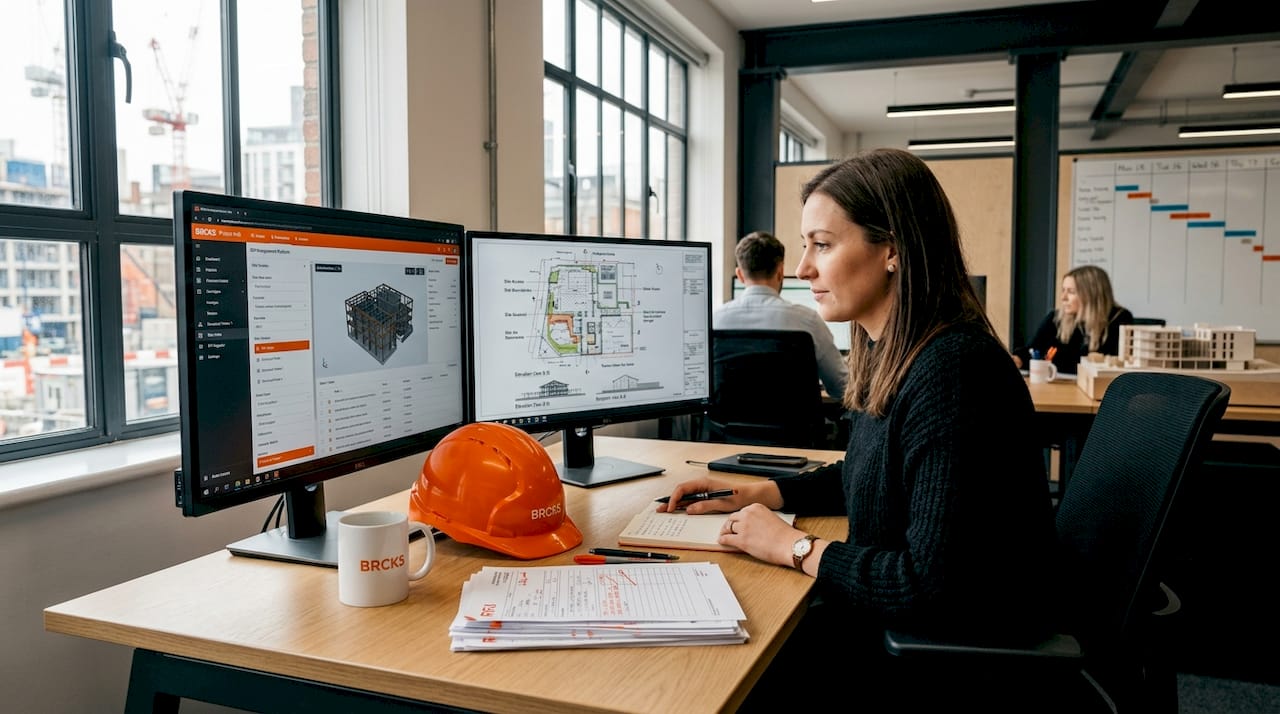
Critical alerts must always reach teams even with low bandwidth. Tools that combine cloud-based messaging with PTT (push-to-talk) over LTE fill this gap. They are particularly useful on large sites where radio communication has historically been the norm.
AI-powered tools for call routing and task management
Missed calls cause project delays and lost revenue. AI-powered call routing and central dashboards keep field teams, office staff, and subcontractors connected regardless of who is on site at any given moment. 80% of commercial contractors expect AI-integrated communication to become standard within three years, largely because of skills shortages and the growing complexity of risk management.
Visual intelligence tools for site reporting
Visual-first reporting with photos and 360-degree site captures reduces the burden of written updates and produces audit-ready records without asking site staff to type lengthy reports. Tools that use AI to eliminate manual transcription of handwritten notes, such as BoardScan, save significant time during planning stages and support cleaner digital records.
WhatsApp-native tools adapted for construction workflows
Most UK site teams are already using WhatsApp. The problem is that consumer WhatsApp has no structure: no task assignment, no file version control, no audit trail. Brcks is built specifically to work within the WhatsApp environment that teams already know, while adding the project management structure that construction requires. It covers project updates, checklists, file sharing, team chat, meeting recordings, and client portals in a single platform. You get the adoption rates of a familiar app with the governance of a proper project management tool.
3. Comparing tools against criteria for UK construction SMEs
Different tools suit different team sizes, project types, and budgets. This comparison focuses on the criteria that matter most for UK construction SMEs.
| Tool type | Field adoption | Regulatory documentation | Cost for SMEs | Real-time coordination | Security and data governance |
|---|---|---|---|---|---|
| BIM-integrated platforms | Low (steep learning curve) | Strong (built for audit trails) | High (licence cost plus setup) | Moderate | Strong (enterprise-grade) |
| PTT mobile apps | High (familiar interface) | Weak (voice-first, poor records) | Low to moderate | Very high | Moderate |
| AI call routing tools | Moderate (office-focused) | Moderate (call logs only) | Moderate | High | Moderate |
| Visual reporting tools | High (photo-based, minimal typing) | Strong (photo audit trails) | Moderate | Moderate | Moderate to strong |
| WhatsApp-native platforms (e.g. Brcks) | Very high (familiar app) | Moderate to strong (structured records) | Low to moderate | Very high | Strong (purpose-built for construction) |
The pattern here is clear. The tools with the highest field adoption tend to be those that require the least behavioural change from site teams. Brcks sits at an interesting point because it does not ask site teams to abandon WhatsApp. It builds on top of it.
Construction firms typically invest 2% to 5% of annual revenue on digital communication infrastructure. For a £2 million turnover business, that is £40,000 to £100,000 per year. Getting the tool selection wrong is an expensive mistake, which makes the evaluation criteria in section one even more important.
4. How to implement digital communication strategies on site
Choosing the right tool is only half the work. Implementation is where most strategies fail. Here is a practical sequence that works for both small builders and larger site operations.
1. Define communication roles before the project starts. Every project needs a communication matrix: who owns which channel, who is responsible for formal sign-off, and what the escalation path is when something goes wrong. Defining these roles pre-construction prevents the confusion that leads to missed instructions and duplicated effort.
2. Formalise your channel rules. Decide which tool carries which type of message. Site photos go to the visual reporting channel. Contract amendments go through the formal document system. Quick coordination happens in the real-time chat. Clear rules prevent information silos and stop people making decisions in the wrong place.
3. Run a short onboarding session before work starts. Not a full day of training. Thirty minutes with the site team, showing them exactly where to find updates, how to log a defect, and how to escalate an urgent issue. Buy-in from the site manager is the single biggest factor in whether the rest of the team follows.
4. Set measurable communication benchmarks. Track how quickly RFIs are responded to, how many updates are logged per day, and whether defect reports are being raised and closed in the system rather than verbally. These numbers tell you whether the strategy is working.
5. Review and adjust at each project stage. Communication needs change between pre-construction, structural works, fit-out, and snagging. What works during groundworks may not suit a final inspection. Build a review point into your stage gates.
6. Avoid letting platforms become noise generators. Without clear process rules, tools overwhelm users with notifications and the important messages get ignored. Mute non-urgent channels during site hours if needed. Keep the signal-to-noise ratio high.
Pro Tip: Ask your site manager to name the three most common communication failures on your last project. Then check whether your new tool and process directly address each one. If it does not, keep adjusting before you go live.
My honest view on digital communication in construction
I have watched teams spend serious money on enterprise project management platforms and still run the project on WhatsApp and phone calls. The software was not the problem. The process was never defined.
What I have learned is that the tools people actually use are the ones that require the least friction. Not the most feature-rich. Not the ones with the most impressive demo. The ones that feel like a natural extension of how the team already works. That is why I think the case for WhatsApp-native tools like Brcks is stronger than most people in this sector will admit publicly. Site teams are already on WhatsApp. You are not asking them to adopt new behaviour. You are giving structure to behaviour that exists.
I also think improving communication in construction is undervalued as a risk management tool. Most project overruns I have seen trace back to a decision that was made without the right people knowing about it. A missed RFI. A subcontractor who was not told about a design change. A snagging item that was logged verbally and then forgotten. These are not technology failures. They are process failures that technology could have prevented if the right structure had been in place from day one.
The digital tools are genuinely good now. The gap is almost always in how they are deployed.
— James
How Brcks supports your digital communication strategy
If you are looking to put the framework from this article into practice without stitching together five different tools, Brcks is worth a close look.
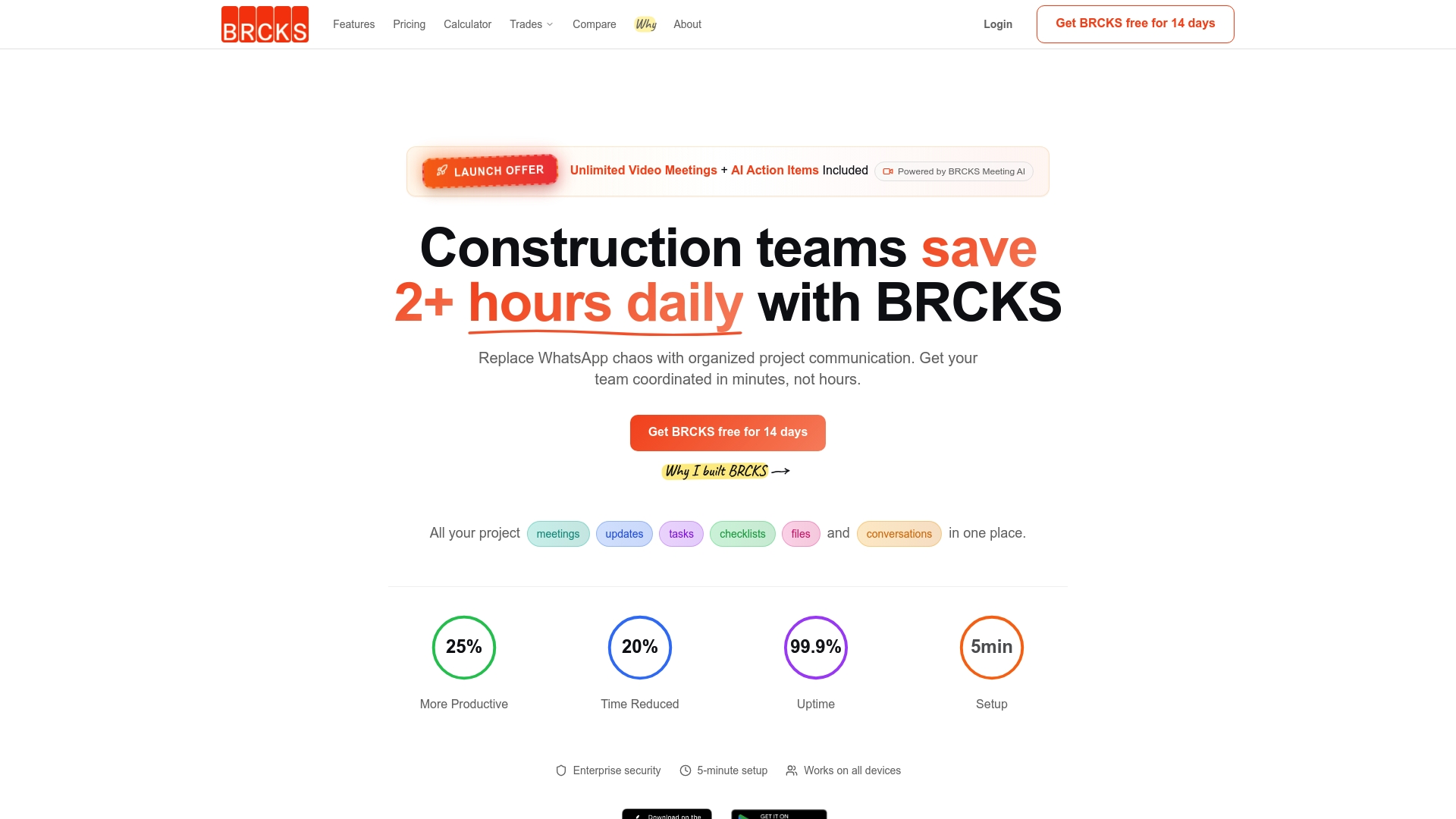
Brcks is purpose-built for UK construction teams. It handles formal and informal communication in a single platform. Project updates, checklists, file sharing, client portals, and team chat all sit together. The WhatsApp integration means your site teams adopt it without resistance. The AI-powered search and automation reduce manual effort and save teams over two hours daily. Subcontractor access is free, which removes the usual barrier of getting the whole supply chain onto one system. For builders, the Brcks platform for builders is a practical starting point. Electricians and specialist trades can explore Brcks for electricians. Try it free for 14 days and see whether it fits your projects.
FAQ
What are digital communication strategies in construction?
Digital communication strategies in construction are structured plans that define which tools and channels teams use for different types of information, from formal documentation to real-time site coordination, to reduce errors and keep projects on track.
How do I choose the right construction communication tool for a small builder?
Prioritise tools with high field adoption, low setup cost, and clear audit trails for regulatory documents. WhatsApp-native platforms often work well for small teams because they require minimal behavioural change from site staff.
Why does mobile fallback matter on UK construction sites?
Many UK sites have weak or intermittent cellular signals. Mobile tools need SMS or PTT fallback to make sure critical safety alerts and coordination messages always get through, regardless of signal strength.
How does the Building Safety Act affect construction communication?
The Building Safety Act requires clearer accountability and audit trails for higher-risk buildings. Digital tools that store formal records, manage document versions, and track who approved what are now more important than ever for compliance.
What is the biggest mistake teams make with digital communication tools?
Adopting a tool without first defining process rules. Without clear escalation protocols and channel guidelines, platforms become cluttered with notifications and critical information gets lost, which defeats the purpose of going digital in the first place.
Recommended
- Ditch WhatsApp for Construction Project Comms | BRCKS | BRCKS
- The Hidden 11% Cost: How Poor Communication Between Trades Is Destroying Your Construction Budget | BRCKS
- The Hidden £13 Billion Cost: How Construction Communication Problems Are Crippling UK Projects | BRCKS
- Cloud Communication for UK Construction Teams | BRCKS
How BRCKS Can Help
Effective digital communication is no longer a luxury but a necessity for modern construction teams looking to reduce errors and stay on schedule. By integrating your project updates and team dialogues into a single, streamlined platform, BRCKS removes the friction of fragmented messaging and ensures everyone stays aligned from the office to the site. Our software is purpose-built to simplify these complex workflows, allowing you to focus on the build rather than the paperwork. We invite you to explore how BRCKS can transform your project delivery by booking a demo or starting a free trial today. Learn more at BRCKS and explore our full feature set.