Construction site safety checklist for UK builders 2026
Discover how to implement a robust construction site safety checklist to reduce accidents and ensure full compliance with UK CDM 2015 regulations.
By James Shorter ·
Construction site safety checklist for UK builders 2026
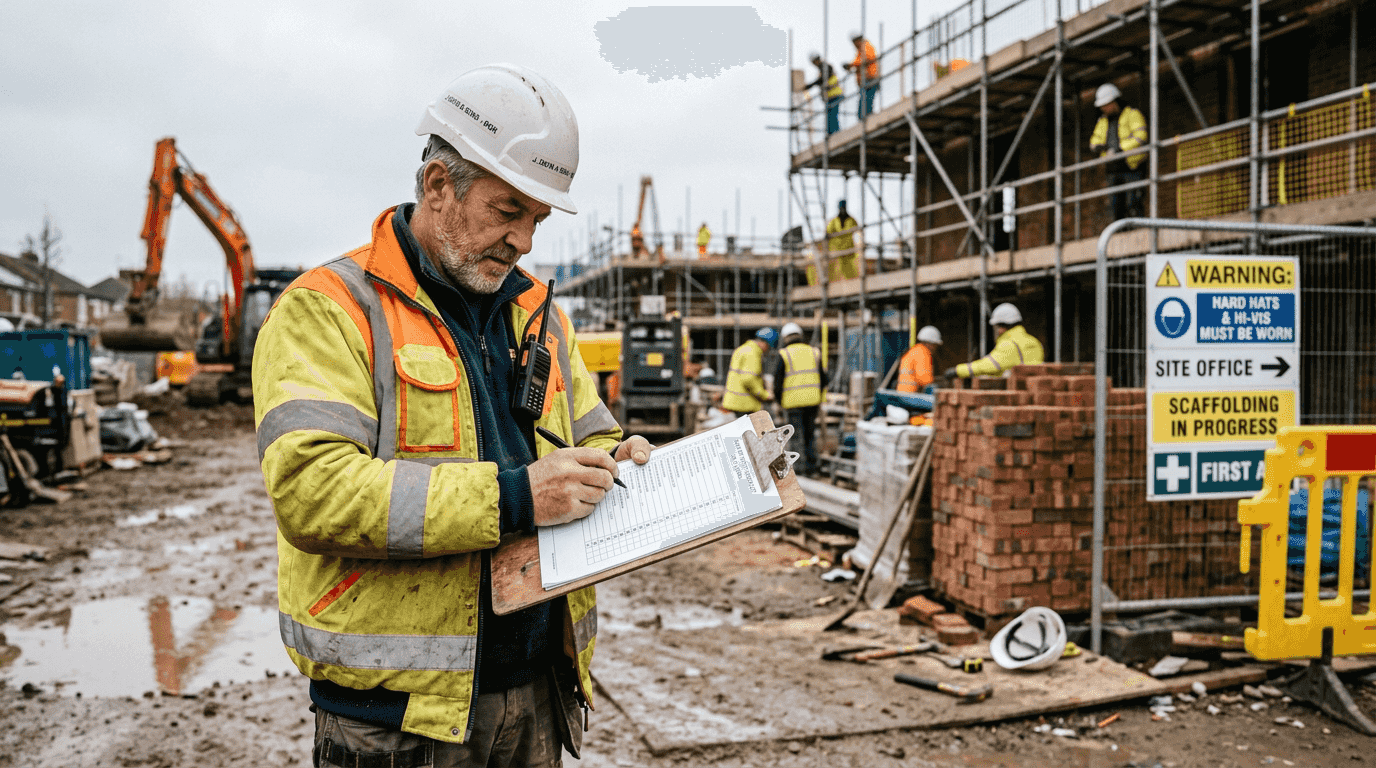 A purpose-built construction snagging software keeps these items tracked through to sign-off.
Maintaining safety on residential construction sites demands more than good intentions. With falls from height causing 40% of construction fatalities, project managers need systematic approaches to risk management. A comprehensive, tailored safety checklist provides the framework to identify hazards, enforce controls, and demonstrate compliance with UK regulations. This guide examines how to evaluate, select, and implement effective safety checklists that reduce incidents whilst meeting Construction Design and Management requirements. You’ll discover the essential components, compare delivery formats, and learn practical strategies to embed checklists into daily site operations for measurable safety improvements.
Table of Contents
- How To Evaluate And Select Checklist Criteria
- Key Components Of An Effective Construction Site Safety Checklist
- Comparing Manual And Digital Construction Safety Checklists
- Best Practices For Implementing Construction Site Safety Checklists
- How BRCKS Software Supports Your Construction Site Safety Checklist Needs
- Frequently Asked Questions
Key takeaways
| Point | Details |
|---|---|
| Effective checklists reduce incidents | Properly implemented safety checklists can decrease site accidents by 30 to 40% through systematic hazard identification. |
| Regular inspections essential | Daily and weekly checks covering PPE, scaffolding, and site conditions ensure continuous compliance and early hazard detection. |
| Digital tools improve efficiency | Mobile checklist applications save 15 to 20% inspection time whilst enabling instant data sharing and trend analysis. |
| Tailoring maximises effectiveness | Checklists must reflect specific project activities, site conditions, and evolving regulatory requirements to remain relevant. |
| Compliance mitigates legal risks | Documented checklist processes demonstrate due diligence under CDM 2015 and protect against prosecution following incidents. |
How to evaluate and select checklist criteria
Choosing the right safety checklist starts with understanding your project’s unique risk profile. Small residential extensions present different hazards than multi-unit developments, so generic templates often miss critical site-specific dangers. Your checklist must align with actual work activities, from groundworks through to final finishes.
Checklists should be tailored to specific projects and regularly updated as site conditions evolve. A static document quickly becomes irrelevant when trades change, new materials arrive, or weather conditions shift. Establish a review schedule, typically weekly for active sites, to incorporate emerging risks and regulatory updates.
Integration into site culture determines whether checklists become valued tools or ignored paperwork. Workers must understand how checklists protect them personally, not just satisfy management requirements. When teams participate in checklist development, identifying hazards from their daily experience, compliance improves dramatically. Managing subcontractors effectively requires ensuring they understand and follow your checklist protocols from day one.
Regulatory compliance forms the foundation of any construction safety checklist. Your system must address Construction Design and Management Regulations 2015, Work at Height Regulations 2005, and relevant HSE guidance for your activities. Treating checklists as mere formality rather than active risk management tools undermines their protective value and leaves you exposed to prosecution.
Pro Tip: Test your checklist with frontline workers before full implementation. Their feedback reveals unclear items, missing hazards, and practical usability issues that desk-based reviews miss.
Clarity and usability matter as much as comprehensive coverage. Overly complex checklists with ambiguous questions generate inconsistent responses and incomplete inspections. Each item should require a clear yes, no, or not applicable answer, with space for brief notes on corrective actions needed.
Key components of an effective construction site safety checklist
Every construction site safety checklist must begin with mandatory induction procedures. All workers and visitors require site inductions covering emergency arrangements, PPE requirements, hot works procedures, traffic management routes, and restricted areas. Document attendance with signatures and dates to demonstrate compliance during inspections.
Site rules form the operational framework that checklists verify. Your documented rules should address:
- Emergency assembly points and evacuation procedures
- Minimum PPE standards for different work zones
- Permit systems for high-risk activities
- Vehicle movement protocols and pedestrian segregation
- Welfare facilities location and maintenance standards
Risk controls for common hazards require specific checklist sections. Falls from height remain the leading cause of construction fatalities, demanding rigorous edge protection verification. Your checklist must confirm:
- Scaffold inspection tags are current and accessible
- Edge protection meets minimum height and strength requirements
- Fragile roof warnings are displayed where applicable
- Ladder securing and angle comply with regulations
- Harness anchor points are tested and certificated
Regular risk assessments and documented inspections create the audit trail that protects your business. Weekly formal inspections should complement daily supervisor checks, with findings recorded and actions tracked to closure. Construction site monitoring becomes systematic rather than reactive when checklists guide inspectors through consistent evaluation criteria.

Construction Design and Management Regulations 2015 impose specific duties on principal designers, principal contractors, and contractors. Your checklist should clarify these duty holders for your project and verify that each party fulfils their legal obligations. This includes confirming that construction phase plans exist, are current, and are communicated to all relevant parties.
Environmental and neighbour considerations deserve checklist attention on residential sites. Noise limits, working hours restrictions, dust suppression measures, and waste segregation often feature in planning conditions. Non-compliance generates complaints, enforcement notices, and reputational damage that systematic checking prevents.
Comparing manual and digital construction safety checklists
Traditional paper checklists offer simplicity and universal accessibility. Any worker can complete a printed form without training, devices, or connectivity concerns. For small sites with limited technology adoption, paper remains practical and cost-effective. Storage and retrieval present challenges, but filing systems work adequately for operations managing few concurrent projects.
Digital checklist solutions deliver significant efficiency gains for growing businesses. Mobile applications improve inspection efficiency by 15 to 20% through features like pre-populated fields, photo capture, and automatic timestamps. Data flows instantly to project managers and safety officers, enabling rapid response to identified hazards. Analytics reveal trends across sites, highlighting systemic issues that individual paper forms obscure.
| Feature | Manual checklists | Digital checklists |
|---|---|---|
| Initial cost | Low, printing only | Moderate, software subscription |
| Completion time | Standard baseline | 15 to 20% faster |
| Data accessibility | Delayed, requires filing | Instant, cloud-based |
| Trend analysis | Manual compilation needed | Automated dashboards |
| Photo documentation | Separate camera required | Integrated capture |
| Audit trail | Paper storage risks | Secure, timestamped records |
Digital adoption challenges centre on workforce capability and site conditions. Construction teams vary in digital literacy, requiring training investment and ongoing support. Connectivity issues on remote sites or in steel-framed structures interrupt digital workflows. Battery life and device durability matter when inspectors work full days in harsh conditions.
Pro Tip: Hybrid approaches work well during transition periods. Use digital checklists for formal weekly inspections whilst maintaining paper forms for quick daily checks until teams gain confidence with new systems.
Selecting the right format depends on your operation’s scale and ambitions. Single-site builders managing tight margins may find paper adequate, whilst companies targeting growth need digital inspection software to scale quality processes efficiently. Consider your current pain points: if finding historical records frustrates you, digital solutions solve that immediately.
Best practices for implementing construction site safety checklists
Successful checklist implementation starts with comprehensive, site-specific inductions for everyone entering your site. Generic safety briefings fail to address the actual hazards workers will encounter. Walk new starters through your checklist items, explaining why each matters and how their actions directly impact safety outcomes. This contextual understanding transforms compliance from obligation to personal responsibility.
Incorporate checklists into daily safety briefings and toolbox talks. Worker training and routine discussions referencing checklists raise compliance by 20% compared to occasional reminders. When supervisors review previous day’s findings and preview today’s critical checks, teams understand that checklists drive continuous improvement rather than periodic box-ticking exercises.
Prompt action on identified issues determines whether checklists prevent incidents or merely document failures. Establish clear escalation procedures:
- Minor issues: supervisor resolves immediately
- Moderate risks: site manager addresses within 24 hours
- Serious hazards: work stops until controls implemented
- Systemic problems: project review and corrective action plan
Consistent checklist use and immediate corrective actions prove critical for effectiveness. Delayed responses signal that safety takes lower priority than programme, undermining the entire system.
Regular checklist updates maintain relevance as projects progress. Monthly reviews should assess whether current items still apply, new activities require additional checks, and regulatory changes demand incorporation. Involve workers in these reviews, as they spot practical issues that office-based managers miss. Effective site communication workflows ensure updates reach all teams promptly.
Foster a safety culture where checklists represent valued protection tools rather than bureaucratic burdens. Recognise workers who identify hazards through checklist processes. Share near-miss learnings that checklists revealed, demonstrating their preventive power. When teams see tangible benefits from systematic checking, engagement becomes self-sustaining rather than management-driven.
“Safety checklists only work when everyone understands their purpose and sees management acting on findings. Token compliance achieves nothing.” HSE Inspector, 2026
Measure and communicate checklist performance through simple metrics. Track completion rates, response times for corrective actions, and incident trends. Celebrate improvements publicly whilst addressing gaps privately. Transparency builds trust that safety genuinely matters to leadership, not just when inspectors visit.
How BRCKS software supports your construction site safety checklist needs
Managing safety checklists across multiple sites and trades creates coordination challenges that traditional methods struggle to solve. BRCKS provides construction-specific digital tools that centralise safety documentation, enabling real-time visibility of compliance status across your entire operation. The platform’s mobile applications let site teams complete inspections offline, with data syncing automatically when connectivity returns.
BRCKS transforms safety management from reactive paperwork into proactive risk control. Automated reminders ensure inspections happen on schedule, whilst photo documentation capabilities create visual evidence of conditions and corrective actions. The unified project feed keeps safety communications separate from commercial discussions, preventing critical alerts from drowning in message threads. For builders, plumbers, and other trades, BRCKS delivers the organised approach that small to medium companies need to meet UK regulations efficiently. Compare BRCKS to WhatsApp to see how purpose-built construction software outperforms improvised communication tools for safety-critical processes.
Frequently asked questions
What is a construction site safety checklist?
A construction site safety checklist is a structured document that guides systematic inspection of workplace hazards, safety equipment, and regulatory compliance. It ensures consistent evaluation of risks across shifts and personnel, creating documented evidence of due diligence. Effective checklists are project-specific, covering relevant activities from access arrangements through to waste management, and form part of your overall safety management system under CDM 2015.
How often should safety checklists be used on construction sites?
Daily supervisor checks should verify immediate hazards like weather impacts, new deliveries, and changing work activities. Weekly formal inspections by competent persons assess scaffolding, electrical installations, and overall site conditions. Monthly reviews evaluate checklist effectiveness and identify emerging trends. Frequency increases for high-risk activities or following incidents, ensuring controls remain effective throughout project phases.
What are the main differences between manual and digital safety checklists?
Manual checklists use paper forms that require physical storage and manual data compilation for trend analysis. Digital checklists operate through mobile applications, offering instant data sharing, automated reminders, photo integration, and analytics dashboards. Manual systems cost less initially but consume more administrative time, whilst digital solutions require software investment but deliver efficiency gains of 15 to 20% and superior audit trails for regulatory compliance.
Who is responsible for maintaining and updating safety checklists?
Principal contractors hold overall responsibility for safety management systems, including checklist development and maintenance. Site managers typically oversee daily implementation, ensuring supervisors complete required checks. Safety officers or advisors should review checklist effectiveness monthly, incorporating regulatory updates and lessons from incidents. Construction workflow management clarifies these responsibilities, preventing gaps where critical checks fall between roles.
Why are safety checklists legally important under UK construction regulations?
CDM 2015 requires principal contractors to maintain construction phase plans and monitor compliance throughout projects. Safety checklists provide documented evidence of systematic risk management, demonstrating that you identified hazards and implemented appropriate controls. Following incidents, HSE inspectors examine safety records to assess whether duty holders fulfilled legal obligations. Robust checklist processes prove proactive safety management, potentially mitigating penalties, whilst absent or incomplete records suggest negligence that courts view unfavourably during prosecutions.
Recommended
- BRCKS | Construction Project Communication Software
- BRCKS | Construction Project Communication Software
- BRCKS | Construction Project Communication Software
- BRCKS | Construction Project Communication Software
- Role of Railings in Safety – Impact on Modern Construction – Inoxify
How BRCKS Can Help
Maintaining site safety in 2026 requires more than just a paper checklist; it demands real-time visibility and seamless communication across your entire team. BRCKS simplifies this process by digitising your safety protocols, ensuring that every inspection is logged and every hazard is addressed instantly from the palm of your hand. By integrating these essential safety checks into your daily digital workflow, you can protect your workforce while keeping your projects on schedule and fully compliant with UK regulations. We invite you to discover how BRCKS can strengthen your safety culture by exploring our platform today. Learn more at BRCKS.