Construction handover guide for UK residential projects 2026
A comprehensive guide to navigating the construction handover phase in the UK residential sector, ensuring regulatory compliance and efficient project closeout.
By James Shorter ·
Construction handover guide for UK residential projects 2026
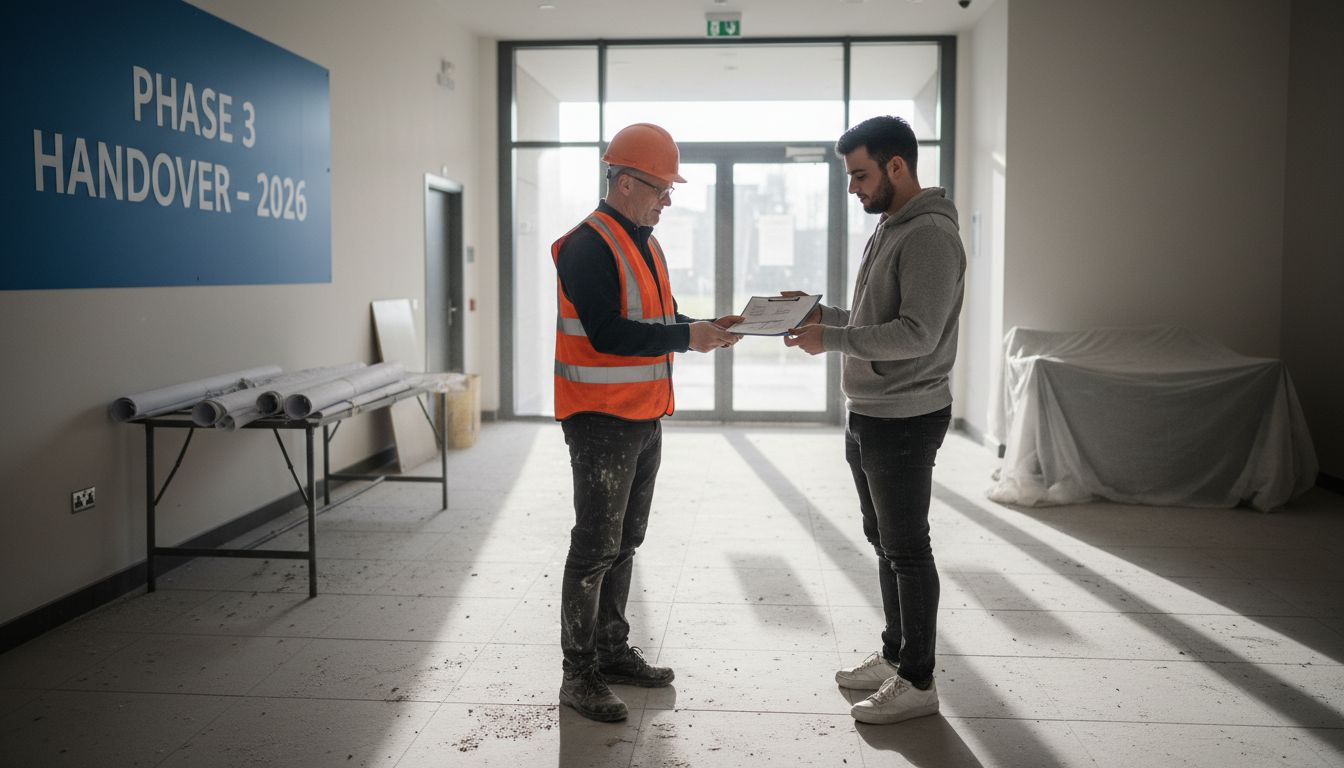 A purpose-built construction snagging software keeps these items tracked through to sign-off.
Construction handover guide for UK residential projects 2026
Construction handovers remain one of the most stressful phases for UK residential project managers. Fragmented communication across WhatsApp, email, and paper documents causes delays, disputes, and incomplete documentation that frustrate clients and delay final payments. This guide walks you through a digital-first, step-by-step handover process that reduces project closeout time by up to 40% whilst improving client satisfaction and ensuring Building Safety Act 2022 compliance.
Table of Contents
- Introduction To Construction Handover In The UK Residential Sector
- Prerequisites: What You Need Before Starting Construction Handover
- Step-By-Step Construction Handover Process For UK Residential Projects
- Using Digital Tools To Streamline And Improve Handover Communication
- Common Mistakes, Failure Points, And How To Avoid Them
- Expected Outcomes, Timelines, And Success Metrics
- Improve Your Construction Handover With BRCKS Software
Key takeaways
| Point | Details |
|---|---|
| Digital handover efficiency | Digital handover tools reduce closeout time by 40% through centralised documents and real-time collaboration. |
| Essential prerequisites | Complete documentation, defined roles, and digital platforms must be ready before handover begins to avoid delays. |
| Stepwise execution | Structured inspections, client training, and formal digital sign-offs ensure quality and regulatory compliance. |
| Common pitfalls | Incomplete documents and unclear responsibilities are the leading causes of handover disputes and payment delays. |
| Success outcomes | Proper handovers accelerate final payments by 30% and significantly boost client satisfaction scores. |
Introduction to construction handover in the UK residential sector
Construction handover is the formal process that transfers building responsibility, documentation, and operational knowledge from contractor to client. This marks the moment when your team hands over keys alongside critical legal and maintenance documents.
Many confuse handover with practical completion, but they’re distinct. Practical completion is a contractual milestone confirming the building is fit for use, triggering defect liability periods. Handover encompasses the broader transfer process including documentation delivery, system training, and final sign-offs.
Under the Building Safety Act 2022 and updated UK building regulations, residential projects face heightened documentation requirements. You must demonstrate compliance with fire safety, structural integrity, and energy performance standards through comprehensive audit trails.
Typical handover components include:
- Operation and maintenance (O&M) manuals detailing building systems and maintenance schedules
- Health and safety files documenting hazards and safe operation procedures
- Asset registers listing all installed equipment with warranty information
- Snagging reports identifying defects requiring rectification
- Compliance certificates proving Building Control and regulatory approval
Thorough documentation isn’t bureaucratic box-ticking. It protects you legally, enables smooth operations for clients, and prevents costly disputes that delay final retention payments. Poor handover communication causes over 25% of UK residential project delays, costing contractors thousands in extended site overheads and damaged reputations.
Prerequisites: what you need before starting construction handover
Rushing into handover without proper preparation guarantees problems. You need four critical elements ready before beginning the formal process.
Essential handover documents form your evidence base. Compile complete O&M manuals covering heating, electrical, plumbing, and ventilation systems with manufacturer specifications and maintenance requirements. Your construction snagging checklist should document all identified defects with photographic evidence and rectification status. Health and safety files must detail any residual hazards, asbestos registers, and emergency procedures. Asset registers list every installed component with serial numbers, warranty details, and supplier contacts.

Digital infrastructure centralises communication and eliminates scattered information. Set up a dedicated project management platform accessible to all stakeholders, replacing fragmented WhatsApp groups and email chains. Cloud storage for documents ensures version control and remote access for sign-offs.
Building Safety Act 2022 knowledge is non-negotiable for residential projects. Understand your obligations around golden thread documentation, building safety cases, and accountable persons. Non-compliance risks enforcement action and project delays.
Clear role definition prevents miscommunication. Assign specific responsibilities for document assembly, inspection coordination, client training, and sign-off management. Missing key documents or unclear participant roles are the primary causes of handover delays.
| Requirement | Description | Responsibility |
|---|---|---|
| O&M manuals | Complete system documentation with maintenance schedules | Main contractor |
| H&S files | Hazard documentation and safety procedures | Principal designer |
| Digital platform | Centralised communication and document repository | Project manager |
| Compliance records | Building Control sign-offs and certificates | Site supervisor |
| Role assignments | Defined handover coordinator and team responsibilities | Senior management |
Pro Tip: Assign a dedicated handover coordinator three months before practical completion. This person owns the checklist, chases outstanding documents, and schedules all inspections, preventing last-minute scrambles.
Step-by-step construction handover process for UK residential projects
Effective handovers follow a logical sequence that builds confidence and captures every detail. Here’s your actionable framework.
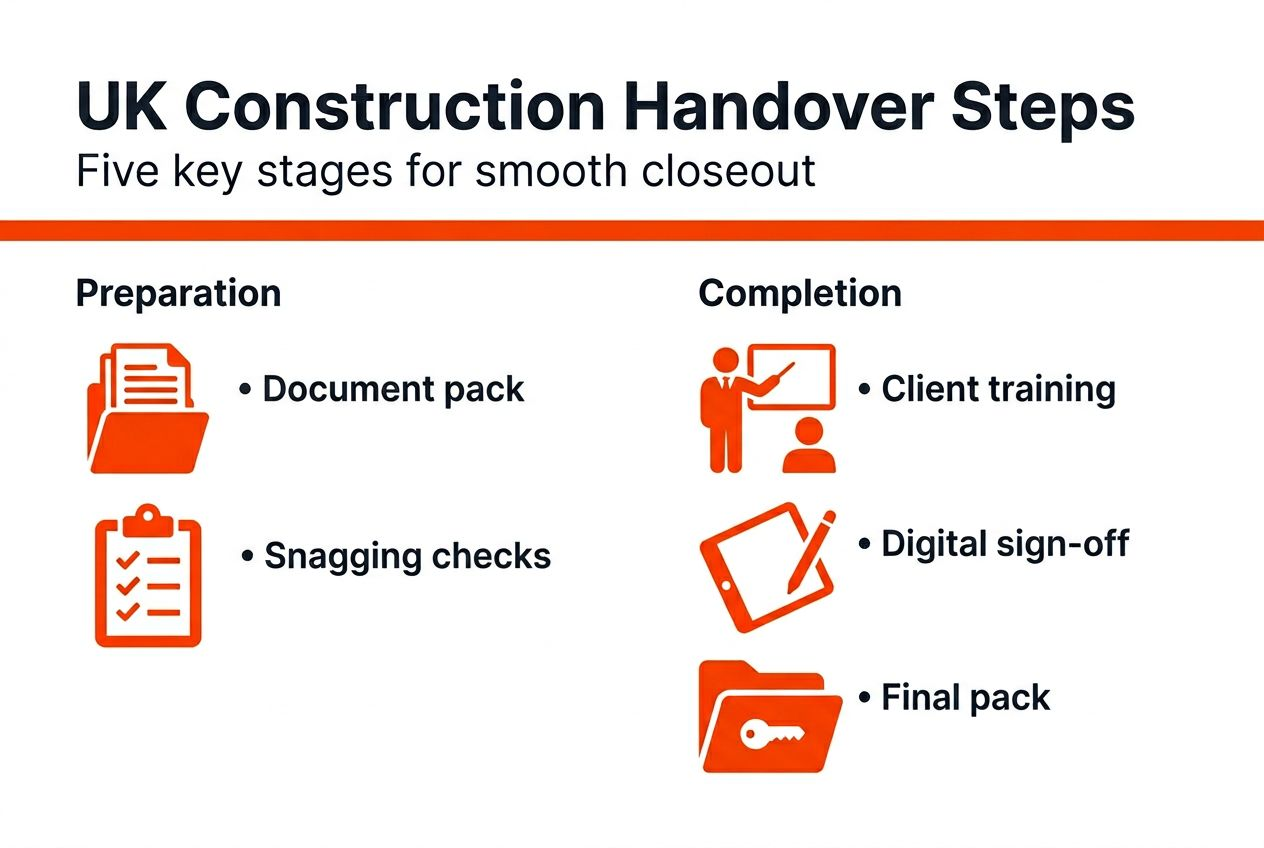
Step 1: Gather and assemble complete handover documents digitally. Upload all O&M manuals, H&S files, compliance certificates, and warranty documentation to your central platform. Organise by system type and ensure consistent naming conventions. Tag documents with metadata for easy search and retrieval. Run a completeness check against your master handover specification three weeks before practical completion.
Step 2: Conduct thorough snagging inspections and close out defects. Walk through every room systematically using a snagging software for handover that captures photos, locations, and severity ratings in real-time. Assign defects to responsible subcontractors with deadline dates. Track rectification progress digitally and obtain photographic evidence of completed fixes. A structured, stepwise approach ensures snagging issues are resolved before final client inspections.
Step 3: Provide comprehensive client training on building systems. Schedule dedicated sessions covering heating controls, ventilation management, electrical panels, and maintenance requirements. Record training videos as reference materials clients can revisit. Demonstrate emergency shut-offs and provide emergency contact lists. This investment in construction communication improvements prevents panicked calls and builds client confidence.
Step 4: Obtain formal digital sign-off from all parties. Circulate final handover documentation for client review with clear approval workflows. Use e-signature tools to capture legal acceptance without scheduling in-person meetings. Ensure all subcontractors confirm work completion and defect rectification.
Step 5: Deliver final digital handover pack accessible to client and facilities managers. Provide a comprehensive digital package containing all documents, training videos, contact details, and warranty information. Grant appropriate access permissions for ongoing reference. Include instructions for accessing support and reporting post-handover issues.
| Handover approach | Average closeout time | Documentation accuracy | Client satisfaction |
|---|---|---|---|
| Traditional (paper-based) | 8-12 weeks | 65-75% complete | 3.2/5 rating |
| Digital stepwise process | 4-6 weeks | 95-98% complete | 4.6/5 rating |
Pro Tip: Schedule handover meetings two weeks after practical completion, not on the same day. This buffer allows time for final defect rectification and document assembly without rushing crucial quality checks.
Using digital tools to streamline and improve handover communication
Digital platforms transform handover from chaotic paperwork into organised, auditable processes that protect all parties.
Centralised document management stores everything in one secure location with version control. No more hunting through email attachments or wondering which O&M manual is current. Cloud-based systems provide instant access for clients, building control officers, and facilities managers without physical document transfer.
Real-time collaboration features enable immediate feedback loops. When a client spots an issue during their inspection, they photograph it within the app, assign it to your team, and receive automatic updates when resolved. Chat functions replace endless email threads with searchable conversations linked directly to relevant documents or tasks.
Mobile app access empowers on-site teams to update statuses, upload photos, and complete checklists without returning to the office. Site supervisors conduct inspections using tablets, instantly syncing findings with back-office teams. This eliminates the data entry lag that delays decision-making.
Automated reporting generates professional handover packs in minutes rather than days. Systems pull together all uploaded documents, inspection records, and sign-offs into branded PDF packages ready for client delivery. Information sharing benefits extend beyond handover into defect liability management and ongoing maintenance.
Audit trails provide legal protection by timestamping every action, document upload, and approval. When disputes arise months later, you have irrefutable evidence of what was delivered, when, and who approved it.
“Digital handover tools reduce project closeout time by up to 40% through centralised documents and real-time collaboration, whilst dramatically improving accuracy and client satisfaction.”
AI-powered features flag missing documents before they cause delays. Systems scan your handover pack against standard requirements and alert you to gaps weeks before practical completion. Smart checklists adapt based on project type, ensuring nothing falls through cracks.
Communication workflow improvements from digital adoption extend far beyond handover efficiency. Teams save over two hours daily by eliminating duplicate data entry, searching for information, and coordinating across multiple platforms.
Common mistakes, failure points, and how to avoid them
Even experiencedteams fall into predictable traps that derail handovers and damage client relationships.
Incomplete or outdated documentation tops the failure list. Over 25% of UK residential projects experience delays because critical documents are missing or contain obsolete information. Fix this by maintaining live digital documents throughout construction, not scrambling to create them at the end. Assign document owners and set interim review milestones at 50%, 75%, and 90% completion.
Unclear role assignments create communication chaos. When nobody owns specific handover tasks, everything becomes everyone’s problem, which means it’s nobody’s priority. Establish a RACI matrix (Responsible, Accountable, Consulted, Informed) at project kickoff, identifying exactly who delivers each document, who approves it, and who needs copies. Fixing communication problems starts with crystal-clear accountability.
Rushed inspections overlook defects that become costly rework or client complaints. Pressure to hit practical completion dates tempts teams to gloss over quality checks. Resist this. Budget adequate time for thorough inspections using detailed checklists. A two-day inspection delay is infinitely cheaper than returning to fix issues post-handover or defending disputes.
Inadequate client training leaves occupants confused and frustrated. Handing over keys with a thick manual nobody reads guarantees support calls and dissatisfaction. Invest in face-to-face demonstrations, create video tutorials for common tasks, and provide laminated quick-reference guides for emergency procedures.
Actionable fixes include:
- Implement digital document registers with real-time status tracking visible to all stakeholders
- Define handover roles and responsibilities in pre-construction meetings, not during closeout chaos
- Schedule inspections with buffer time, using standardised checklists that prevent oversight
- Create client-friendly training materials in plain English, avoiding technical jargon
- Establish regular handover progress reviews starting three months before practical completion
Pro Tip: Appoint a handover coordinator as a standalone role distinct from site management. This person’s sole focus is orchestrating the handover process, chasing subcontractors, and ensuring nothing slips through cracks whilst site managers concentrate on completing physical works.
Expected outcomes, timelines, and success metrics
Knowing what success looks like helps you benchmark performance and justify investment in better handover processes.
Timeline expectations vary dramatically based on your approach. Traditional paper-based handovers typically span 8 to 12 weeks from practical completion to final sign-off, with multiple back-and-forth cycles for document corrections. Digital stepwise processes compress this to 4 to 6 weeks by eliminating document hunting and enabling parallel approvals.
Cost impact extends beyond direct labour. Poor handovers trigger retention delays averaging 8 to 12 weeks, tying up capital and affecting cash flow. Disputes over incomplete documentation cost contractors £15,000 to £40,000 in legal fees and management time per project. Digitally structured handovers accelerate final payment releases by 30% and virtually eliminate documentation disputes.
Client satisfaction improves measurably with professional handover execution. Projects using structured digital handovers score 4.6 out of 5 in client satisfaction surveys compared to 3.2 out of 5 for traditional approaches. Higher ratings translate into repeat business, positive references, and reduced marketing costs. Client communication challenges diminish when you provide organised, accessible information rather than overwhelming paper folders.
Compliance success becomes demonstrable through complete audit trails. When Building Control or warranty providers request documentation, you produce everything instantly rather than scrambling through archives. This audit readiness reduces insurance premiums and protects against enforcement action under Building Safety Act requirements.
| Success metric | Traditional handover | Digital stepwise handover |
|---|---|---|
| Average closeout time | 8-12 weeks | 4-6 weeks |
| Documentation completeness | 65-75% | 95-98% |
| Final payment delay | 8-12 weeks | 3-4 weeks |
| Client satisfaction score | 3.2/5 | 4.6/5 |
| Defect liability disputes | 18-25% of projects | 3-5% of projects |
Benchmark your current performance against these metrics. Track handover duration, document completeness at first submission, client satisfaction ratings, and dispute frequency. Quarterly reviews identify improvement opportunities and demonstrate ROI from process investments.
Improve your construction handover with BRCKS software
Implementing the stepwise digital handover process becomes straightforward with purpose-built construction software. BRCKS centralises all project communication, documents, and handover activities in one organised platform, eliminating the WhatsApp and email chaos that plagues traditional approaches.
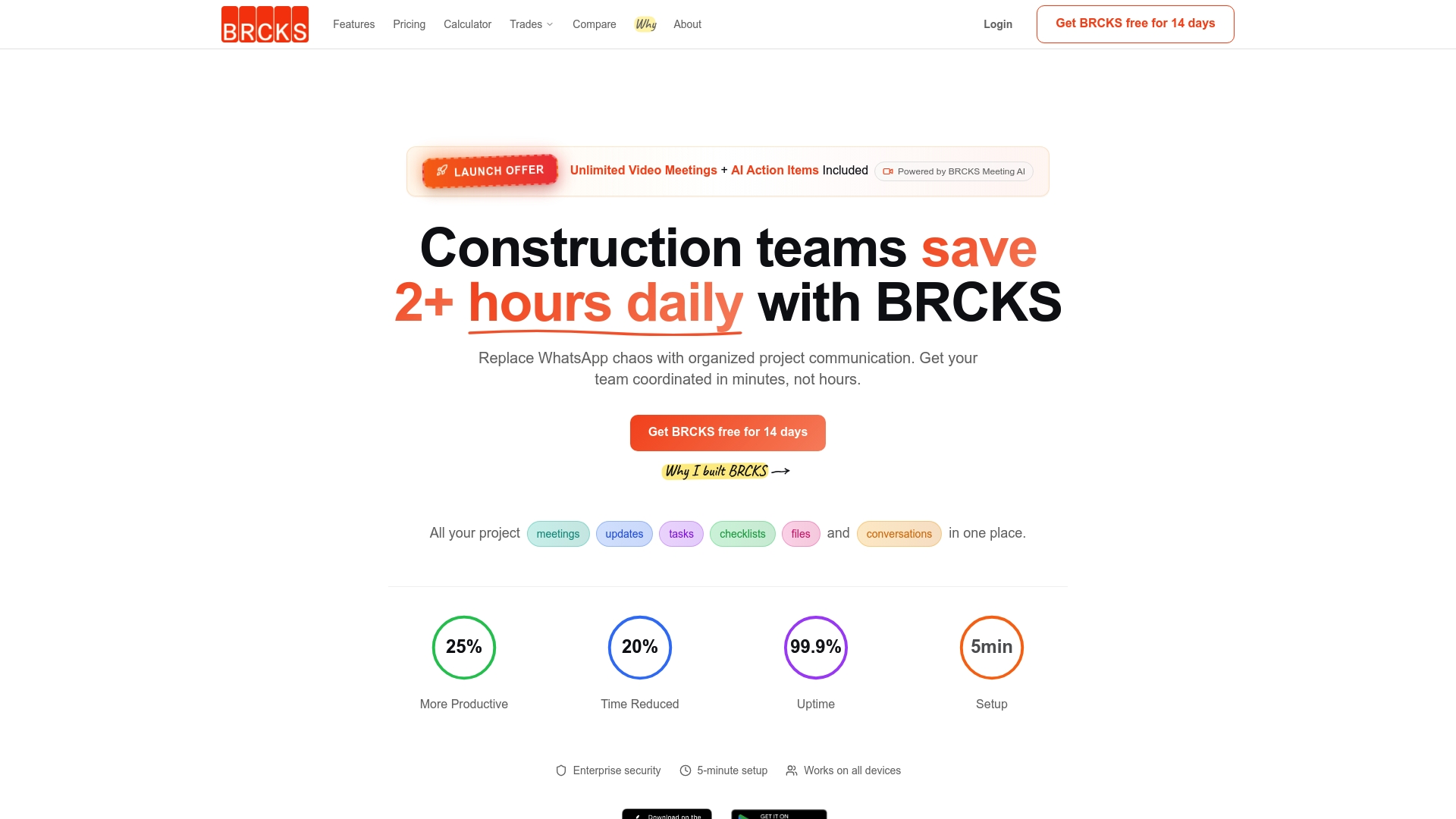
Our mobile-first platform gives your site team instant access to handover checklists, document libraries, and snagging tools from any device. Upload inspection photos, assign defects, and track rectification progress in real-time without paperwork delays. Automated handover pack generation pulls together all your O&M manuals, H&S files, and compliance certificates into professional branded deliverables clients actually appreciate.
UK builders trust BRCKS construction software for builders to reduce errors, accelerate closeout, and improve client satisfaction. Set up takes just five minutes, and our dedicated support team helps you transition smoothly. Compare how BRCKS vs WhatsApp transforms construction communication from fragmented to coordinated, saving your team over two hours daily whilst ensuring nothing falls through cracks during critical handover phases.
FAQ
What is the difference between construction handover and practical completion?
Practical completion is a contractual milestone confirming the building meets specification and is fit for occupation, triggering defect liability periods and partial payment release. Handover is the comprehensive process of transferring operational responsibility, delivering documentation, training clients on building systems, and obtaining final sign-offs. Practical completion can occur before handover is fully complete.
Which documents are essential for a UK residential construction handover?
Essential documents include operation and maintenance (O&M) manuals for all building systems, health and safety files documenting hazards and safe procedures, asset registers listing equipment with warranties, snagging reports with rectification evidence, and Building Control compliance certificates. Accurate digital versions organised in searchable repositories facilitate faster, error-free handover and ongoing facilities management.
How can digital tools reduce handover delays in residential projects?
Digital platforms centralise all handover documentation and communication in one accessible location, eliminating time wasted searching across emails, WhatsApp, and paper files. Real-time collaboration enables immediate feedback and parallel approvals rather than sequential reviews. Automated completeness checks flag missing documents weeks before deadlines, and audit trails provide legal protection that prevents disputes causing payment delays.
What are common handover mistakes to avoid?
The most frequent failures include incomplete or outdated documentation that delays practical completion, unclear role assignments causing miscommunication and duplicate effort, rushed inspections that overlook defects requiring costly rework, and inadequate client training leaving occupants confused. Fixes include maintaining live digital documents throughout construction, defining clear RACI responsibilities at project start, scheduling inspections with buffer time using detailed checklists, and providing face-to-face demonstrations supplemented by video tutorials.
Recommended
- BRCKS | Construction Project Communication Software
- BRCKS | Construction Project Communication Software
- BRCKS | Construction Project Communication Software
- BRCKS | Construction Project Communication Software
- 7 Key Sustainable Building Practices 2026 for Managers
How BRCKS Can Help
Navigating the complexities of handover requirements for UK residential projects in 2026 demands a proactive approach to data management and compliance. BRCKS simplifies this transition by centralising your documentation and ensuring every safety record is audit-ready well before the final inspection. By integrating these digital workflows early in the build, you can eliminate last-minute delays and deliver a seamless experience for your clients. We invite you to explore how BRCKS can streamline your next completion and help you maintain a gold standard in construction management. Learn more at BRCKS.