Why replace email in construction management in 2026
Email is costing UK construction projects time and money. Learn how purpose-built digital tools transform coordination and reduce costly rework for residential teams.
By James Shorter ·
Why replace email in construction management in 2026

Email remains the default communication tool for most construction project managers across the UK, yet this reliance comes at a significant cost. Despite widespread adoption, email creates delays, buries critical information, and fragments project coordination in ways that directly impact timelines and budgets. For residential construction teams managing multiple sites and stakeholders, the limitations of email become increasingly apparent. This guide explores why replacing email with purpose-built digital tools transforms project management outcomes, reduces costly errors, and streamlines communication workflows for UK construction professionals.
Table of Contents
- The Pitfalls Of Email In Construction Management
- How Digital Construction Communication Tools Improve Coordination
- Common Alternatives To Email In UK Construction Projects
- Implementing A Replacement For Email: Best Practices And Challenges
- Discover BRCKS Construction Software For Streamlined Communication
- Frequently Asked Questions
Key takeaways
| Point | Details |
|---|---|
| Email creates project delays | Inbox overload and lost messages slow decision-making and extend timelines |
| Digital tools reduce rework | Construction-specific platforms cut rework by over 50% through improved clarity |
| Integrated systems streamline workflows | Centralised communication eliminates version confusion and scattered documents |
| Better tools improve coordination | Real-time updates and task tracking enhance team accountability and visibility |
| Adoption requires planning | Successful transitions need stakeholder buy-in, training, and change management |
The pitfalls of email in construction management
Email was never designed for the complex, fast-moving demands of construction project management. When you manage multiple residential sites, coordinate subcontractors, and track dozens of daily decisions, your inbox quickly becomes a bottleneck rather than a solution. Email communication in construction often leads to miscommunication, delays, and increased errors that cascade through project timelines.
Consider what happens when a site manager sends a critical RFI via email at 8am. The architect receives it alongside 47 other messages, many unrelated to active projects. By the time they respond two days later, the subcontractor has already proceeded with assumptions, creating rework that costs both time and money. This scenario plays out repeatedly across UK construction sites.
Attachments present another fundamental problem. When drawing revisions circulate via email, you end up with multiple versions scattered across different inboxes and devices. Which PDF is current? Did everyone receive the updated specifications? These questions waste valuable hours every week as teams chase the correct information.
Email threads fragment conversations in ways that obscure context and decision history. A discussion about window specifications might span three separate email chains, each with different participants. New team members joining mid-project face an impossible task reconstructing what was decided and why.
Pro Tip: Track how many hours your team spends searching for information in emails each week. Most construction managers underestimate this hidden cost until they measure it.
The core issue is that email lacks construction-specific functionality. You cannot assign tasks with clear ownership, track RFI status, manage change orders, or maintain a single source of truth for project documents. Every workaround you create adds complexity rather than solving the underlying construction communication problems that slow your projects.
How digital construction communication tools improve coordination
Purpose-built digital tools transform construction communication by addressing the specific challenges that email cannot solve. These platforms centralise project information in ways that eliminate the searching, version confusion, and fragmented conversations that plague email-dependent teams.
When all project communication lives in one organised system, everyone accesses the same current information. Site updates, drawing revisions, meeting notes, and task assignments exist in a unified feed rather than scattered across hundreds of individual email threads. This centralisation alone saves construction teams over two hours daily in information retrieval and clarification.
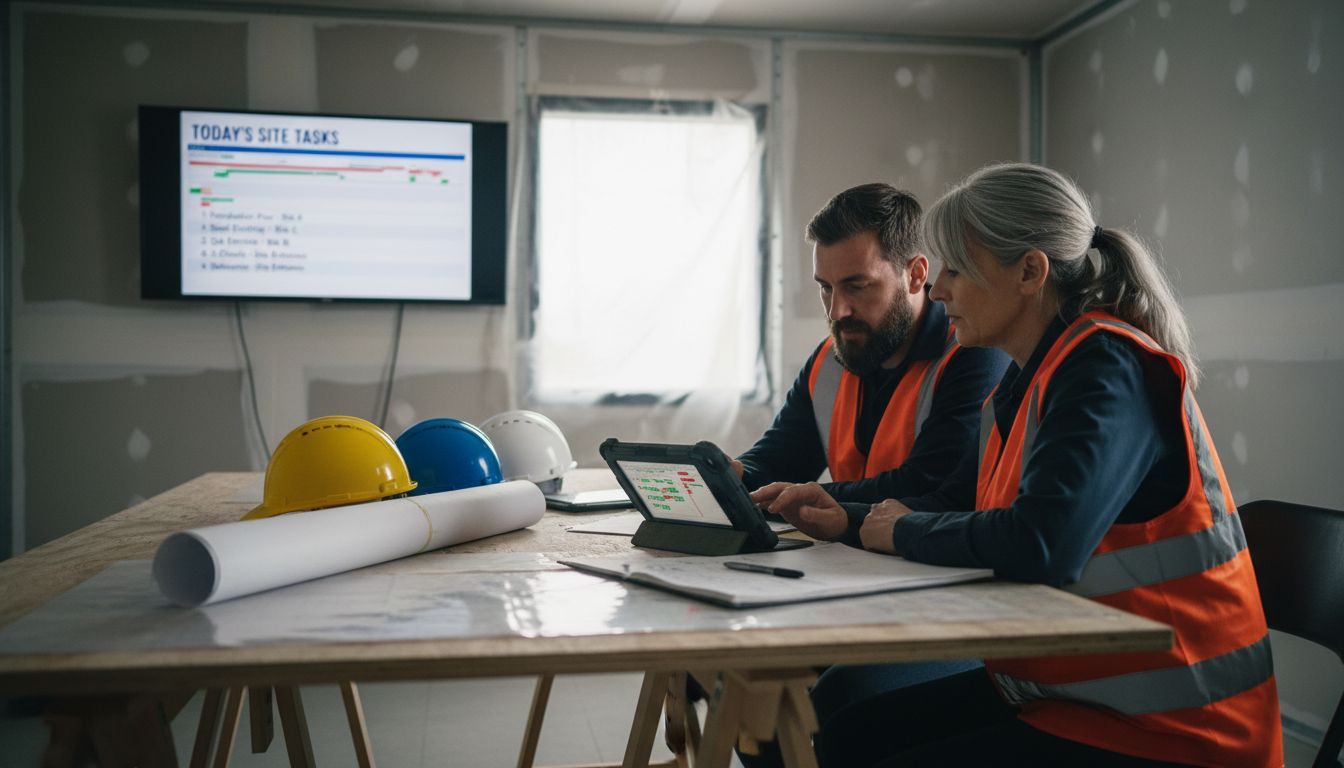
The impact on errors and rework is substantial. Research shows that information sharing cuts construction errors by 70% when teams use integrated platforms instead of email. Similarly, structured communication workflows cut rework by 52% in UK projects by ensuring clarity and accountability.
| Metric | Email-Based | Digital Platform | Improvement |
|---|---|---|---|
| Error rate | 28% | 8% | 71% reduction |
| Rework percentage | 15% | 7% | 53% reduction |
| Daily search time | 2.3 hours | 0.4 hours | 83% reduction |
| Response time | 18 hours | 2 hours | 89% faster |
Real-time updates change how teams coordinate on active sites. When a subcontractor completes a task, the system notifies relevant stakeholders immediately rather than waiting for someone to send an email update. This visibility prevents delays and keeps projects moving forward without constant manual status checking.
Task tracking with clear ownership eliminates the ambiguity that email creates. Instead of hoping someone noticed your request buried in a long thread, you assign tasks with due dates, attachments, and context. Everyone knows exactly what they need to deliver and when.
Pro Tip: Schedule monthly reviews of your communication tool usage data to identify adoption gaps and optimise workflows. Teams that actively monitor engagement see 40% better results than those who simply deploy tools and hope for the best.
Document management becomes effortless when your communication platform integrates file storage. The latest drawings, specifications, and contracts live in project folders accessible to authorised team members. Version control happens automatically, eliminating the “which file is current” confusion that costs hours weekly.
Common alternatives to email in UK construction projects
Construction teams exploring email alternatives encounter three main categories of tools, each with distinct advantages and limitations for residential project management.
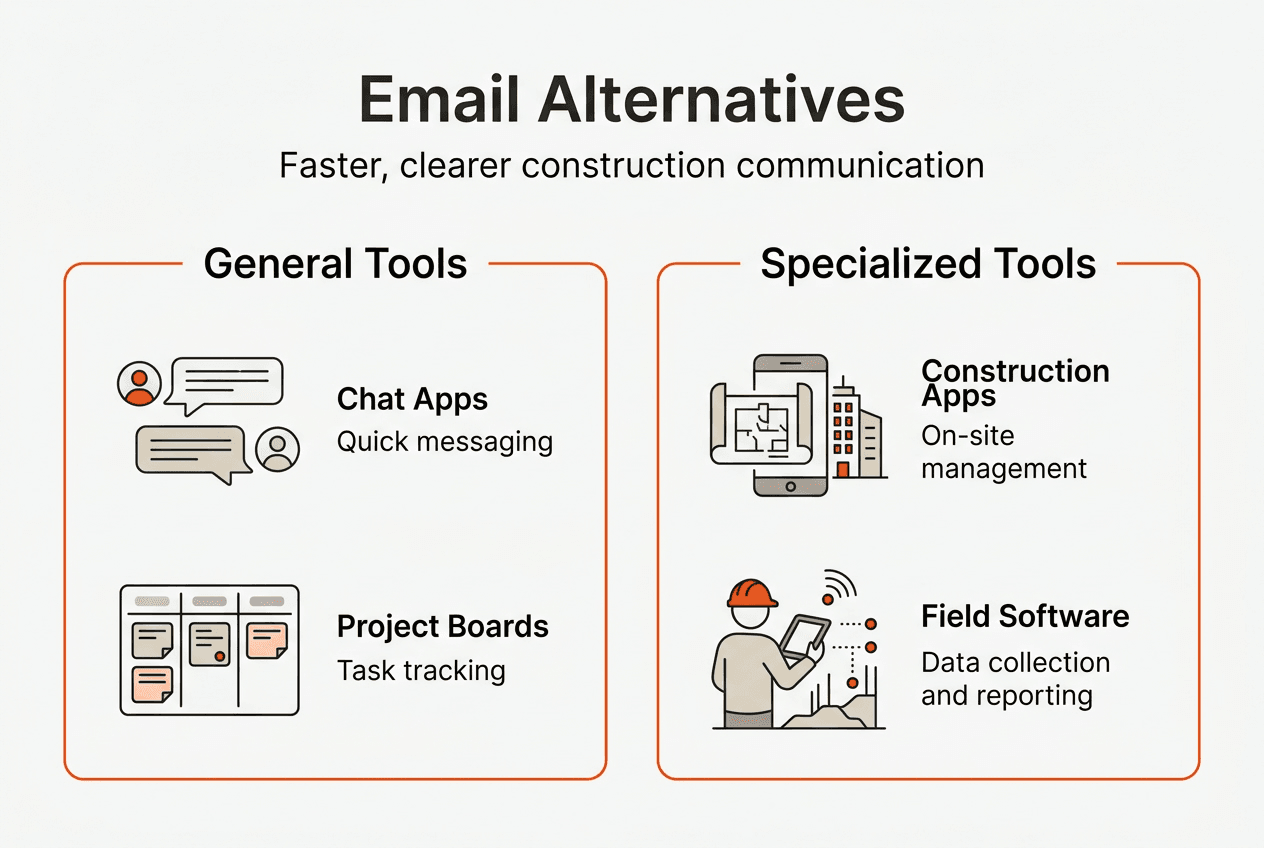
Generic chat applications like WhatsApp offer immediate messaging but lack the structure construction projects demand. Conversations disappear in endless scrolling, files get lost, and there is no way to track tasks or decisions systematically. WhatsApp limitations in construction become apparent quickly when you need to find a specific conversation from two weeks ago or assign accountability for outstanding items.
General project management platforms provide better organisation with task boards, file sharing, and team collaboration features. These tools work well for office-based teams but often miss construction-specific workflows. You can track tasks, but managing RFIs, change orders, site inspections, and compliance documentation requires custom workarounds that add complexity.
Construction-specific software delivers purpose-built workflows designed around how residential projects actually operate. These platforms understand that you need to coordinate site teams, manage client communications, track multiple subcontractors, and maintain compliance documentation simultaneously. The difference shows in adoption rates and real-world outcomes.
| Tool Type | Key Features | Pros | Cons | Best For |
|---|---|---|---|---|
| Chat apps | Instant messaging, file sharing | Fast, familiar, free | No structure, poor searchability | Quick site updates only |
| Generic PM tools | Task boards, calendars, docs | Good organisation, flexible | Not construction-focused | Office teams, simple projects |
| Construction platforms | RFIs, change orders, compliance | Purpose-built workflows, mobile | Learning curve, cost | Residential construction teams |
When evaluating alternatives to email, consider these critical factors:
- Mobile accessibility for site-based teams who work away from desks
- Integration with existing tools like accounting software and estimating systems
- Compliance and audit trail capabilities for UK building regulations
- Scalability as your business grows and takes on larger projects
- Training requirements and ease of adoption for diverse team skill levels
- Total cost including setup, licences, and ongoing support
The right choice depends on your specific project complexity, team size, and workflow requirements. A communication tool comparison helps identify which features matter most for your residential construction business.
Implementing a replacement for email: best practices and challenges
Successfully transitioning away from email requires more than selecting software. Construction teams that approach implementation strategically see adoption rates above 85%, whilst those who simply announce a new tool often struggle to reach 40% engagement.
Start by securing stakeholder buy-in before rolling out any new system. Meet with project managers, site supervisors, subcontractors, and office staff to explain why the change matters and how it benefits them personally. People resist change when they see it as extra work, but embrace it when they understand the time savings and frustration reduction.
Provide comprehensive training that goes beyond basic features. Show your team exactly how the new tool replaces their current email workflows with better alternatives. Demonstrate searching for information, assigning tasks, sharing updates, and managing documents in real scenarios they encounter daily.
Integrate the new platform with existing systems rather than creating information silos. Your communication tool should connect with accounting software, estimating platforms, and other business systems to create seamless workflows. Manual data entry between disconnected tools defeats the efficiency purpose.
Monitor adoption actively during the first three months. Track who uses the platform, which features see engagement, and where people fall back to email habits. Address gaps quickly through additional training, workflow adjustments, or feature customisation.
Pro Tip: Identify power users in each team who embrace the new tool quickly, then leverage them as peer coaches. People learn faster from colleagues who understand their daily challenges than from formal training sessions.
Common challenges include resistance from team members comfortable with email, integration difficulties with legacy systems, and initial productivity dips during the learning period. Research on digital construction collaboration challenges shows these obstacles are temporary when addressed through proper change management.
Address resistance by highlighting measurable benefits. Show exactly how much time the new system saves compared to email searching and clarification. Track error reductions and rework savings to demonstrate ROI. When people see concrete improvements in their daily work, adoption follows naturally.
Phase implementation strategically rather than switching everything overnight. Start with one project or team, refine workflows based on feedback, thenexpand gradually. This approach reduces risk and builds confidence through visible success before company-wide rollout.
Maintain momentum by celebrating wins and sharing success stories. When a project completes ahead of schedule due to better communication, or a team eliminates a recurring error, broadcast these achievements. Positive reinforcement accelerates adoption far more effectively than mandates.
Discover BRCKS Construction Software for streamlined communication
BRCKS delivers the construction-specific communication platform UK residential teams need to replace email effectively. Built specifically for project managers coordinating multiple sites, subcontractors, and stakeholders, BRCKS centralises all project information in one organised system that eliminates the searching, delays, and errors email creates.
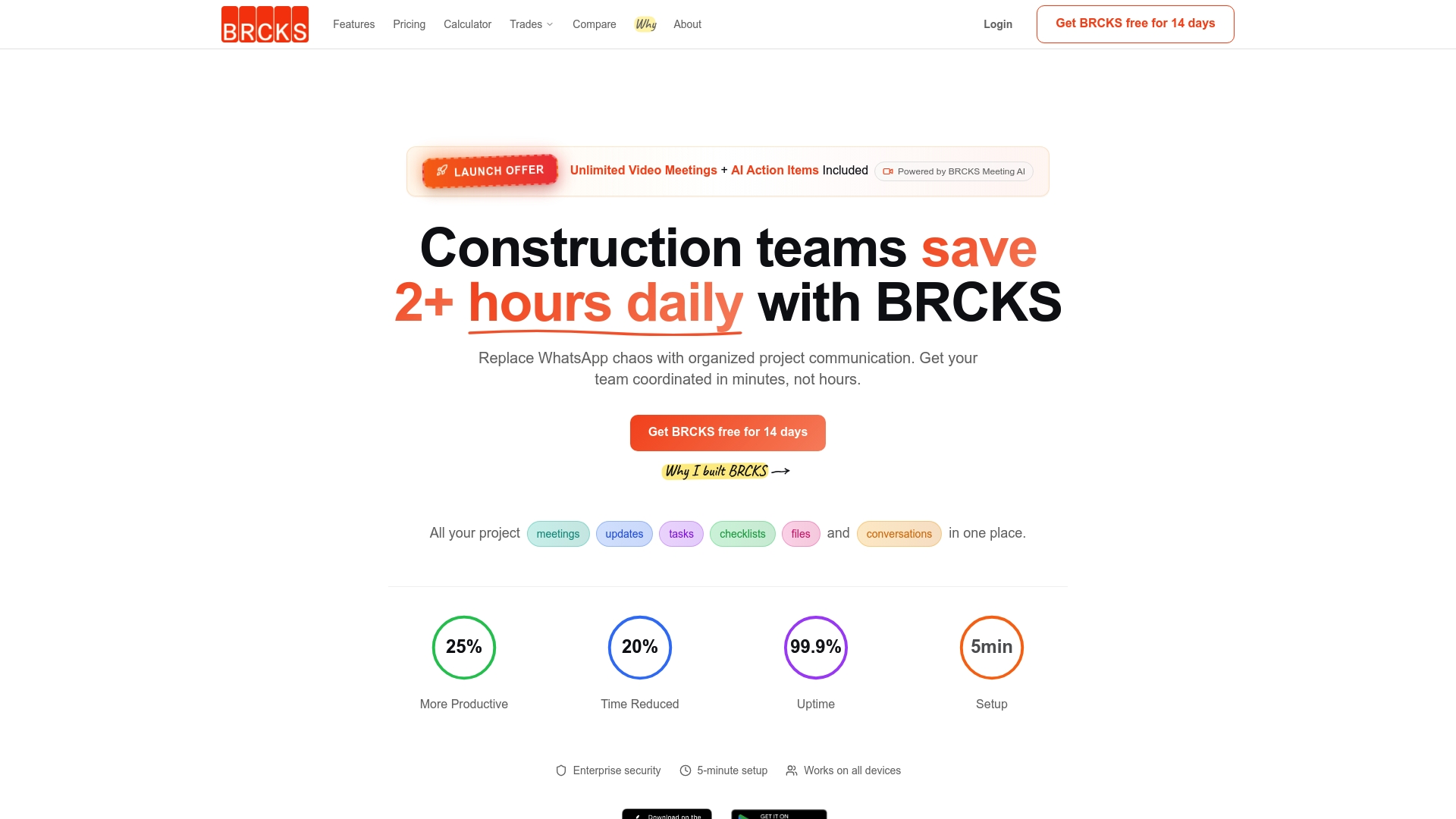
The platform saves construction teams over two hours daily by replacing fragmented email threads with unified project feeds, integrated task management, and real-time updates accessible from both office and site. Construction software for builders includes unlimited video meetings with AI-generated action items, comprehensive document management, and mobile apps that keep everyone coordinated regardless of location. Whether you manage traditional builds or specialise in renewable installations, construction software for solar installers adapts to your specific workflows whilst maintaining the simplicity teams need for rapid adoption. Explore how BRCKS compares to fragmented communication tools through our detailed BRCKS vs WhatsApp comparison to see why purpose-built platforms deliver measurably better project outcomes.
Frequently asked questions
What does it cost to replace email with construction software?
Construction-specific platforms typically charge per user monthly, ranging from £15 to £50 depending on features and team size. Most teams recoup this investment within weeks through reduced rework and time savings. Calculate ROI by measuring hours currently spent searching emails and clarifying miscommunications, then multiply by your team’s hourly cost.
How long does transitioning from email take?
Most construction teams complete initial setup within one week and reach full adoption within 30 to 60 days. The transition period depends on team size, project complexity, and change management approach. Phased rollouts starting with one project reduce disruption whilst building confidence and refining workflows before company-wide implementation.
Are construction platforms more secure than email?
Yes, purpose-built construction software typically offers superior security through encrypted data transmission, role-based access controls, automatic backups, and comprehensive audit trails. Email lacks these protections, making it vulnerable to data loss, unauthorised access, and compliance gaps that create risk for UK construction businesses managing sensitive project information.
What features do construction tools provide that email cannot?
Construction platforms offer task assignment with ownership tracking, RFI management with status visibility, change order workflows, integrated document version control, site inspection checklists, compliance tracking, real-time project feeds, and mobile accessibility for field teams. Email requires manual workarounds for all these functions, creating inefficiency and error risk.
How do new tools integrate with existing construction processes?
Modern construction platforms connect with accounting software, estimating systems, and other business tools through APIs and integrations. This connectivity eliminates duplicate data entry and creates seamless workflows. During implementation, map your current email-based processes to platform features, then configure workflows that match how your team actually operates rather than forcing process changes.
Recommended
- WhatsApp vs BRCKS | Built for Construction Projects
- BRCKS | Construction Project Communication Software
- BRCKS | Construction Project Communication Software
- BRCKS | Construction Project Communication Software
How BRCKS Can Help
As the industry moves towards 2026, relying on fragmented email chains is no longer a viable strategy for maintaining project clarity or accountability. BRCKS streamlines this transition by centralising your communication and project data into a single, intuitive platform designed specifically for the built environment. By moving away from the inbox and into a collaborative workspace, your team can reduce errors and ensure everyone stays aligned on the latest developments. We invite you to explore how BRCKS can modernise your workflow and help you regain control over your project management today. Learn more at BRCKS.