Why project communication matters: boost delivery, cut risk
Poor communication costs the UK construction industry up to £25 billion annually. Discover how to streamline your workflows and eliminate costly rework.
By James Shorter ·
Why project communication matters: boost delivery, cut risk

Technical skill gets a project started. Communication is what gets it finished on time, on budget, and without incident. The UK construction industry loses £10 to £25 billion annually due to rework caused by poor communication, a figure that should give every project manager pause. Yet many teams still treat communication as secondary to planning, procurement, and technical execution. This article covers what project communication actually means in a construction context, why it matters so profoundly, which tools and methods work best, and how to overcome the barriers that derail even well-resourced projects.
Table of Contents
- What is project communication in construction?
- Why is project communication important in construction?
- Methods and tools for effective project communication
- Common challenges and barriers to clear communication
- Best practices for transforming project communication
- Streamline your construction project communication with modern tools
- Frequently asked questions
Key Takeaways
| Point | Details |
|---|---|
| Reduces costly rework | Good communication can halve the amount of project rework, saving both time and money. |
| Improves team alignment | Clear channels and consistent updates keep all stakeholders working towards the same goals. |
| Minimises safety risks | Accurate and timely information helps prevent accidents on site. |
| Boosts project profitability | Fewer delays and disputes mean projects finish on time and within budget. |
What is project communication in construction?
Project communication in construction is the structured exchange of accurate, timely information between every party involved in a build. That means clients, main contractors, subcontractors, suppliers, designers, and site operatives. It is not casual conversation. It carries contractual weight, safety implications, and financial consequences.
The channels vary widely. You might use site meetings, progress reports, email chains, messaging apps, or a centralised platform. What matters is that the right information reaches the right person at the right time, and that it is properly documented. As effective project communication aligns stakeholders and mitigates risks, the absence of it creates confusion, disputes, and costly delays.
Key elements of strong project communication include:
- Accuracy: Information must be correct and verified before it is shared.
- Timeliness: Late updates are nearly as damaging as no updates at all.
- Documentation: Verbal agreements without a written record are a liability.
- Clarity: Ambiguous instructions lead to rework and wasted labour.
- Accessibility: Every relevant party must be able to access what they need, when they need it.
“Project communication is not just about talking. It is about creating a shared understanding of what needs to happen, who is responsible, and when it must be done.”
For a practical overview of how to structure this in your team, the project manager’s communication guide is a useful starting point.
Why is project communication important in construction?
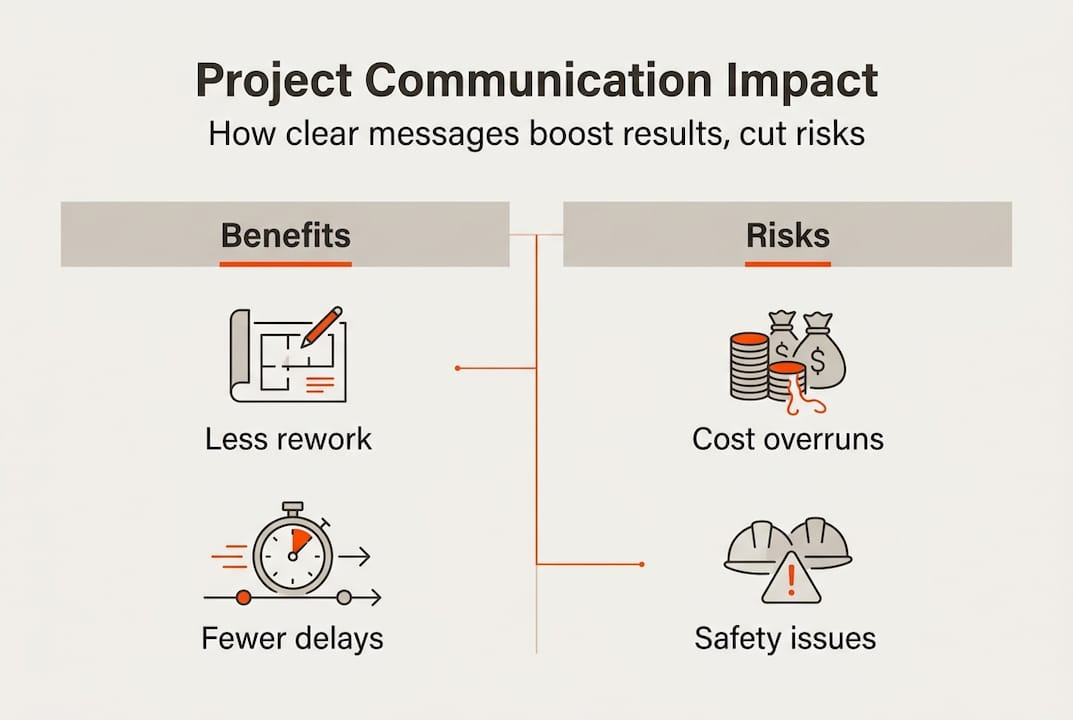
The numbers tell a clear story. 52% of rework in UK construction stems from unclear or late messages, and poor communication accounts for roughly 20% of all project delays. These are not abstract statistics. They represent real costs absorbed by your business and your clients.
Here is a snapshot of how communication quality affects key project outcomes:
| Outcome | Impact of poor communication | Impact of strong communication |
|---|---|---|
| Rework costs | High, often repeated | Significantly reduced |
| Project delays | Frequent and compounding | Minimised through early alerts |
| Safety incidents | Increased risk | Lower incident rates |
| Client satisfaction | Eroded trust | Stronger relationships |
| Dispute frequency | Higher | Reduced through clear records |
The financial exposure is significant. The UK industry loses between £10 and £25 billion every year to communication-related rework alone. That figure does not include the cost of delays, disputes, or reputational damage.
Key stat: Teams that invest in structured communication processes report fewer change orders, faster sign-offs, and measurably better client retention.
Pro Tip: Address communication problems and solutions before they escalate. A weekly five-minute check-in with your site foreman costs nothing and can catch misalignments before they become expensive corrections. Structured workflow reduces rework by keeping everyone aligned on priorities and progress.
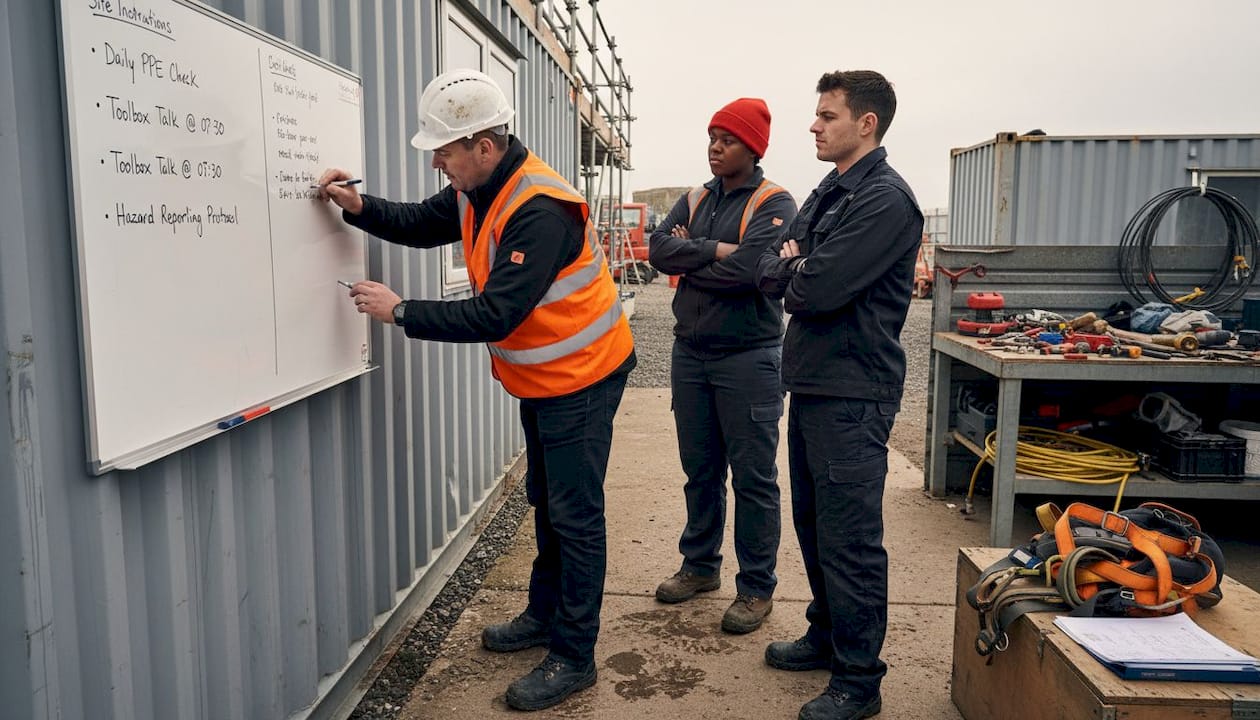
Beyond cost, communication directly affects safety. When operatives receive unclear instructions about temporary works, hazardous materials, or sequencing, the risk of accidents rises sharply. Clear, documented communication is not just good practice. It is a duty of care.
Methods and tools for effective project communication
Knowing communication matters is one thing. Building a system that delivers it consistently is another. The most effective UK construction teams use a combination of structured processes and purpose-built tools.
Communication methodologies used by high-performing teams typically include structured communication plans, stakeholder matrices, regular site meetings, and centralised digital platforms. A stakeholder matrix maps who needs what information, how often, and through which channel. It removes guesswork and prevents critical updates from falling through the gaps.
Here is a comparison of commonly used communication tools in UK construction:
| Tool | Strengths | Limitations |
|---|---|---|
| Familiar, fast, free | No audit trail, poor file management, not built for construction | |
| Documented, widely used | Slow, easily missed, hard to search | |
| Re-flow | Field-focused, digital forms | Limited client-facing features |
| BRCKS | Built for construction, client portals, AI search, task management | Requires onboarding |
For a detailed breakdown of why generic messaging apps fall short, see the article on WhatsApp limitations in construction.
To upgrade your communication processes, follow these steps:
- Map your stakeholders. Identify every party involved and what information they need.
- Create a communication plan. Define channels, frequency, and ownership for each type of update.
- Centralise your documentation. Use one platform for files, decisions, and records.
- Schedule regular touchpoints. Weekly site walks and progress reviews keep everyone aligned.
- Review and adjust. Communication needs change as projects evolve. Build in a monthly review.
Pro Tip: Better information sharing can cut construction errors by up to 70%. Standardising how updates are logged and shared is one of the highest-return changes you can make. This is especially relevant when managing subcontractors, where fragmented communication is most likely to cause problems.
Common challenges and barriers to clear communication
Even well-organised teams hit communication barriers. Recognising them early is the first step to managing them.
Language barriers account for 67% of miscommunications on UK construction sites, particularly where multilingual workforces are common. A misunderstood instruction about sequencing or safety can have serious consequences. Visual aids, translated briefings, and a culture of asking questions without fear all help.
Other common barriers include:
- Information overload: Too many messages across too many channels means critical updates get missed.
- Team fragmentation: Subcontractors working across multiple sites often lack visibility of the wider project picture.
- Unclear contracts: Ambiguous scope documents create disputes that could have been avoided with clearer upfront communication.
- Siloed reporting: When teams report only within their own group, project managers lose the full picture.
- Overreliance on technology: Tools only work if people use them consistently and correctly.
“The biggest communication failures we see are not technical. They are cultural. Teams that do not feel safe raising concerns will stay quiet until a problem becomes a crisis.”
For a deeper look at how these issues compound, the article on reasons projects fail is worth reading. You can also explore how reducing disputes through better communication protects both your margins and your client relationships.
Best practices for transforming project communication
Improving communication is not a one-off fix. It requires deliberate, sustained effort from project start to handover.
Research into construction project control problems consistently shows that failures stem from siloed reporting and a lack of integrated systems. Technology helps, but culture drives the outcome. A platform no one uses is worse than a whiteboard everyone checks.
Here are the steps that make the biggest difference:
- Start with a communication plan. Define it at project kick-off, not after problems arise.
- Train your team. Ensure everyone knows which channel to use for which type of message.
- Prioritise psychological safety. People must feel comfortable flagging issues early.
- Use integrated systems. Platforms that connect tasks, files, and messages reduce the risk of information being lost.
- Review regularly. Hold a monthly communication audit to identify what is working and what is not.
- Lead by example. Project managers who communicate clearly set the standard for the whole team.
Pro Tip: When overcoming digital pitfalls, the most common mistake is adopting too many tools at once. Pick one platform, embed it into your workflow, and build from there. For broader context on property project management practices, the principles of clear ownership and documented decisions apply universally.
Sustaining high communication standards under pressure is where most teams struggle. When deadlines tighten, shortcuts creep in. Build your communication habits during quieter phases so they hold when the pressure is on.
Streamline your construction project communication with modern tools
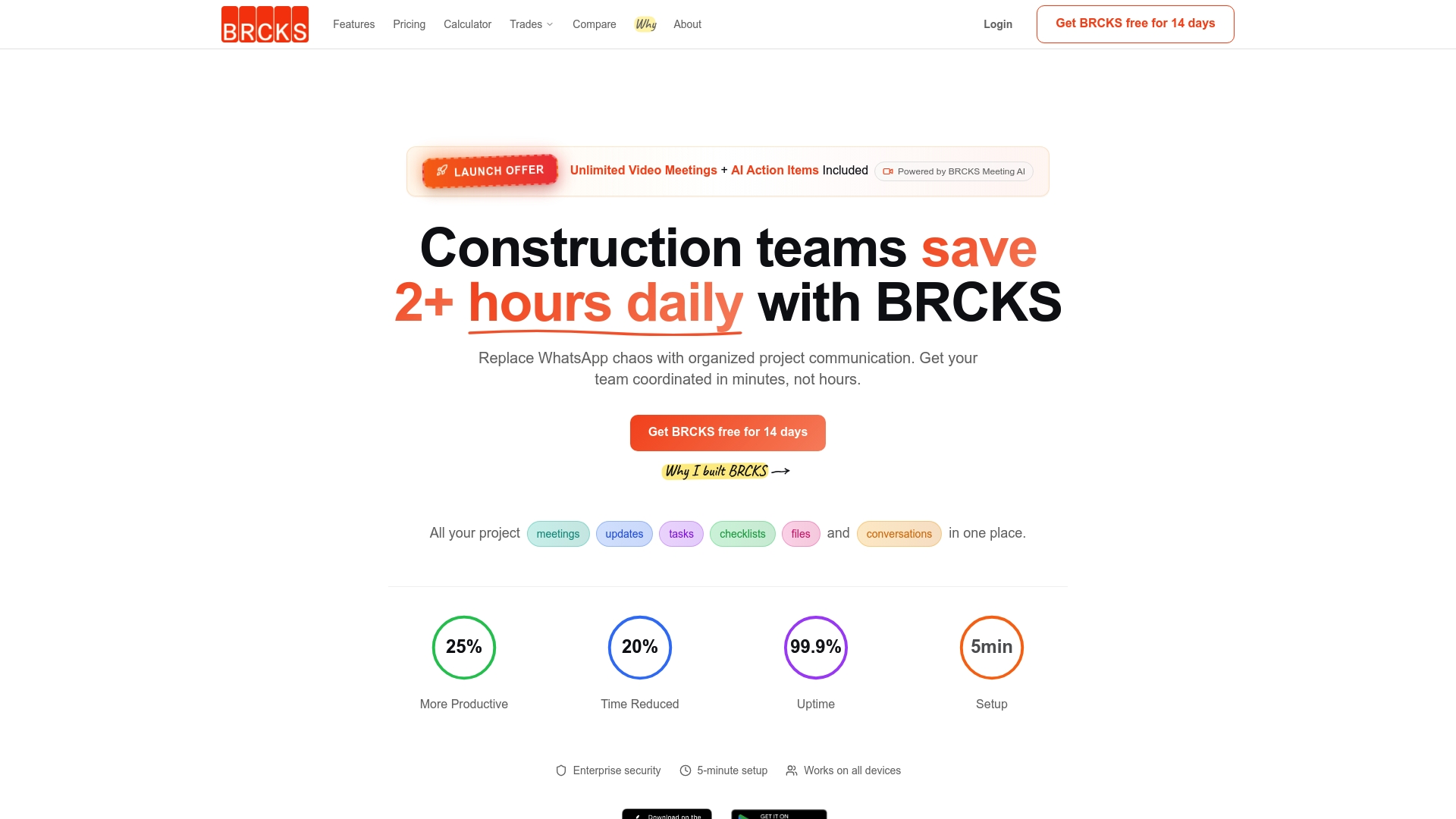
Putting these practices into action is far easier with a platform built specifically for construction. BRCKS brings together project updates, task management, file sharing, team chat, and client portals in one place, so your team spends less time chasing information and more time delivering.
Whether you are a builder managing a handful of subcontractors or a project manager overseeing a complex multi-site programme, BRCKS scales to fit. Explore the construction solutions for builders to see how teams like yours are using it. If you want to understand the core value proposition, the project communication software page explains it clearly. And if you are currently relying on WhatsApp, the WhatsApp vs BRCKS comparison will show you exactly what you are missing. Get BRCKS free for 14 days and see the difference structured communication makes.
Frequently asked questions
What are the consequences of poor communication in construction projects?
Poor communication leads to costly rework, project delays, safety risks, and disputes. The UK industry loses £10 to £25 billion annually as a direct result, making it one of the most expensive operational failures in the sector.
Which communication tools are most effective for construction project teams?
Structured plans, regular meetings, and centralised platforms tailored for construction consistently outperform generic apps. Industry-specific tools like BRCKS offer audit trails, task management, and client portals that WhatsApp simply cannot provide.
How can project managers overcome language and cultural barriers?
Clear documentation, visual aids, and a culture of open feedback are the most effective approaches. Language barriers cause 67% of miscommunications on site, so proactive measures are essential rather than optional.
What is a stakeholder matrix, and why is it useful?
A stakeholder matrix maps who needs what information, how often, and through which channel. It ensures the right updates reach the right people, preventing missed communications and the confusion that follows. Stakeholder matrices are a core component of any structured communication plan.
Recommended
- BRCKS | Construction Project Communication Software
- BRCKS | Construction Project Communication Software
- BRCKS | Construction Project Communication Software
- BRCKS | Construction Project Communication Software
- Team Communication: Keys to Better Collaboration – Optio Station: Best Project Management App for Prioritisation
- How to Build Client Trust as a Remote Freelancer | Nomad Excel
How BRCKS Can Help
Effective communication is the cornerstone of any successful build, ensuring that every stakeholder remains aligned from initial groundworks to final handover. By centralising project data and streamlining real-time updates, BRCKS helps site teams eliminate costly misunderstandings and mitigate long-term risks. Our platform is designed to simplify these complex interactions, allowing you to focus on delivering quality results without the administrative headache. We invite you to discover how BRCKS can transform your project delivery by exploring our features today. Learn more at BRCKS.