Why communication breaks down on site and how to fix it
London residential construction projects lose hours daily to fragmented tools. Learn how to restore clarity and eliminate coordination chaos on site.
By James Shorter ·
Why communication breaks down on site and how to fix it

London residential construction projects lose over two hours daily to fragmented communication tools. You chase updates across WhatsApp groups, emails, and scattered apps while critical information slips through the cracks. This guide reveals why communication breakdowns inflate costs and delivers practical frameworks to restore clarity on site.
Table of Contents
- Understanding Why Communication Breaks Down
- Common Misconceptions About Communication Breakdowns
- Framework For Understanding Communication Breakdowns
- Solutions To Improve On-Site Communication
- Practical Applications To Improve Communication On London Residential Sites
- Boost Your Project’s Communication With BRCKS Software
- Frequently Asked Questions
Key takeaways
| Point | Details |
|---|---|
| Fragmented tools cause 70%+ inefficiency | Multiple platforms create coordination chaos and missed updates |
| Role ambiguity delays projects by 30% | Unclear responsibilities cause confusion and rework |
| Centralised communication saves hours daily | Single platforms eliminate tool switching and information hunting |
| Excessive meetings decrease productivity | Too many gatherings reduce actual work time by 15% |
| Clear frameworks reduce errors by 40% | Structured communication prevents costly mistakes |
Understanding why communication breaks down
Fragmented communication platforms cause over 70% of coordination inefficiencies on London residential sites. You juggle WhatsApp for quick messages, email for formal updates, and spreadsheets for schedules. Each tool operates in isolation, creating information silos that trap critical updates.
Unclear roles amplify the chaos. When site teams don’t know who handles specific communications, 30% of project delays stem from this ambiguity alone. A plumber awaits electrical clearance while the electrician assumes someone else confirmed the timeline.
These failures carry steep financial penalties. Errors caused by communication failures inflate costs by 5-10% across UK construction projects. Missed specifications trigger rework. Delayed material orders halt progress. Budget overruns follow.
Consider the typical breakdown pattern:
- Site manager posts schedule changes in WhatsApp
- Subcontractor misses the message buried under 50+ daily updates
- Wrong materials arrive on site
- Two days lost to corrections and reordering
WhatsApp lacks the structure needed for professional construction communication. Messages disappear in endless scrolling. Files vanish after a few weeks. No audit trail exists when disputes arise.
“The construction industry loses billions annually to preventable communication errors. Most projects use 5-8 different tools, guaranteeing information falls through gaps.”
Email creates similar problems at the opposite extreme. Formal chains bury urgent updates under routine correspondence. Team members spend 30 minutes daily hunting for the latest revision buried across multiple threads.
Construction communication problems multiply when information travels through disconnected channels. The office uses email. Site teams prefer WhatsApp. Clients expect phone calls. Each group operates in isolation, repeating questions already answered elsewhere.
Common misconceptions about communication breakdowns
You might believe more meetings solve communication problems. The data tells a different story. Projects with excessive meetings see up to 15% lower productivity because workers spend less time actually building.
Three damaging myths persist:
-
Digital tools are too complex for construction teams: Modern platforms take five minutes to set up and require minimal training. Resistance stems from familiarity bias, not actual difficulty.
-
Multiple platforms offer flexibility: Fragmentation masquerades as choice. Each additional tool multiplies confusion and guarantees missed messages.
-
Face-to-face communication beats digital updates: In-person discussions matter for complex decisions, but routine updates waste valuable site time when digital channels suffice.
The meeting trap catches many project managers. You schedule daily briefings hoping to align everyone. Instead, you pull skilled workers from productive tasks to discuss items affecting only two people. The other eight lose 30 minutes they’ll never recover.
centralised communication platforms get dismissed as expensive or complicated. You’ve invested years mastering WhatsApp’s limitations and email’s quirks. Switching feels risky. Yet construction communication problems persist precisely because familiar tools weren’t designed for project management.
Pro Tip: Track how many hours your team spends in meetings versus actual construction work each week. Most managers discover 20-30% of time goes to discussions that could happen asynchronously through a proper project feed.
The complexity myth collapses when you examine actual adoption curves. Teams transition to centralised platforms within days, not weeks. The initial resistance fades once workers experience the relief of checking one place for all updates instead of five.
Another misconception claims digital communication reduces personal connection. Reality shows the opposite. When routine updates flow through organised channels, you reclaim time for meaningful conversations about complex challenges. Less time hunting information means more time solving problems.
Disputes decrease significantly when teams abandon these myths and adopt structured communication approaches. Clear documentation prevents he-said-she-said arguments. Centralised information stops duplicate work before it starts.
Framework for understanding communication breakdowns
Three core elements determine whether site communication succeeds or fails: channel fragmentation, role clarity, and information flow consistency. Master these and you eliminate most coordination problems.
Channel fragmentation occurs when project updates scatter across multiple platforms. You post schedules in email, discuss changes in WhatsApp, store files in Dropbox, and track tasks in spreadsheets. Each tool becomes another place for information to hide.

Role ambiguity creates the second failure point. Who confirms material deliveries? Who updates the client on progress? When responsibilities overlap or gaps exist, critical tasks fall through the cracks. Role-based frameworks reduce errors by 40% by eliminating this confusion.
Inconsistent information flow completes the breakdown triangle. Updates reach some team members immediately while others learn about changes days later. This timing mismatch triggers expensive mistakes as workers proceed on outdated information.
| Fragmented approach | Centralised framework |
|---|---|
| 5-8 different communication tools | Single platform for all updates |
| Unclear message ownership | Defined roles for each communication type |
| Information scattered across channels | Unified project feed with complete history |
| Updates reach teams at different times | Real-time notifications to relevant members |
| No audit trail for decisions | Complete documentation of all changes |
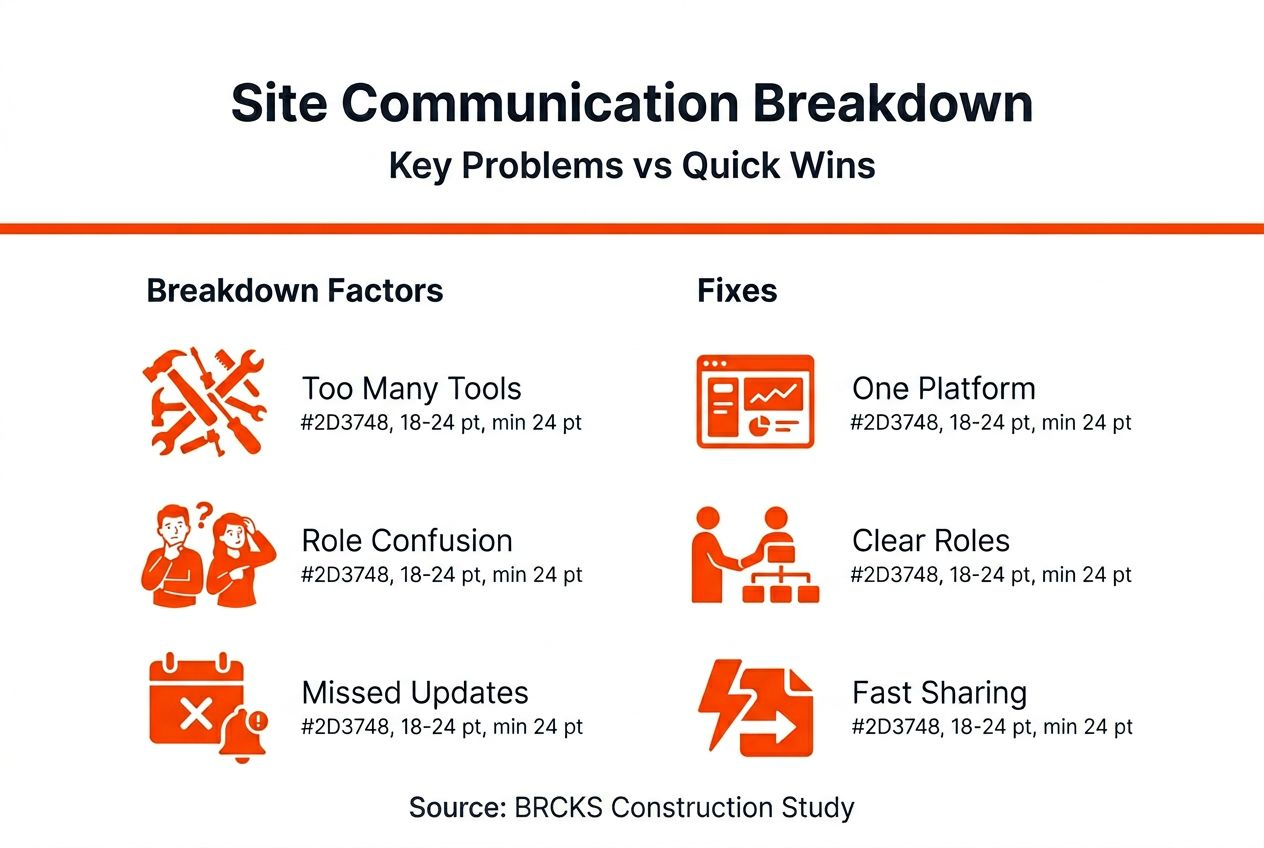
Clear role definitions transform communication flow. Assign specific responsibilities: site manager posts daily updates, foreman confirms task completion, quantity surveyor handles material queries. Everyone knows where to look and who to contact.
Pro Tip: Create a simple communication matrix showing which team member handles each type of update. Pin this in your site office and project feed. Confusion drops immediately.
Centralised platforms enable accurate information sharing by creating a single source of truth. When the architect revises drawings, one upload reaches everyone simultaneously. No one works from outdated plans. No duplicate questions clutter multiple channels.
Information sharing improvements deliver measurable results. Projects adopting unified communication see 70% fewer errors caused by outdated information. Rework drops proportionally.
The escalation path completes the framework. Not every issue needs the project manager’s attention, but critical problems can’t wait. Define clear thresholds: routine updates flow through the project feed, safety concerns escalate immediately to site management, client changes require formal approval.
Construction communication workflows that implement this framework cut rework by 52%. The structure prevents small miscommunications from snowballing into expensive corrections. Teams catch discrepancies early when fixes cost pounds instead of thousands.
This framework isn’t theoretical. It reflects how successful London residential projects actually operate. They’ve abandoned communication chaos for systematic clarity, and their delivery timelines prove the value.
Solutions to improve on-site communication
Adopt a centralised platform designed specifically for construction project management. Generic tools like WhatsApp or email weren’t built for coordinating trades, tracking tasks, or maintaining documentation. Purpose-built software saves over two hours daily per worker by eliminating tool switching and information hunting.
Unified project feeds reduce missed updates by more than 60%. Every team member sees the same chronological stream of announcements, task assignments, file uploads, and decisions. No more checking five places to piece together what happened since yesterday.
Mobile applications bridge the on-site and office divide seamlessly. Your site foreman updates task status from his phone while standing at the work location. The quantity surveyor in the office sees the change instantly. Both work from identical real-time information.
Key implementation steps:
- Select a platform with construction-specific features like task checklists and file version control
- Define clear communication protocols during the onboarding phase
- Establish escalation paths for different issue types
- Train teams on the new system with hands-on practice
- Monitor adoption rates and address resistance quickly
Implement structured communication protocols alongside technology. Decide what information flows through which channels. Daily progress updates belong in the project feed. Safety incidents require immediate phone calls. Client approvals need formal documentation.
Pro Tip: Start with one small project as a pilot before rolling out organisation-wide. This builds confidence and lets you refine processes based on real feedback before scaling.
Training accelerates adoption and maximises value. Many teams abandon new tools because they never learned the time-saving features. Invest two hours upfront showing workers how to use mobile apps, search project history, and set notification preferences. That small investment returns hundreds of hours in efficiency.
Construction communication problems often persist not from bad tools but from incomplete implementation. You need both the right platform and the discipline to use it consistently. Half your team on the new system while otherscling to WhatsApp recreates the fragmentation you’re trying to eliminate.
Clear communication responsibilities prevent overlap and gaps. Assign owners for each update type: who posts daily schedules, who confirms material arrivals, who updates clients. This role clarity eliminates the “I thought someone else handled that” excuses that derail projects.
Workflow improvements extend beyond just messaging. Integrated platforms connect communication with task management, file storage, and meeting notes. Everything related to a project lives in one searchable location, accessible from any device.
Practical applications to improve communication on London residential sites
London residential builders adopting centralised communication platforms report 50% reductions in requests for information. When everyone accesses the same up-to-date drawings and specifications, duplicate questions disappear. Site teams find answers in the project feed instead of interrupting the office with calls.
One Islington renovation project cut its schedule by three weeks after implementing structured communication workflows. The project manager tracked every delay cause. Communication failures dropped from 40% of slowdowns to under 10% within the first month.
Improved communication accelerates project delivery through several mechanisms. Trades coordinate better when they see each other’s schedules in real time. Material orders arrive on time because suppliers receive clear advance notice. Client decisions happen faster with organised proposal presentations.
Streamlined workflows prevent the costly rework that plagues fragmented communication. When the electrician sees the plumber’s pipe routing updates immediately, conflicts get resolved during planning instead of after installation. Those prevented errors save thousands per project.
| Metric | Before centralised platform | After implementation |
|---|---|---|
| Daily time spent finding information | 2.3 hours per person | 0.4 hours per person |
| Missed updates causing rework | 12 incidents per project | 3 incidents per project |
| Client communication response time | 6-8 hours average | 1-2 hours average |
| RFIs per project | 180 average | 90 average |
Actionable steps to replicate this success:
- Audit your current communication tools and identify information gaps
- Calculate time wasted on communication inefficiencies using your team’s actual hours
- Select a construction-specific platform with mobile capabilities
- Run a pilot project with committed team members
- Document improvements with concrete metrics
- Scale across all active projects once proven
The hidden costs of poor communication extend beyond obvious rework expenses. You lose competitive advantage when projects drag on. Your reputation suffers when clients experience communication chaos. Team morale declines when workers spend more time confused than productive.
London’s competitive residential market rewards efficiency. Builders who deliver projects on schedule and budget win repeat business and referrals. Those struggling with communication breakdowns watch opportunities go to more organised competitors.
Case studies from South London show that improved communication reduces disputes dramatically. When every decision and change gets documented in a centralised system, disagreements about what was agreed become rare. Clear communication trails protect all parties and speed resolution when questions arise.
Boost your project’s communication with BRCKS software
Fragmented communication doesn’t have to drain your projects of time and money. BRCKS provides a centralised platform built specifically for residential builders managing London construction projects. Replace your chaos of WhatsApp groups, emails, and scattered spreadsheets with one organised system.
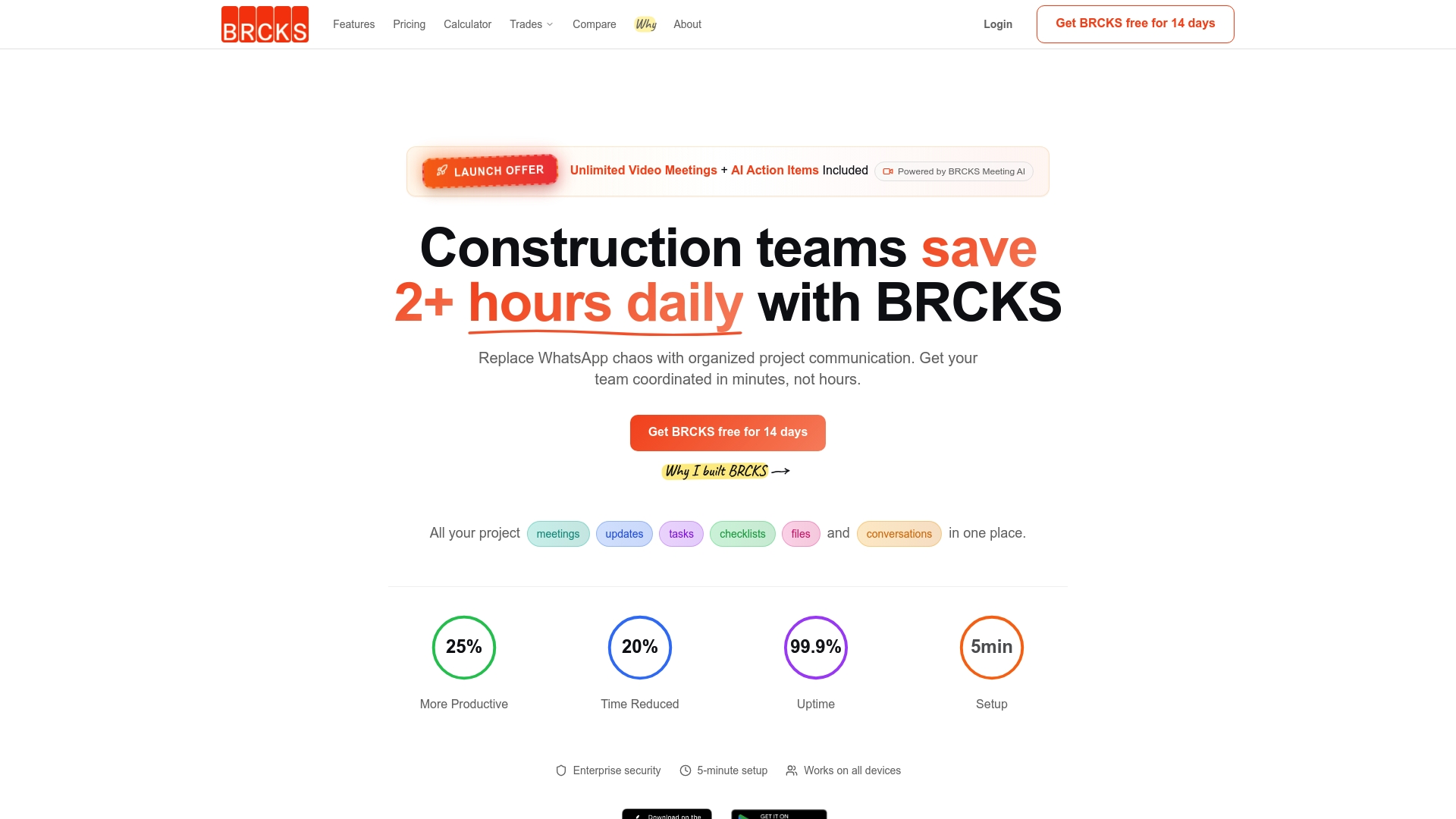
Every project detail lives in a unified feed: meetings, updates, tasks, checklists, files, and conversations. Your site teams access everything from mobile apps while office staff work from desktop. Everyone sees identical real-time information, eliminating the confusion that causes expensive errors.
BRCKS saves construction teams over two hours daily by centralising project communication. Compare how BRCKS stacks up against WhatsApp for professional construction coordination. Discover why hundreds of UK builders trust BRCKS to improve their project communication and reduce costly delays.
Frequently asked questions
What causes communication breakdowns on residential construction sites?
Fragmented tools, unclear roles, and delayed information flow create most communication failures. When updates scatter across WhatsApp, email, and spreadsheets, critical messages get missed. Role ambiguity means no one takes ownership of important communications.
How do multiple communication platforms increase project risks?
Each additional platform multiplies the chances of missed messages and outdated information. Workers check some tools regularly while ignoring others. Important updates trapped in rarely-checked channels cause preventable errors and delays.
Why is defining communication responsibilities important?
Clear ownership prevents both gaps and overlap in project communication. When everyone knows who handles specific update types, information flows smoothly. Role clarity reduces confusion by 40% and eliminates “I thought someone else did that” excuses.
Can centralised tools actually improve information accuracy?
Yes, dramatically. Single-platform communication creates one authoritative source for all project information. Everyone accesses identical up-to-date data instead of working from scattered, potentially outdated sources. This accuracy prevents expensive mistakes.
Do more meetings improve communication efficiency?
No, excessive meetings reduce productivity by up to 15%. Most routine updates work better through asynchronous channels like project feeds. Reserve meetings for complex discussions requiring real-time collaboration, not status updates everyone could read in two minutes.
Recommended
- BRCKS | Construction Project Communication Software
- BRCKS | Construction Project Communication Software
- BRCKS | Construction Project Communication Software
- BRCKS | Construction Project Communication Software
- Manage electrical repairs workflow in Waterloo with ease
How BRCKS Can Help
Effective site communication is the backbone of any successful build, yet it remains one of the industry's most persistent challenges. By centralising project data and providing real-time updates, BRCKS eliminates the silos that lead to costly misunderstandings and delays. Our platform ensures that every team member stays aligned, allowing you to focus on quality delivery rather than chasing information. Discover how BRCKS can transform your site operations by exploring our features today. Learn more at BRCKS.