WhatsApp construction software for UK builders: 2026 guide
Discover how WhatsApp-integrated construction management platforms are revolutionising UK building sites by turning daily chats into structured project data.
By James Shorter ·
WhatsApp construction software for UK builders: 2026 guide
TL;DR:
- Most UK construction teams rely heavily on WhatsApp for daily communication, despite its lack of project management features. WhatsApp-integrated construction platforms enhance this by automatically capturing messages, creating tasks, and providing structured reports, saving significant time and improving accountability. These tools seamlessly operate within existing groups, ensuring user adoption and compliance with building regulations while offering a quick setup and predictable costs.
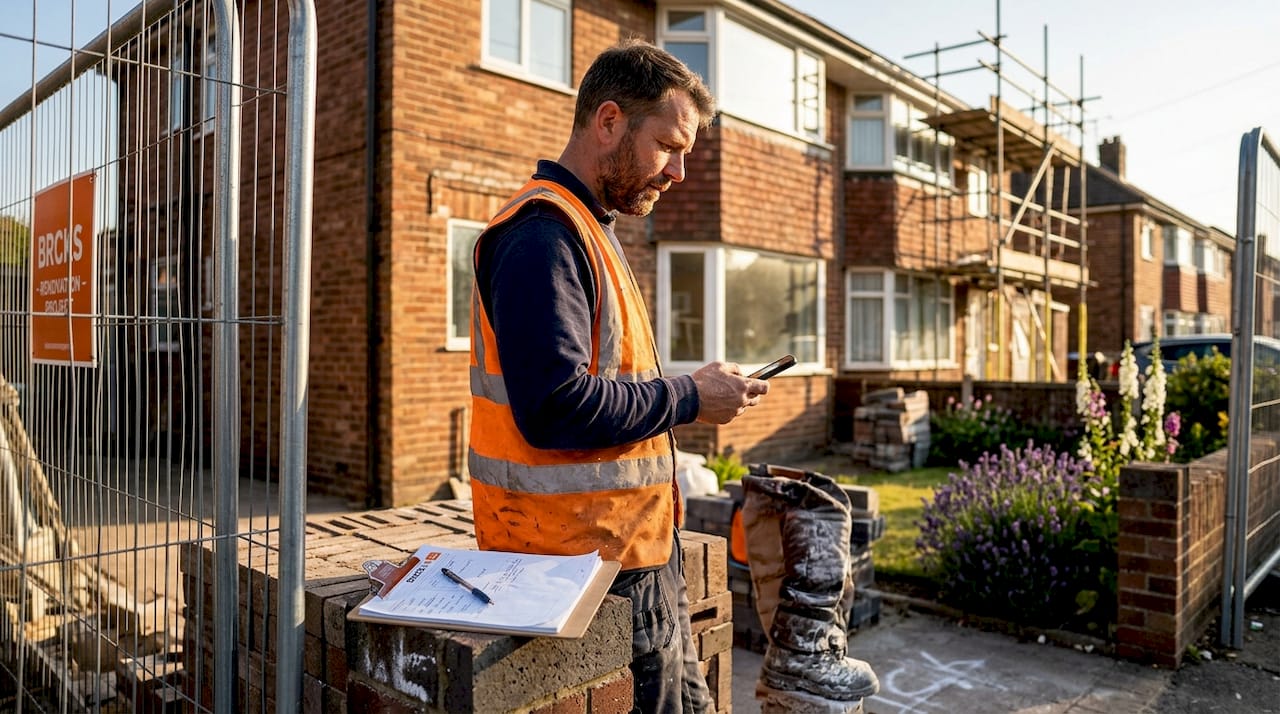
Most UK construction sites run on WhatsApp. That is not an exaggeration. Builders, site managers, and subcontractors send hundreds of messages a day across group chats, sharing photos, voice notes, and instructions. The problem is that plain WhatsApp groups were never designed for project management. Tasks get buried, decisions go unrecorded, and nobody can find that photo from three weeks ago. WhatsApp construction software, the industry term being WhatsApp-integrated construction management platforms, fixes this by adding structure and automation on top of the tool your team already uses every day.
Table of Contents
- Key takeaways
- How WhatsApp construction software works
- Benefits for project communication and task management
- WhatsApp alone vs integrated construction software
- Best practices for adopting WhatsApp construction software
- My honest view on WhatsApp and construction communication
- Why Brcks is worth a look for UK builders
- FAQ
Key takeaways
| Point | Details |
|---|---|
| WhatsApp alone is not enough | Plain group chats lack task tracking, accountability, and audit trails needed for real project management. |
| Integration keeps existing habits | WhatsApp construction software works inside your current groups, so teams need no new apps or logins. |
| Automation saves hours daily | Teams save over two hours daily by eliminating time spent searching scattered chats and emails. |
| Structured outputs reduce rework | Label-based routing and template messages convert chat updates into tasks, reports, and checklists automatically. |
| Cost scales with team size | Pricing ranges from free small-project tools to API-based platforms with BSP fees, so match the solution to your operation. |
How WhatsApp construction software works
The phrase “WhatsApp construction software” describes platforms that connect to WhatsApp via the WhatsApp Business API, then layer bots or AI on top to capture and organise messages automatically. The result is that your site team keeps chatting normally while the software does the sorting behind the scenes.
Here is what that looks like in practice:
- Message capture. When a site manager sends a photo of a snagging issue or a voice note about a materials delivery, the bot reads it and logs it against the correct project. No manual data entry required.
- Task creation. Text messages containing instructions, such as “fix the render on the east elevation by Friday”, are parsed and converted into assigned tasks with deadlines and reminders.
- Structured reporting. Tools like SendStatus let operatives send updates via their normal WhatsApp number, and AI processes inputs into daily reports covering work progress, materials used, weather, and labour hours.
- Label-based routing. Messages tagged as “Client Instruction” or “Urgent Action” are automatically routed into correct workflows, reducing manual handling and missed items.
- Client portals. Clients see a clean view of project updates without being added to your working group chats.
The WhatsApp Business Cloud API became the standard integration route after the on-premise API was deprecated in 2025, making setup faster and more reliable for software providers. For your team, this means the connection between WhatsApp and the management platform is more stable than it was even a year ago.
Pro Tip: When evaluating any WhatsApp construction software, ask the provider whether they use the Cloud API or a third-party gateway. Cloud API integrations are more stable and less likely to drop messages under load, which matters when your site team is sending dozens of updates an hour.
The technical backbone matters because production-grade bots require robust parsing of photos, voice notes, and free-text messages. A message saying “cracked lintel above window 4” needs to be understood, categorised, and linked to the right part of the project. Good platforms handle this reliably. Cheap ones miss things.
Benefits for project communication and task management
Switching from plain WhatsApp groups to an integrated platform changes how your whole site operates, not just how messages are stored.
- A single source of truth. Every update, photo, and instruction lands in one place. Fragmented updates across multiple tools cause version conflicts and outdated task visibility. Integration eliminates that problem by enforcing a single data record.
- Accountability without extra admin. When a task is created automatically from a WhatsApp message, it carries the sender’s name, a timestamp, and the project it belongs to. Nobody can claim they did not receive an instruction.
- Real-time photo documentation. Site photos sent via WhatsApp are tagged, stored, and searchable. This is particularly useful for snagging records and Building Safety Act compliance, where you need an evidence trail.
- Daily reporting without forms. Operatives send their end-of-day update via WhatsApp as they would normally. The platform compiles it into a structured daily report. No app, no form, no training required.
- Faster client communication. Clients receive updates through a portal rather than being added to group chats. This keeps your working conversations private while still giving clients the visibility they expect.
The time savings are significant. Teams save over two hours daily by not searching through scattered chats and email threads. Across a week, that is a full working day recovered per person.
For UK SMEs where every hour counts, this is not a marginal gain. It is the difference between finishing a project on programme and spending the last week firefighting miscommunications. If you are weighing up your options, the best construction messaging apps guide covers how WhatsApp-based tools compare to standalone alternatives.
WhatsApp alone vs integrated construction software
Understanding the gap between plain WhatsApp and an integrated platform helps you decide what your team actually needs.
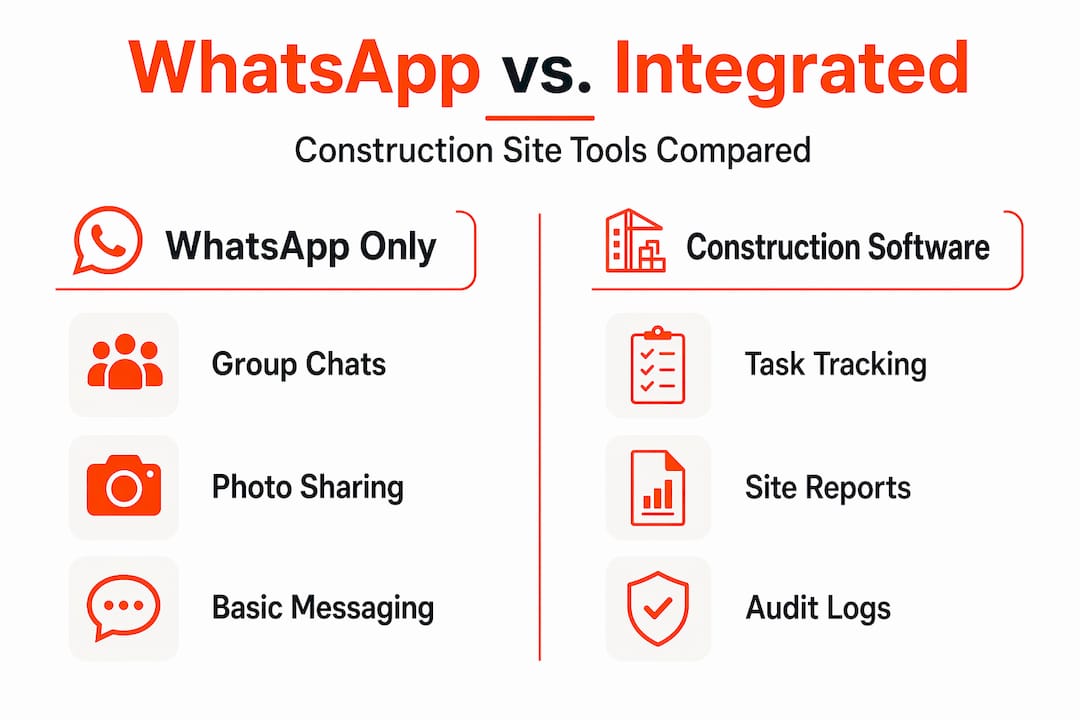
| Feature | Plain WhatsApp groups | WhatsApp construction software |
|---|---|---|
| Message history | Searchable but unstructured | Organised by project, task, and date |
| Task assignment | Manual, often forgotten | Automatic from message content |
| Deadline tracking | None | Built-in with reminders |
| Photo documentation | Stored in chat, hard to retrieve | Tagged, searchable, project-linked |
| Daily reports | None | Auto-generated from WhatsApp inputs |
| Client visibility | Add client to group or screenshot | Dedicated client portal |
| Audit trail | Limited | Full log for compliance and disputes |
| Setup time | Instant | Around five minutes for most platforms |
| Cost | Free | Free to paid; API costs apply at scale |
Plain WhatsApp is genuinely useful for quick coordination. If you are a sole trader managing one small project, it may be all you need. But once you have multiple subcontractors, concurrent projects, or client reporting obligations, the cracks appear fast.
On cost, the WhatsApp Business API charges per template message delivered, with rates varying by country and message category. Service messages within a 24-hour window are free. Business Solution Providers (BSPs) add their own markups. For most UK SMEs using a platform like Brcks, these costs are absorbed into the platform subscription and are not something you manage separately.
Pro Tip: Before committing to any platform, check whether your subcontractors will need their own paid licences. Some platforms, including Brcks, offer free subcontractor access, which makes a material difference to your total cost when you have ten trades on site.
Security and compliance are worth considering too. Plain WhatsApp offers end-to-end encryption but no audit logging, no access controls, and no way to export a structured record for dispute resolution or Building Safety Act documentation. Integrated platforms provide all of that. For projects subject to the Building Safety Act or NHBC standards, that audit trail is not optional.
Best practices for adopting WhatsApp construction software
Getting the software is the easy part. Getting your site team to use it consistently is where most rollouts succeed or fail.
- Match the tool to your team size. A two-person team doing domestic extensions needs something different from a 30-person groundworks contractor running five concurrent sites. Brcks scales across both, but the configuration will differ.
- Start with one project. Do not roll out across your entire operation on day one. Pick one active project, set it up properly, and let the team get comfortable before expanding.
- Set clear labelling rules. Decide upfront which message types trigger which workflows. “Snagging issue”, “material request”, and “client approval” should each have a defined label so the bot routes them correctly. Label-based routing only works if the team uses consistent language.
- Brief subcontractors in five minutes. You do not need a training day. Show them what to type or say when logging an issue, and let the bot handle the rest. Most platforms are designed for this.
- Use the client portal from day one. Clients who can see live project updates ask fewer questions by phone and email. Set up the portal before the project starts, not halfway through.
- Review automation accuracy weekly. In the first two weeks, check that tasks are being created correctly and that no messages are being misclassified. Adjust your labelling rules based on what you find.
Pro Tip: The biggest adoption killer is inconsistency. If the site manager uses the bot religiously but the electrician ignores it, your data becomes unreliable. Make consistent use a site rule from the start, the same way you enforce PPE or site inductions.
A useful reference point on subcontractor scope and communication is that clear upfront agreements about how updates will be communicated reduce disputes significantly. WhatsApp construction software makes that agreement enforceable because every update is logged.
My honest view on WhatsApp and construction communication
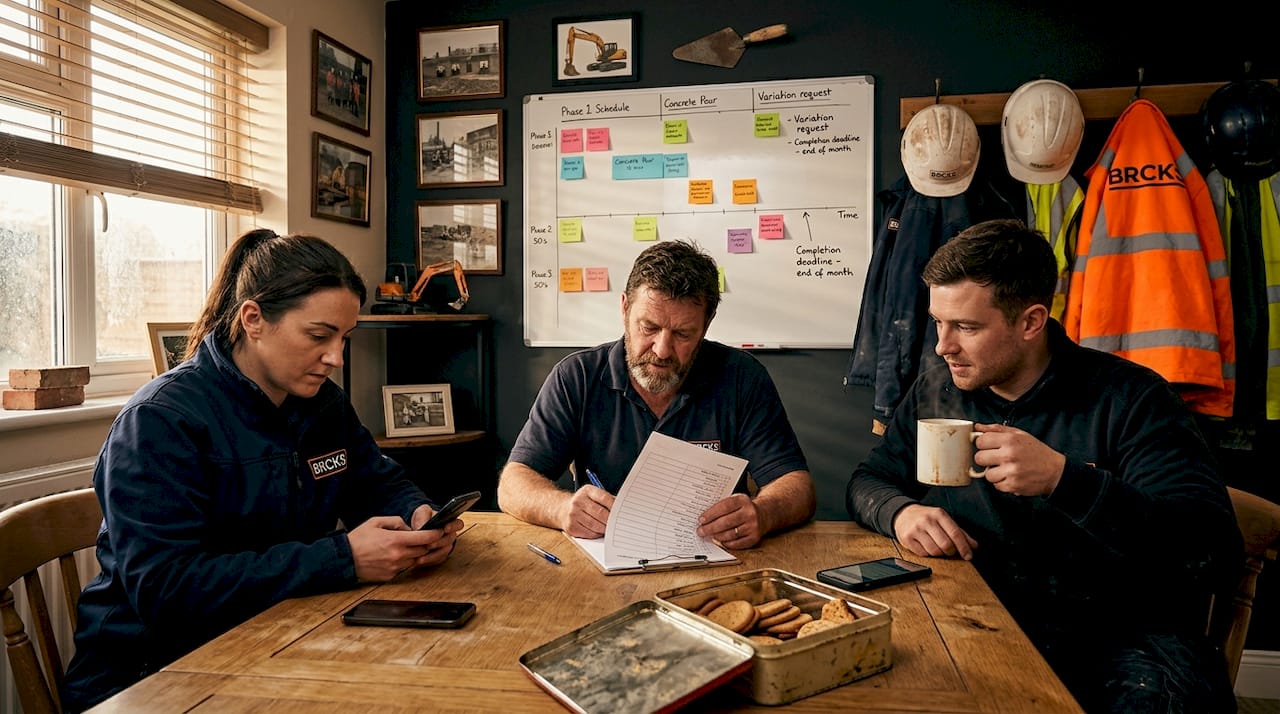
I have watched site managers run projects entirely from WhatsApp group chats, and I have seen the same managers lose three days of productivity trying to reconstruct a decision trail when a dispute arose. The chaos is not caused by WhatsApp itself. It is caused by using a messaging app as a project management system without any structure.
What I have found, working with teams across UK residential and commercial sites, is that the resistance to integrated tools is almost always about fear of complexity. People assume that adding software means adding admin. In practice, the opposite is true. When a bot captures your site update automatically, you spend less time on admin, not more.
The tools that work best are the ones that ask almost nothing of the site team. A roofer sending a photo of a completed section should not need to think about which system it goes into. It should just go in. That is what WhatsApp-native platforms deliver when they are set up properly.
My experience with Brcks specifically is that the setup is fast enough that you can have a project running on it within a morning. The client portal alone changes the dynamic with clients because they stop calling to ask for updates. That is time back in your day.
The discomfort of changing how your team communicates is real but short-lived. The cost of not changing, in lost time, repeated mistakes, and unresolved disputes, is permanent.
— James
Why Brcks is worth a look for UK builders
If you have read this far, you are probably already aware that plain WhatsApp is not cutting it on your projects. Brcks is built specifically for this situation.
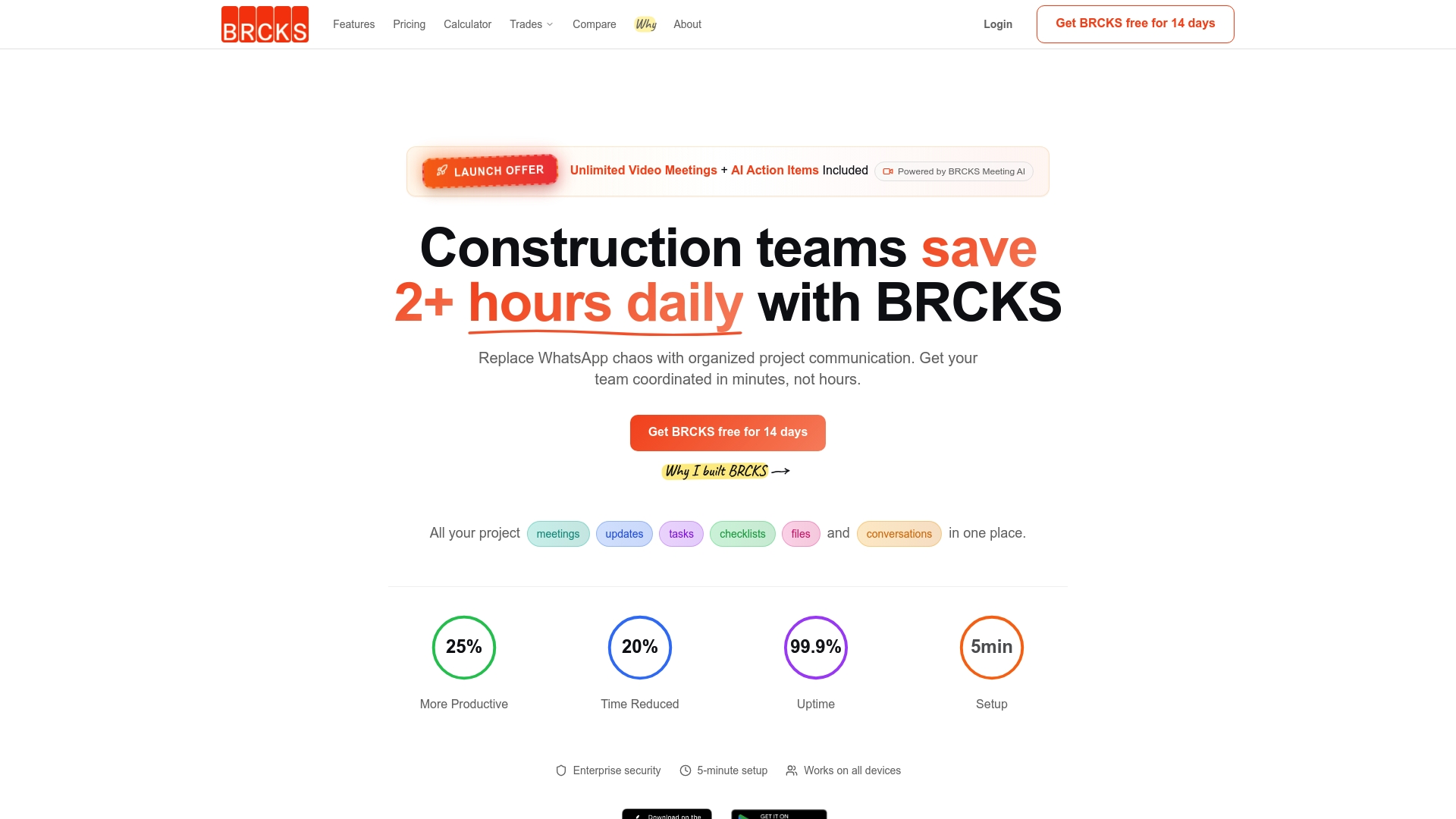
Brcks works inside your existing WhatsApp groups. Your team keeps using WhatsApp exactly as they do now. The Brcks bot captures updates, creates tasks, logs photos, and compiles daily reports automatically. There is no new app to download and no login for your subcontractors. The BRCKS WhatsApp bot is designed to sit invisibly inside your workflow and do the organising for you.
For builders specifically, the Brcks platform for builders covers task management, snagging checklists, file sharing, client portals, and meeting records. Subcontractor access is free, which keeps your costs predictable. The platform is also built with UK construction workflows in mind, including support for the kind of audit trails and documentation that the Building Safety Act requires.
Teams using Brcks report saving over two hours daily by not searching through scattered chats. You can try it free for 14 days and see the difference on a live project before committing.
FAQ
What is WhatsApp construction software?
WhatsApp construction software refers to platforms that connect to WhatsApp via the Business API and add bots or AI to capture messages, create tasks, and generate reports automatically. Teams keep using WhatsApp normally while the software organises everything behind the scenes.
Does my team need to download a new app?
No. Platforms like Brcks work inside your existing WhatsApp groups. Your site team and subcontractors send messages as they normally would, and the bot handles the rest without any additional app or login.
How much does WhatsApp construction software cost?
Costs vary. Some tools are free for small projects, while API-based platforms charge per template message plus BSP fees. Most UK-focused platforms bundle API costs into a monthly subscription, with pricing varying by message category.
Is WhatsApp construction software compliant with UK building regulations?
Integrated platforms provide audit logs, structured records, and document storage that support compliance with the Building Safety Act and NHBC standards. Plain WhatsApp groups do not provide this level of documentation.
How long does setup take?
Most WhatsApp-integrated platforms take around five minutes to set up for basic task management. A full project configuration with client portals and reporting workflows typically takes under an hour.
Recommended
- BRCKS | Construction Project Communication Software
- Best Construction Apps UK: 2026 Guide for Builders
- BRCKS | Construction Project Management Software UK
- BRCKS | Construction Project Management Software UK
How BRCKS Can Help
While WhatsApp remains a convenient tool for quick chats on-site, relying on it for complex project management often leads to fragmented data and costly miscommunications. BRCKS bridges this gap by centralising your site updates, documents, and team communications into a single, professional platform designed specifically for the UK construction industry. By moving your workflows into BRCKS, you can maintain the speed of instant messaging while ensuring every decision is tracked and every project stays on schedule. We invite you to book a demo today to see how our software can streamline your business operations. Learn more at BRCKS and explore our full feature set.