Site task management guide for UK construction teams
A comprehensive guide for UK construction professionals on mastering site task management through the PDCA cycle and robust Construction Phase Plans.
By James Shorter ·
Site task management guide for UK construction teams

TL;DR:
- Effective site task management links every task to the live, version-controlled Construction Phase Plan to ensure active oversight.
- Using the PDCA cycle and pragmatic techniques like Kanban and GTD helps maintain proactive, traceable workflows on site.
Site task management is the organised process of planning, monitoring, and controlling tasks on a construction site to deliver projects safely, on time, and within budget. For UK construction professionals, this means working within a framework that includes the Construction Phase Plan (CPP), the Plan-Do-Check-Act (PDCA) cycle, and digital tools like BRCKS to keep every task traceable and audit-ready. Poor task organisation is not just an efficiency problem. It is a compliance risk under the Construction (Design and Management) Regulations 2015 (CDM 2015). This guide covers the core components, practical workflows, and site task management strategies that actually hold up on a live site.
What does a site task management guide need to cover?
Effective site task management rests on four foundations: clear roles, live documentation, structured coordination routines, and traceable task records. Miss any one of these and the whole system starts to drift.
The Construction Phase Plan as your task management backbone
Under CDM 2015 regulations, the Principal Contractor must produce a CPP that documents how work will be planned, monitored, and controlled across the project lifecycle. The CPP supersedes individual Risk Assessment and Method Statements (RAMS), which focus on task-level safety, by providing the overarching site management framework. It covers site constraints, logistics, risk controls, and subcontractor coordination in one document. Think of it as the master reference that every task on site should trace back to.
The CPP is not a document you write once and file away. Auditors expect evidence of active management: issue numbers, change summaries, and briefing records that show the plan is being used and updated throughout the project. A CPP that does not reflect current site conditions is a liability, not a safeguard.
Roles, responsibilities, and coordination routines
Every person on site needs to know what they are accountable for and who they report to. Defined roles prevent tasks from falling between subcontractors or being duplicated at cost. The coordination routines that hold this together include:
- Daily toolbox talks tied to the day’s specific tasks and hazards
- Weekly look-ahead planning meetings with subcontractor supervisors
- Permit-to-work (PTW) briefings before high-risk activities begin
- Site inductions that reference the CPP and relevant RAMS
- Regular site inspections with recorded findings
Pro Tip: Link every toolbox talk record to the relevant section of the CPP. This creates a direct evidence trail that auditors look for and that keeps your team anchored to the live plan rather than working from memory.
How does the PDCA cycle work for site workflow management?
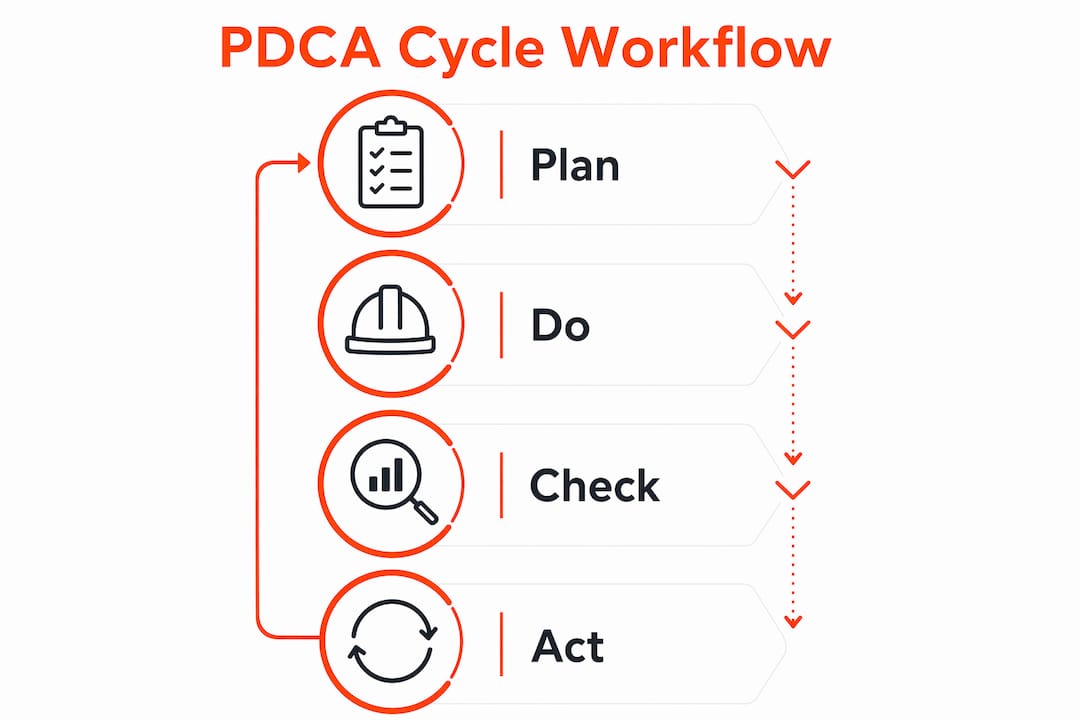
The Plan-Do-Check-Act cycle is the most practical framework for managing health, safety, and task execution on a construction site. PDCA suits construction because it structures hazard identification, operational controls, and performance evaluation within a Health, Safety, and Environmental Management System (HSEMS).
Here is how each stage maps to real site activity:
- Plan. Identify tasks and associated hazards. Prepare the CPP, RAMS, and PTW documentation. Assign responsibilities and set measurable targets for the phase.
- Do. Implement controls. Issue permits, conduct briefings, and deploy resources according to the plan. This is where task lists become live site activity.
- Check. Run site inspections, review KPIs, conduct audits, and capture near-miss reports. KPIs like Total Recordable Incident Rate and permit-to-work compliance give you objective data on whether controls are working.
- Act. Investigate incidents, implement corrective actions, and feed lessons back into the plan. Management reviews at this stage close the loop and prevent the same problems recurring.
The table below shows how PDCA stages map to specific site documents and activities:
| PDCA stage | Site activity | Key document |
|---|---|---|
| Plan | Hazard identification, task scheduling | CPP, RAMS |
| Do | Briefings, permit issue, task execution | PTW, method statements |
| Check | Inspections, audits, KPI review | Inspection records, audit reports |
| Act | Incident investigation, corrective actions | Investigation reports, updated CPP |
Pro Tip: Do not wait for a formal audit to review your KPIs. A short weekly review of permit compliance and near-miss reports gives you early warning of task management failures before they become incidents.
What task management techniques work best on construction sites?
Construction sites are not offices, and task management techniques designed for software teams do not translate directly. That said, three frameworks adapt well to site conditions when applied with some pragmatism.
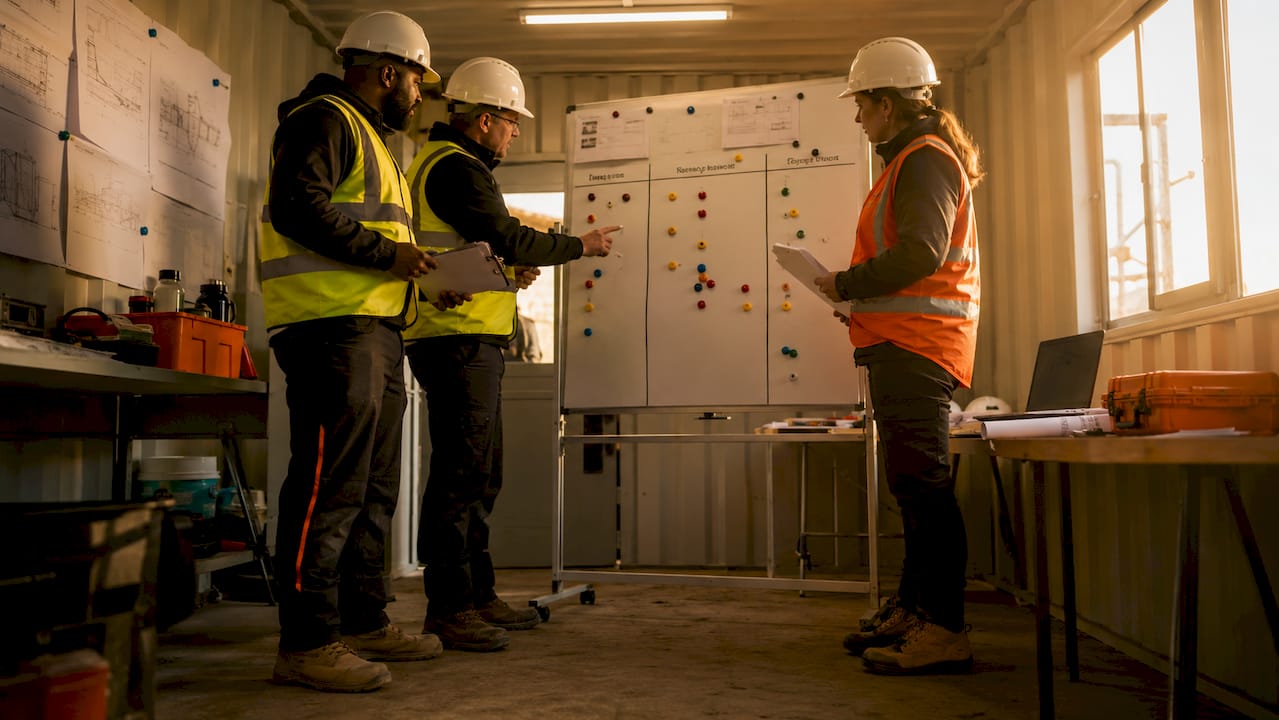
Kanban works well for trade sequencing. Visualising tasks as cards moving through columns (To Do, In Progress, Complete) gives supervisors an instant read on where blockages are forming. On a fit-out project, for example, a Kanban board showing first-fix electrical, plumbing, and joinery tasks in parallel makes it immediately clear when one trade is holding up another.
Getting Things Done (GTD), developed by David Allen, translates to site management as a capture-and-clarify habit. Every task that comes up during a site walk gets captured immediately, clarified into a specific action, and assigned to a person with a deadline. The discipline here is the capture step. Tasks discussed verbally and not recorded are tasks that disappear.
The Eisenhower matrix sorts tasks by urgency and importance. On site, this prevents the common trap of spending the day on urgent but low-importance tasks (chasing a delivery) while high-importance but non-urgent tasks (updating the CPP after a phase change) get deferred until they become a compliance problem.
Task management systems that scale balance flexibility, visibility, and enforcement. Rigid fixed workflows or poorly integrated software lead to system abandonment on construction sites. This is why matching the technique to your team’s actual working patterns matters more than choosing the most sophisticated method.
Choosing the right digital tools for site project organisation
Digital tools for site project organisation fall into two broad categories: general project management platforms and construction-specific software. General platforms offer flexibility but require significant configuration to handle construction-specific needs like RAMS tracking, PTW management, and CPP version control.
Construction-specific tools are built around the documents and workflows that already exist on site. BRCKS, for instance, integrates with WhatsApp to capture site communications in real time, automatically generating site diary records and task logs without requiring your team to learn a new interface. For teams already using WhatsApp as their primary communication channel, this removes the friction that causes other systems to be abandoned. BRCKS also includes RFI tracking, variation logs, and snag list management, covering the full range of site task types in one place.
The key question when evaluating any tool is whether your team will actually use it under site conditions. A system that requires a laptop and a stable internet connection to update is not a site management tool. It is an office management tool that happens to have a mobile app.
How do you keep site documentation audit-ready?
Maintaining live, audit-ready documentation is where most site task management systems fail. The gap between what the CPP says and what is actually happening on site widens gradually, and by the time an auditor or inspector arrives, the document is describing a project that no longer exists.
Effective site task management requires linking each task directly to its relevant control documents and interface evidence. Without this traceability to RAMS, permits, and CPP hold points, site management loses proactive oversight despite having task lists in place. The fix is not more paperwork. It is better-connected paperwork.
Practical steps to keep documentation current:
- Set defined change triggers that automatically prompt a CPP review. These include moving from strip-out to structural works, introducing a new subcontractor package, or any reportable incident.
- Version-control every update with an issue number, date, and brief change summary. This takes two minutes and creates the audit trail that demonstrates active management.
- Keep look-ahead meeting notes on file. These show that interface risks between trades are being reviewed proactively, not just reacted to after a clash occurs.
- Assign document ownership. One named person is responsible for the CPP. One named person owns each RAMS package. Shared ownership means no ownership.
“Making CPP and Construction Management Plan arrangements ‘real’ on site requires audit-ready evidence including versioning, briefing records, and look-ahead meeting notes showing active risk and interface review.” — CTC South West Ltd
The most common pitfall is reactive firefighting: spending every day responding to problems that a functioning task management system would have anticipated. Regularly updating task plans upon phase changes, incidents, or new subcontractor packages keeps the CPP live and reflects actual site conditions. When you stop updating the plan, you stop managing the site. You start managing the consequences.
Key takeaways
Effective site task management on UK construction projects requires linking every task to its control documents, keeping the CPP live through defined change triggers, and using the PDCA cycle to close the loop between planning and performance.
| Point | Details |
|---|---|
| CPP is the task management backbone | Every site task should trace back to the live, version-controlled Construction Phase Plan. |
| PDCA structures the whole workflow | Plan, Do, Check, Act maps directly to site documents and coordination routines. |
| Match technique to your team | Kanban, GTD, and the Eisenhower matrix all work on site when adapted to real workflows. |
| Traceability prevents firefighting | Linking tasks to RAMS, permits, and hold points keeps management proactive, not reactive. |
| Change triggers keep documents live | Phase changes, incidents, and new subcontractor packages must prompt an immediate CPP review. |
What I have learned from watching site task management go wrong
Most site task management failures I have seen come down to one thing: the plan and the site diverge, and nobody notices until something goes wrong. The CPP gets written at mobilisation, filed in a folder, and never touched again. The RAMS get signed off and forgotten. The task list lives in someone’s head or on a WhatsApp group that nobody can search.
The counter-intuitive truth is that the teams with the best task management are not the ones with the most sophisticated software. They are the ones with the clearest habits. A simple weekly CPP review, a consistent change trigger protocol, and a named document owner will outperform an expensive platform that nobody uses correctly.
Where I think the industry is heading is genuinely interesting. AI-assisted task management, where software flags when a task has no associated RAMS or when a phase change has not triggered a CPP update, is already technically possible. BRCKS is already moving in this direction by capturing WhatsApp communications and automatically generating site diary entries, removing the manual step that most teams skip. The teams that will benefit most from these tools are not the ones who adopt them because they are new. They are the ones who already have disciplined task management habits and are looking to reduce the administrative load on their supervisors.
The advice I would give any project manager reading this: start with the habit, then find the tool that supports it. Not the other way around.
— James
How BRCKS supports site task management for UK builders
If your site task management is held together by WhatsApp threads and spreadsheets, BRCKS is built specifically to fix that. BRCKS captures your team’s WhatsApp communications in real time, automatically generating site diary entries, task logs, and audit-ready records without adding a single extra step to your team’s day.
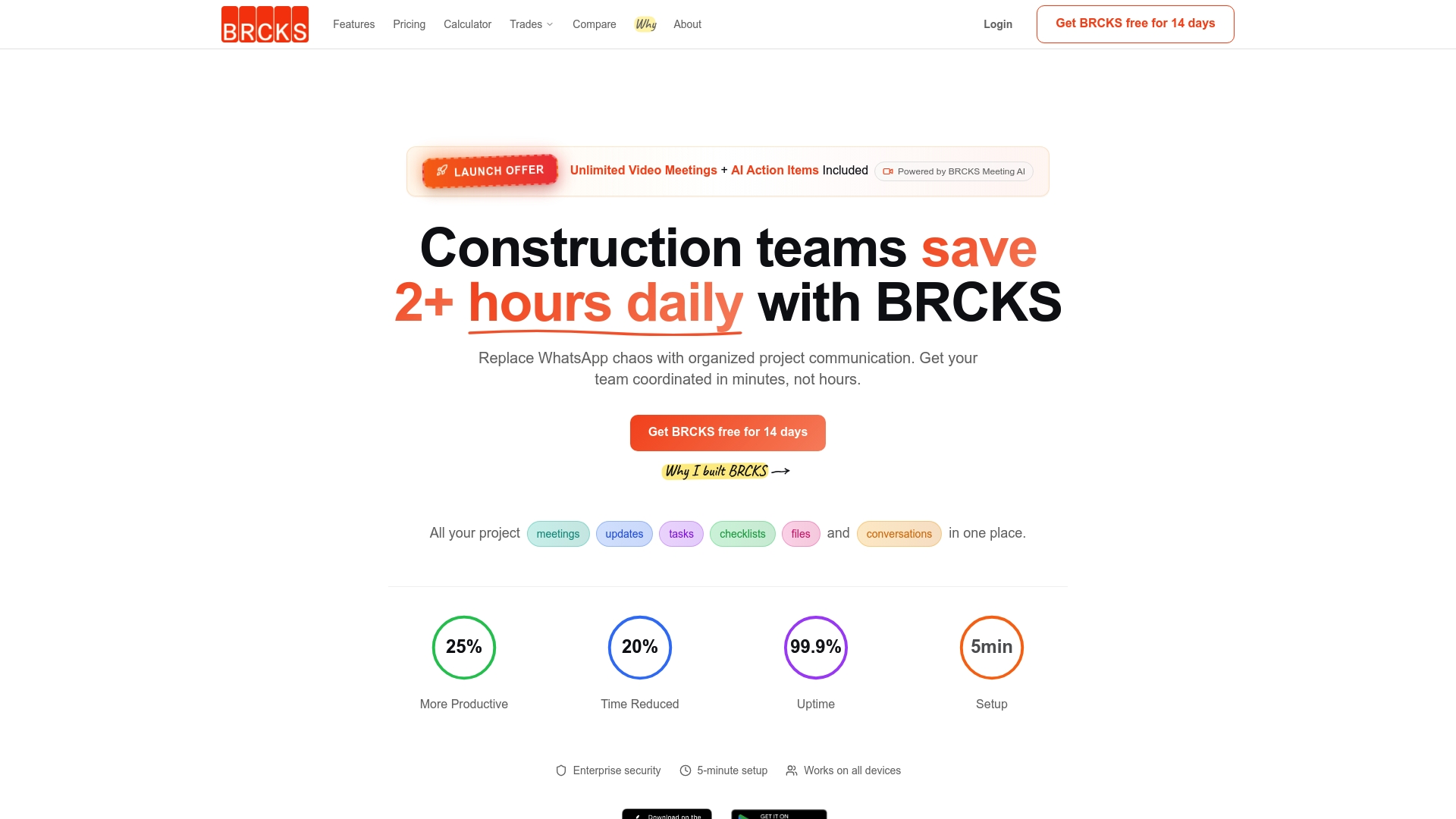
For UK builders managing CPP compliance, RFI tracking, and subcontractor coordination, BRCKS for builders brings all of it into one place. The WhatsApp project management integration means your team keeps working the way they already work, while BRCKS handles the documentation in the background. Users save over two hours of manual effort daily. Get BRCKS free for 14 days and see what audit-ready site management actually looks like.
FAQ
What is a Construction Phase Plan and who is responsible for it?
The Construction Phase Plan is a document required under CDM 2015 that sets out how work on site will be planned, monitored, and controlled. The Principal Contractor is responsible for producing and maintaining it throughout the project.
How often should the CPP be updated?
The CPP should be updated whenever a significant change occurs on site, including phase changes, new subcontractor packages, access strategy adjustments, or any reportable incident. Version control with issue numbers and change summaries is required to demonstrate active management.
What is the PDCA cycle in construction site management?
PDCA stands for Plan, Do, Check, Act. It is a systematic framework used within a Health, Safety, and Environmental Management System to structure hazard identification, task execution, performance monitoring, and continuous improvement on construction sites.
Which task management technique works best for construction teams?
Kanban works well for trade sequencing and visualising workflow blockages. GTD suits task capture and clarification during site walks. The right choice depends on your team’s size, working patterns, and the complexity of the project.
How can digital tools improve site task management?
Construction-specific software like BRCKS automates site diary creation, tracks RFIs and variations, and integrates with communication tools like WhatsApp to keep task records current without adding administrative burden to site teams.
Recommended
- Site Communication Workflow: UK Project Manager’s Guide | BRCKS
- UK Construction Project Management Terminology Guide | BRCKS
- Meeting Management Tips for UK Contractors | BRCKS
- BRCKS | Construction Project Communication Software
How BRCKS Can Help
Effective site task management is the backbone of any successful project, ensuring that teams stay aligned and deadlines are met without compromising on quality. By integrating these best practices with a digital platform like BRCKS, UK construction firms can eliminate manual errors and gain real-time visibility over every moving part on-site. Our software is purpose-built to streamline these complex workflows, allowing you to focus on building rather than chasing updates. We invite you to discover how BRCKS can transform your operational efficiency by exploring our features today. Learn more at BRCKS and explore our full feature set.