Role of video meetings in construction project success
Video conferencing is transforming construction project management by reducing travel costs and accelerating decision-making on UK residential sites.
By James Shorter ·
Role of video meetings in construction project success
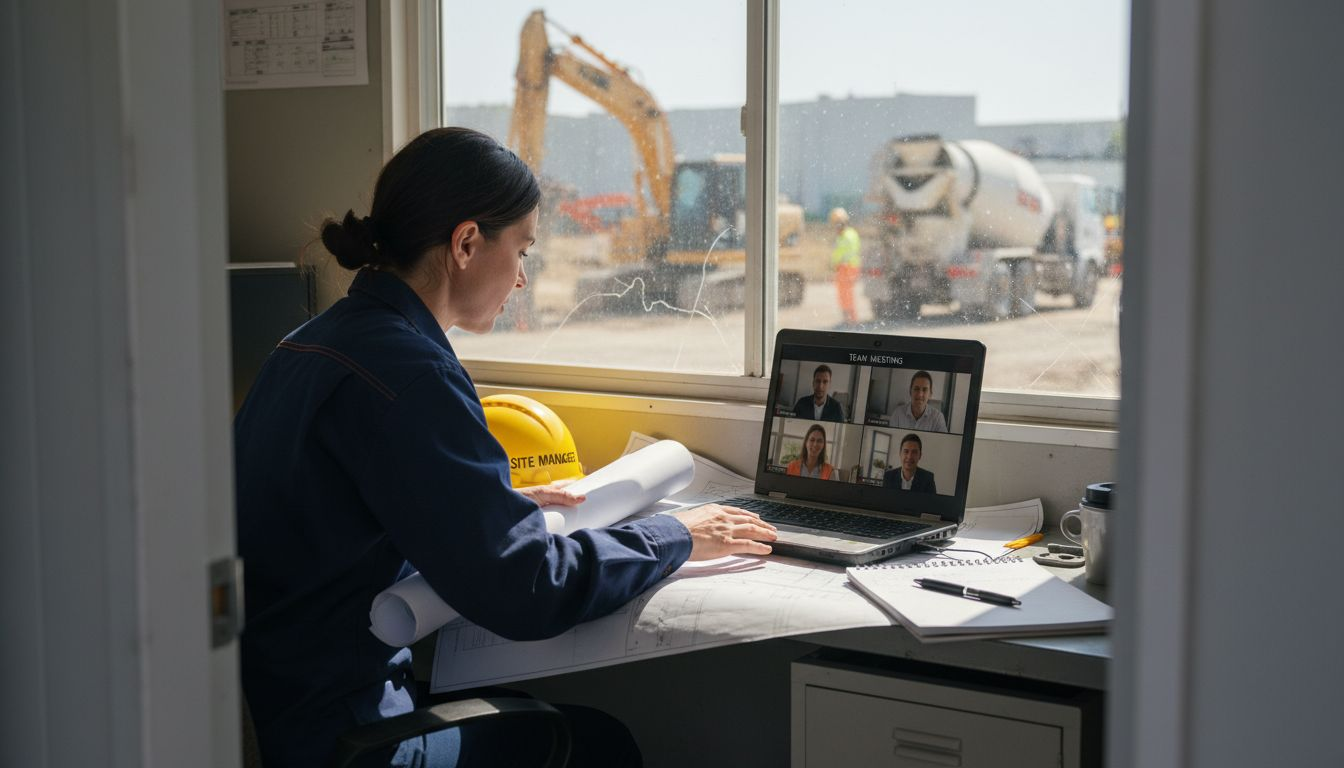
Many construction professionals still view video meetings as poor substitutes for face-to-face site visits, yet recent data reveals a different story. Digital technologies are transforming construction project management, with video conferencing emerging as a critical tool that delivers measurable improvements in efficiency and communication. Studies show that properly implemented video meetings can reduce travel time and costs by up to 30% whilst improving decision-making speed by 20%. This article explores how video meetings have evolved from basic communication tools into essential project management assets, examining their benefits, addressing common implementation challenges, and providing practical guidance for maximising their effectiveness on UK residential construction projects.
Table of Contents
- The Evolving Role Of Video Meetings In Construction
- How Video Meetings Improve Communication And Decision Making
- Challenges And Best Practices For Effective Video Meetings In Construction
- Applying Video Meetings To Enhance Construction Project Workflows
- Discover Construction Software Built For Seamless Video Collaboration
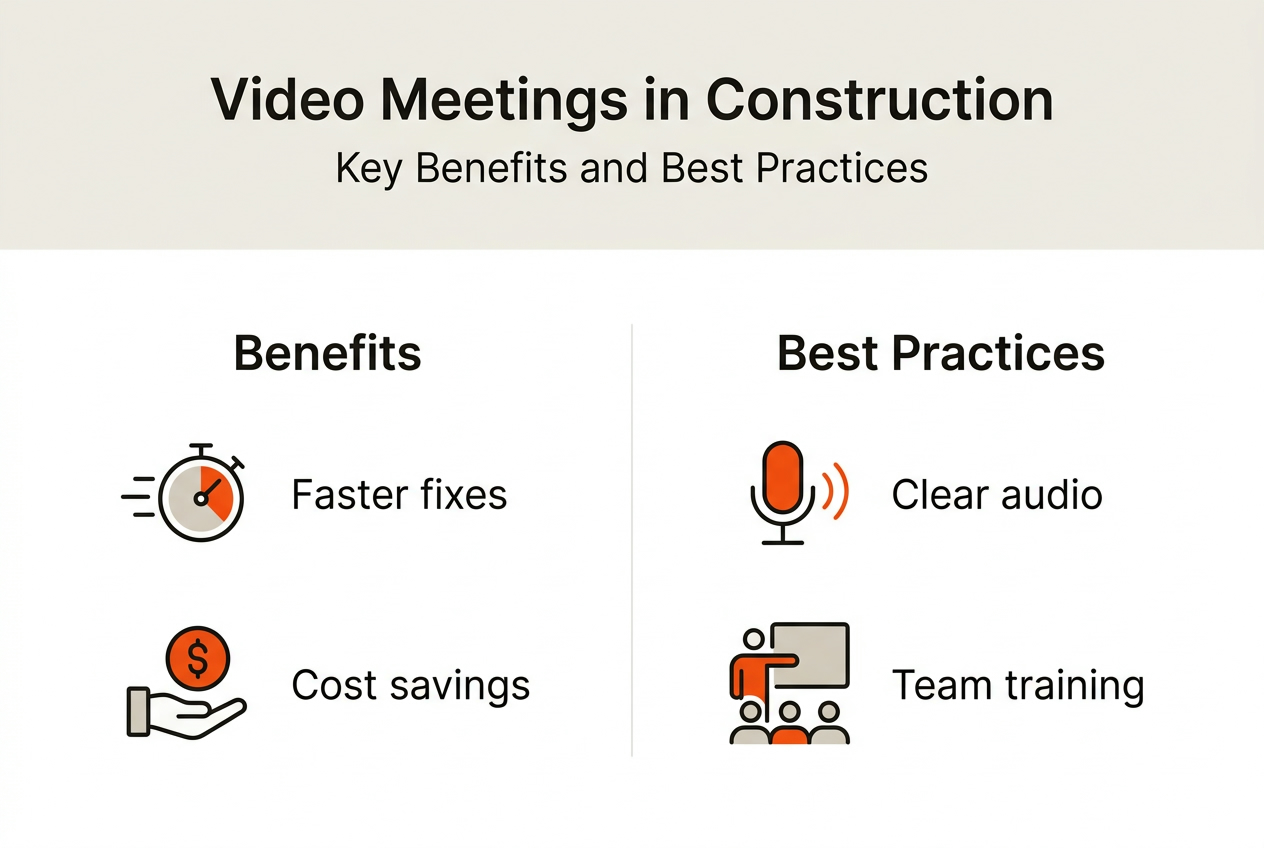
Key takeaways
| Point | Details |
|---|---|
| Cost reduction | Video meetings cut travel expenses and project delays by enabling faster decisions and reducing site visit requirements |
| Enhanced coordination | Real-time video communication accelerates issue resolution and improves task assignment accuracy across dispersed teams |
| Technical requirements | Quality audio equipment and reliable internet connections are essential for effective video meeting implementation |
| Integration benefits | Video meetings work best when combined with project management software for seamless workflow and documentation |
| Training necessity | Team members require proper training in video meeting protocols to maximise communication effectiveness and productivity |
The evolving role of video meetings in construction
digital technologies including BIM, real-time data analytics, drones, and IoT are revolutionising construction project management, improving efficiency, safety, and sustainability. Video meetings have become integral components within these broader digital workflows, enabling teams to coordinate complex activities without the time and cost burdens of constant site travel. The technology supports everything from design reviews and progress updates to safety briefings and stakeholder consultations.
The benefits extend across multiple project dimensions. Video conferencing enables faster problem identification and resolution, reducing the likelihood of costly errors that stem from delayed communication. Teams can share visual information instantly, whether showing site conditions, reviewing drawings, or demonstrating installation techniques. This visual dimension adds clarity that phone calls and emails cannot match, whilst maintaining the convenience and speed of remote communication.
However, digital construction collaboration faces challenges including uneven technology adoption rates and infrastructure limitations, particularly at remote sites. Some team members may resist new communication methods, preferring traditional face-to-face interactions. Internet connectivity can be unreliable in certain locations, and the initial investment in equipment and training requires commitment from project leadership.
Video meetings complement several other digital technologies that enhance construction workflows:
- Building Information Modelling (BIM) platforms for design coordination and clash detection
- Drone technology for site surveys, progress monitoring, and safety inspections
- IoT sensors for real-time tracking of equipment, materials, and environmental conditions
- Cloud-based project management systems for centralised document control and task tracking
- Mobile applications that provide field teams with instant access to project information
When integrated effectively, these technologies create a connected digital ecosystem where video meetings serve as the human communication layer that brings data, decisions, and actions together. The key lies in selecting tools that work together seamlessly rather than creating additional fragmentation.
How video meetings improve communication and decision making
Implementation of video conferencing can reduce travel time and costs by up to 30% on construction projects, delivering immediate financial benefits whilst improving team productivity. Project managers and site supervisors spend less time commuting between locations, freeing hours for higher value activities like planning, coordination, and problem solving. These savings compound across project duration, particularly on developments spanning multiple sites or involving geographically dispersed stakeholders.
Effective use of video conferencing improves communication and decision making speed by 20% compared to traditional methods. When issues arise on site, teams can convene virtual meetings within minutes rather than waiting days for schedules to align. This responsiveness prevents small problems from escalating into major delays or rework. Subcontractors can join discussions from their current locations, ensuring that decisions involve all relevant parties without logistical complications.
Video meetings support seamless task assignment and coordination among teams working across different locations and time zones. Project managers can clearly communicate expectations, demonstrate techniques visually, and confirm understanding through real-time interaction. This clarity reduces construction errors that often result from miscommunication or incomplete information transfer.
The specific benefits include:
- Faster issue resolution through immediate visual assessment and collaborative problem solving
- Real-time project updates that keep all stakeholders informed of progress and changes
- Reduced travel expenses for consultants, specialists, and management personnel
- Fewer project delays caused by waiting for in-person meetings or site visits
- Improved documentation through recorded meetings and action item tracking
- Enhanced client engagement through convenient progress reviews and decision points
Pro Tip: Invest in comprehensive training programmes that teach team members effective video meeting protocols, including camera positioning, lighting setup, and professional communication techniques. Well-trained teams extract significantly more value from video technology than those who simply install software and expect immediate results. Training should cover both technical operation and meeting etiquette, ensuring participants understand how to contribute effectively in virtual environments.
The communication improvements extend beyond immediate project teams to include clients, architects, engineers, and regulatory authorities. Video meetings enable more frequent touchpoints without imposing travel burdens, strengthening relationships and building trust through consistent engagement. Clients appreciate the transparency and accessibility, whilst consultants can provide input more efficiently than traditional site visit schedules allow.
Challenges and best practices for effective video meetings in construction
Construction sites struggle with wifi signal due to structural obstacles, remote locations, and limited infrastructure investment. Bandwidth limitations at remote sites affect video meeting quality, causing frozen screens, dropped connections, and frustrating communication breakdowns. These technical issues undermine confidence in the technology and can discourage teams from adopting video solutions.
Poor audio quality undermines video meeting effectiveness more severely than video problems. Participants can tolerate occasional visual glitches, but garbled or inaudible speech makes productive conversation impossible. Background noise from construction activities compounds audio challenges, particularly when multiple participants join from active work areas. Investing in quality microphones and acoustic solutions delivers better returns than focusing solely on video resolution.
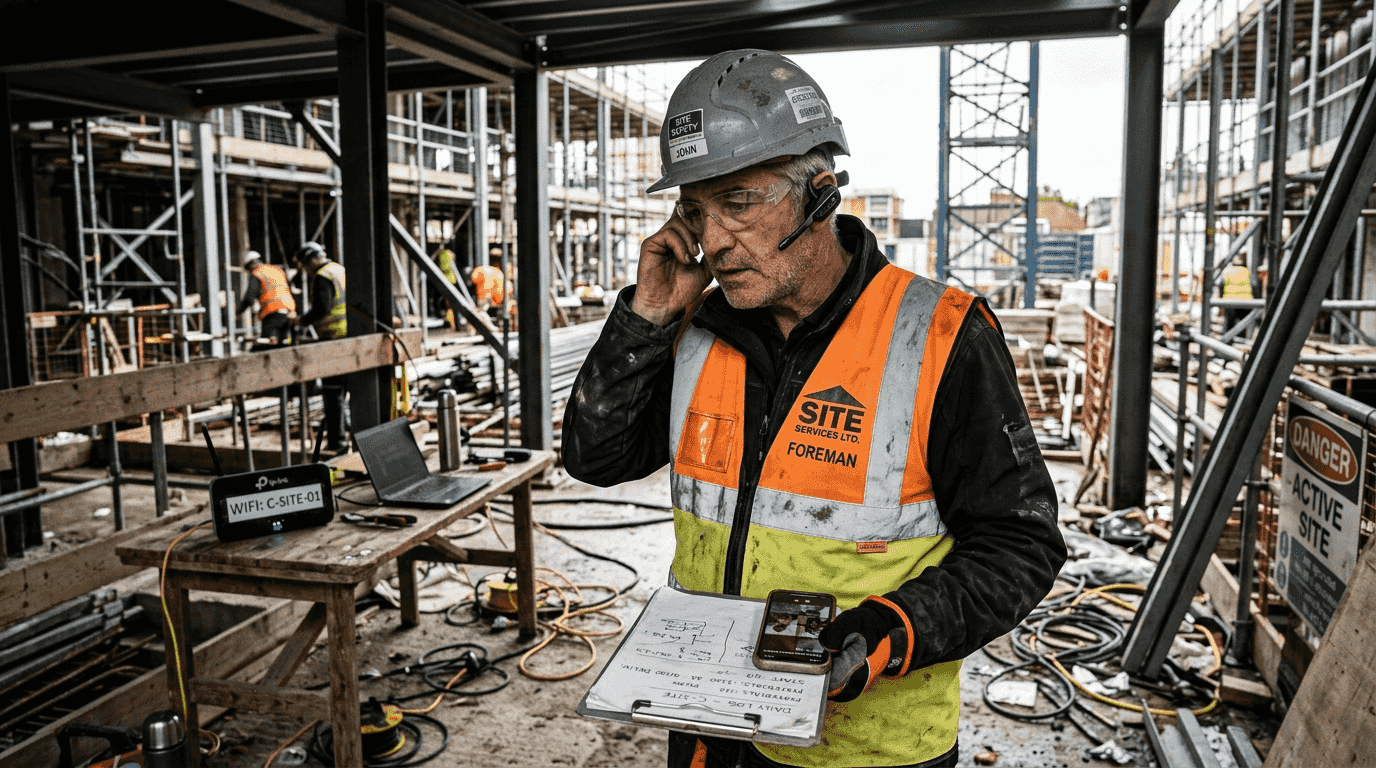
Reliable internet connections are essential for avoiding disruptions during critical project discussions. Teams should assess connectivity at all locations where video meetings will occur, testing bandwidth under realistic conditions rather than assuming adequate performance. Mobile hotspots provide valuable backup options when primary connections fail, ensuring meetings can proceed despite technical difficulties.
Common challenges include:
- Unstable internet connections causing frequent disconnections and poor quality
- Noisy construction environments interfering with audio clarity and comprehension
- Lack of participant training leading to technical difficulties and inefficient meetings
- Inadequate equipment such as low-quality cameras, microphones, or outdated devices
- Scheduling complications across multiple time zones and varying work patterns
Best practices for overcoming these obstacles:
- Pre-test all connections and equipment before important meetings to identify and resolve issues proactively
- Use quality microphones with noise cancellation features and position them appropriately for optimal sound capture
- Provide comprehensive participant training covering both technical operation and effective virtual communication techniques
- Develop backup plans for connectivity issues, including alternative meeting times and audio-only fallback options
- Establish clear meeting protocols regarding muting, turn-taking, and visual presentation standards
- Schedule meetings during periods of lower site activity when background noise is minimised
Pro Tip: When live video proves impractical due to bandwidth constraints or other limitations, consider pre-recorded video updates or audio-only calls to maintain communication flow. Pre-recorded content can be compressed and transmitted during off-peak hours, then reviewed by team members at their convenience. This approach conserves data whilst preserving visual information that aids understanding. Audio-only calls work well for routine updates and straightforward discussions that don’t require visual references.
Addressing these construction communication problems requires systematic approaches rather than ad-hoc solutions. Project leadership should allocate budget for proper equipment, training, and infrastructure improvements rather than viewing video meetings as free tools that require no investment. The hidden costs of inadequate software and poor implementation often exceed the upfront investment in quality solutions.
Applying video meetings to enhance construction project workflows
Video meetings integrate seamlessly with modern project management and collaboration software, creating unified workflows that connect communication with task execution. Collaboration features enable real-time updates, task assignments, and work coordination that enhance workflow and improve project outcomes. When video discussions generate action items, integrated systems can immediately convert these into tracked tasks with assigned owners and deadlines.
| Approach | Cost efficiency | Flexibility | Documentation | Participation | | — | — | — | — | | Traditional in-person meetings | Low due to travel time and expenses | Limited by scheduling and location constraints | Relies on manual notes and follow-up | Restricted to those who can attend physically | | Video meetings | High with minimal travel and faster scheduling | Excellent across locations and time zones | Automated recording and transcription available | Broad including remote team members | | Hybrid approaches | Moderate balancing travel for key meetings | Good combining benefits of both methods | Mixed quality depending on implementation | Variable based on meeting type and importance |
Workflow benefits of integrated video meeting systems include:
- Improved task tracking through automatic action item capture and assignment
- Greater accountability with clear ownership and deadline visibility
- Faster issue escalation enabling problems to reach decision makers quickly
- Seamless information flow connecting discussions to project documentation
- Enhanced transparency allowing stakeholders to review meeting outcomes easily
Pro Tip: Use video meeting recordings and transcripts for accurate record keeping and smooth project handovers. Recorded meetings create definitive records of decisions, commitments, and reasoning that protect all parties in disputes. Transcripts enable quick searching for specific topics without reviewing entire recordings. This documentation proves particularly valuable during project transitions, when new team members need to understand historical context and decision rationale. Archive recordings systematically with clear labelling and secure access controls.
Real-time updates during video meetings enable immediate course corrections when issues emerge. Rather than waiting for weekly progress meetings, teams can address problems as they develop, preventing small deviations from becoming major defects. Task assignments made during video discussions can be confirmed visually, with participants acknowledging responsibilities and asking clarifying questions before ending the call.
The construction workflow management improvements extend to quality control and safety management. Inspectors can conduct virtual reviews using mobile devices, documenting conditions and discussing findings with relevant parties immediately. Safety officers can deliver briefings to multiple sites simultaneously, ensuring consistent messaging whilst reducing time away from oversight responsibilities. These applications demonstrate how video technology supports core project functions beyond basic communication.
Effective information sharing cuts construction errors by 70% in UK projects, with video meetings playing a central role in ensuring that critical details reach the right people at the right time. Visual communication reduces ambiguity inherent in written descriptions, whilst interactive discussion allows participants to verify understanding before proceeding. This combination of visual clarity and interactive confirmation creates robust information transfer that minimises costly mistakes.
Discover construction software built for seamless video collaboration
BRCKS offers comprehensive construction software designed specifically to support digital communication including unlimited video meetings with AI-generated action items. The platform addresses the fragmented communication challenges discussed throughout this article by centralising meetings, updates, tasks, checklists, files, and conversations in one organised system. Rather than juggling multiple applications and losing critical information across WhatsApp groups and email threads, your team gains a unified workspace that saves over two hours per day.

The software integrates task management, file sharing, and messaging to reduce errors and delays that plague construction projects. When your video meetings generate action items, BRCKS automatically captures and assigns them, ensuring nothing falls through the cracks. Specialised features for builders and trades streamline project workflows with intuitive mobile applications for both iOS and Android, enabling seamless collaboration whether your team works on-site or in the office. With setup taking just five minutes and a 14-day free trial available, you can quickly discover how BRCKS transforms construction communication. Compare BRCKS with traditional approaches to see the difference centralised collaboration makes.
FAQ
What are the common challenges when using video meetings on construction sites?
Connectivity issues, poor audio quality, and participant unfamiliarity represent the main challenges teams encounter. Remote sites often lack robust internet infrastructure, whilst construction noise interferes with sound clarity. Solutions include deploying mobile hotspots as backup connectivity, investing in noise-cancelling microphones, and providing comprehensive training to team members on effective video meeting practices.
How can video meetings reduce construction project costs?
Video meetings cut travel expenses by up to 30% by eliminating unnecessary site visits and reducing commute time for project personnel. Faster decision making decreases delays and rework costs by enabling immediate issue resolution rather than waiting for scheduled in-person meetings. These savings compound throughout project duration, particularly on developments involving multiple sites or geographically dispersed stakeholders.
What technical tips improve video meeting effectiveness on site?
Use quality microphones with noise cancellation features, implement acoustic treatments in meeting spaces, and ensure reliable internet connections through wired networks or robust wireless systems. Pre-test all equipment before important meetings to identify potential issues, and maintain backup connectivity options such as mobile hotspots. Position cameras at eye level with appropriate lighting to create professional visual presentation that enhances engagement.
How do video meetings integrate with other construction management tools?
Modern platforms connect video meetings directly with task management, document control, and project scheduling systems, creating seamless workflows where discussions generate tracked action items automatically. This integration ensures that decisions made during video calls translate immediately into assigned tasks with clear ownership and deadlines. Recorded meetings and transcripts become searchable project documentation that supports accountability and knowledge transfer throughout project lifecycles.
Recommended
- BRCKS | Construction Project Communication Software
- BRCKS | Construction Project Communication Software
- BRCKS | Construction Project Communication Software
- BRCKS | Construction Project Communication Software
How BRCKS Can Help
While video meetings have become indispensable for maintaining alignment across modern building sites, they are most effective when integrated into a broader digital strategy. BRCKS bridges the gap between these virtual discussions and real-world progress by centralising communication and project data in one accessible hub. By combining face-to-face collaboration with our robust management tools, your team can ensure that every decision made on screen is accurately reflected on the ground. We invite you to discover how BRCKS can streamline your project delivery by exploring our platform today. Learn more at BRCKS.