Residential construction best practices for success 2026
Discover an evidence-backed framework for UK residential construction success in 2026, focusing on structured communication, BIM, and proactive risk management.
By James Shorter ·
Residential construction best practices for success 2026
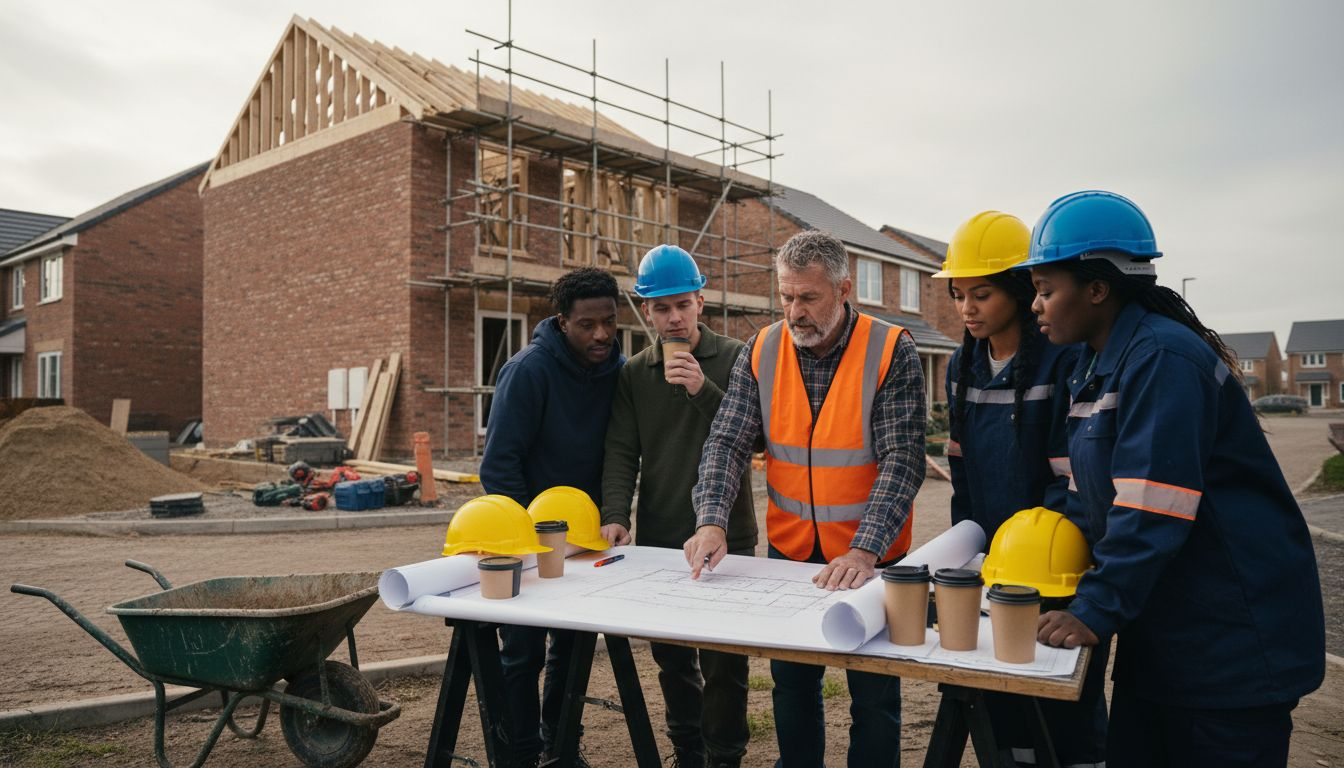
Project managers across UK residential construction face mounting pressure to deliver projects on time and within budget whilst navigating Fragmented communication systems. Research shows that structured communication and risk management can reduce project delays by 15% and cost overruns by 12%. This guide provides an evidence-backed framework to help you select and implement best practices that deliver measurable improvements in efficiency, collaboration, and project control.
Table of Contents
- How To Evaluate And Select Best Practices For Residential Construction
- Implementing Structured Communication Management Plans
- Leveraging Building Information Modelling (BIM) And Early Subcontractor Involvement
- Proactive Risk Management And Regular Site Meetings To Control Costs And Delays
- Summary Comparison Of Residential Construction Best Practices
- Discover Construction Software Built For Your Team
Key takeaways
| Point | Details |
|---|---|
| Communication management plans reduce delays | Structured communication protocols cut project delays by up to 15% and errors by 20% through clear channels and documentation. |
| BIM and early subcontractor involvement cut rework | Digital coordination reduces rework by 20% whilst early subcontractor engagement decreases change orders by 10%. |
| Proactive risk management controls costs | Regular risk assessments and site meetings with digital documentation reduce cost overruns by 12% and delays by 25%. |
| Systematic evaluation drives selection | Assess practices against communication clarity, risk management capability, and technology utilisation to match project complexity. |
How to evaluate and select best practices for residential construction
Selecting the right best practices requires a systematic evaluation framework tailored to your team’s capabilities and project demands. Start by assessing communication clarity: examine how information flows between office staff, site teams, and subcontractors. Effective project control involves planning, monitoring, reporting, and analysing to maintain schedule and budget adherence.
Prioritise practices that strengthen risk identification and mitigation planning. Evaluate potential practices against four core criteria:
- Communication protocols that specify channels, frequency, and stakeholder responsibilities
- Risk management processes enabling early identification and contingency planning
- Subcontractor engagement strategies that promote collaboration from project initiation
- Technology utilisation that centralises information and reduces administrative burden
Project size and team experience levels matter significantly. A three-person builder team requires different tools than a 20-person residential developer. Smaller teams benefit from simple, mobile-first platforms that require minimal training, whilst larger organisations may leverage more sophisticated BIM workflows and enterprise software.
Pro Tip: Test new practices on a single pilot project before full implementation. This approach allows you to identify integration challenges and refine workflows without risking multiple active projects simultaneously.
Implementing structured communication management plans
Fragmented communication remains the primary driver of project delays and costly errors across UK construction sites. A Communication Management Plan (CMP) establishes explicit protocols defining who communicates what information, through which channels, and at what frequency. Implementing a CMP reduces project delays by 15% by eliminating assumptions about information sharing.
Your CMP should specify daily stand-up meetings for site teams, weekly progress reviews with clients, and immediate notification protocols for safety incidents or design conflicts. Effective communication protocols reduce errors by 15-20% when consistently applied across all project phases.
Centralising communication on digital platforms transforms information accessibility. A centralised platform reduces delays by 15% and improves on-time delivery by creating a single source of truth for project documentation, change orders, and RFIs. This eliminates the common scenario where critical information lives in scattered WhatsApp threads, email chains, and handwritten notes.
Balance remains crucial. Excessive communication creates information overload that obscures priority issues. Design your communication cadence to deliver the right information to the right people at the right time:
- Site supervisors receive daily updates on deliveries, inspections, and safety briefings
- Project managers access weekly summaries of progress, budget status, and upcoming milestones
- Clients see monthly reports highlighting completed work and upcoming decision points
- Subcontractors get task-specific notifications with clear deadlines and requirements
Pro Tip: Establish response time expectations in your CMP. For example, safety issues require immediate response within one hour, whilst general queries need acknowledgement within 24 hours. Clear expectations prevent frustration and ensure urgent matters receive appropriate attention.
Leveraging building information modelling (BIM) and early subcontractor involvement
BIM transforms how residential construction teams coordinate complex building systems by enabling 3D visualisation and clash detection before physical construction begins. BIM reduces rework by 20% and improves cost predictability by identifying design conflicts during the planning phase when corrections cost pennies rather than pounds.
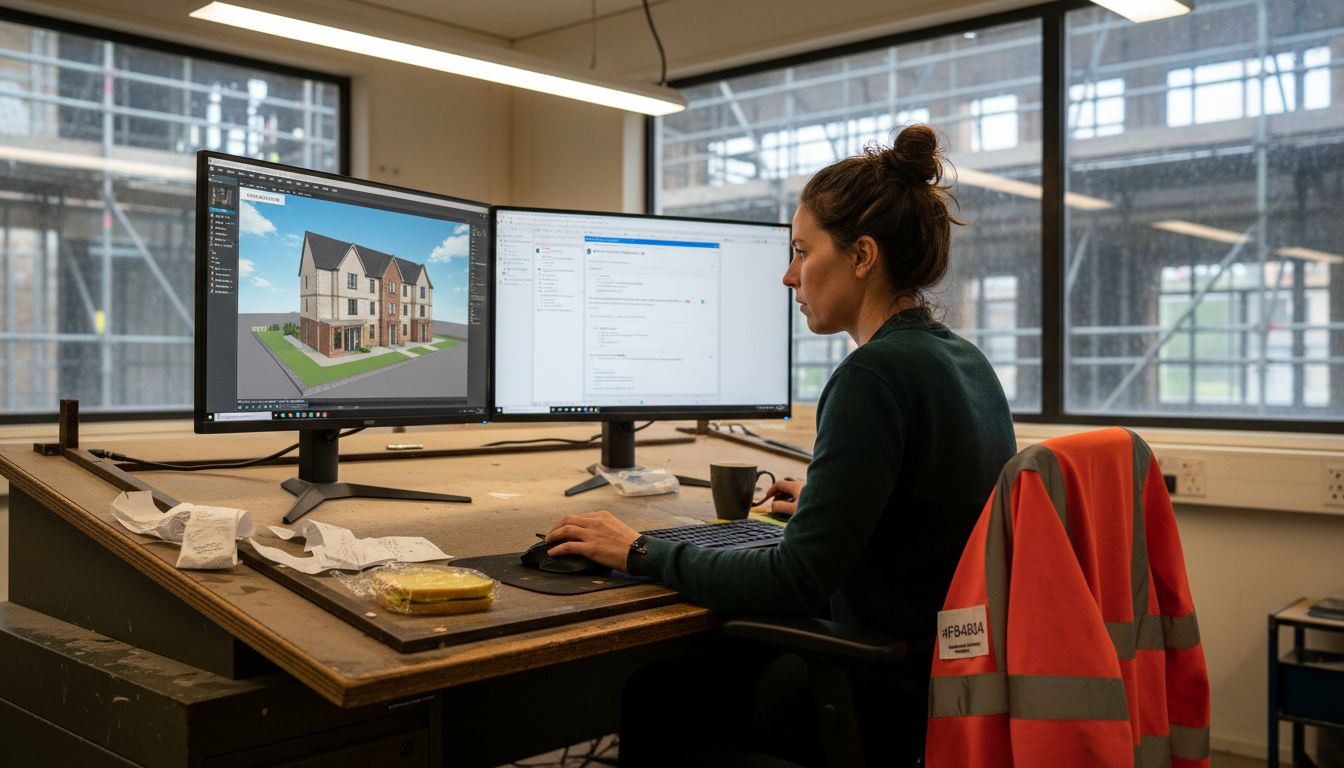
The technology proves particularly valuable for coordinating mechanical, electrical, and plumbing systems in compact residential layouts. A digital model reveals where HVAC ductwork conflicts with structural beams or electrical conduits cross plumbing runs, allowing designers to resolve clashes before trades arrive on site. This coordination capability delivers substantial time and cost savings compared to traditional 2D drawings.
Early subcontractor involvement amplifies BIM benefits considerably. Bringing electricians, plumbers, and HVAC specialists into design coordination reduces change orders by 10% because these experts identify constructability issues and suggest value-engineering alternatives during planning. Early subcontractor participation reduces clashes and improves overall coordination by incorporating specialist knowledge into the design process.
| Aspect | Traditional Process | BIM Process | Improvement |
|---|---|---|---|
| Design coordination | Sequential, 2D drawings | Concurrent, 3D model | 30% faster coordination |
| Clash detection | On-site discovery | Pre-construction identification | 20% less rework |
| Subcontractor input | After design completion | During design phase | 10% fewer change orders |
| Cost predictability | Multiple revisions | Accurate early estimates | 15% better budget control |
Ensuring subcontractor BIM proficiency remains critical for successful collaboration. Many small trade contractors lack experience with digital models and coordination software. Provide basic training or partner with BIM-proficient subcontractors to avoid communication workflow issues that undermine potential benefits.
Pro Tip: Start with simple BIM applications like 3D visualisation for client presentations before advancing to full coordination workflows. This graduated approach builds team confidence and demonstrates value before investing in comprehensive implementation.
Proactive risk management and regular site meetings to control costs and delays
Proactive risk management separates successful projects from those plagued by overruns and disputes. Risk management reduces cost overruns by 12% and delays by 25% when implemented systematically from project inception.
Identify potential risks early through comprehensive site assessments, design reviews, and stakeholder consultations. Common residential construction risks include adverse weather, material delivery delays, subcontractor availability, ground condition surprises, and permit approval bottlenecks. Develop contingency plans and mitigation strategies for high-probability, high-impact risks before they materialise.
Regular site meetings provide the mechanism for ongoing risk monitoring and rapid response. Scheduled meetings with digital documentation reduce rework by 10% by ensuring issues receive immediate attention and agreed actions get recorded and tracked. Weekly site meetings should cover progress updates, upcoming work coordination, safety observations, and risk status reviews.
Implement a systematic risk management process:
- Identify potential risks through site inspections, design reviews, and team consultations
- Assess probability and impact of each identified risk using a simple scoring matrix
- Develop mitigation strategies and contingency plans for high-priority risks
- Monitor risk status through regular site meetings and progress reviews
- Update risk register as new threats emerge or existing risks resolve
Leverage digital tools to document meeting outcomes, assign action items, and track completion status. Mobile applications allow site supervisors to photograph issues, record voice notes, and update risk registers in real time rather than relying on memory and handwritten notes that often get lost or forgotten.
Effective project control is essential in addressing the high level of uncertainty within the construction industry. Regular monitoring, transparent reporting, and systematic risk management enable project managers to maintain schedule and budget adherence despite inevitable challenges.
Successful project management requires balancing proactive planning with responsive adjustment. Your risk management framework should enable quick decisions based on current site conditions rather than forcing adherence to outdated baseline plans. For deeper technical guidance, review project control recommendations from construction research authorities.
Pro Tip: Maintain a lessons learned log throughout each project. After completion, review what risks materialised, which mitigation strategies worked, and what you would do differently. This organisational knowledge compounds across projects and continuously improves your risk management capability.
Summary comparison of residential construction best practices
Understanding when and how to apply specific best practices enables informed decision-making tailored to your project context and organisational capabilities. The following comparison helps you evaluate which practices deliver the greatest value for your situation.
| Practice | Key Benefits | Implementation Challenges | Best Project Context |
|---|---|---|---|
| Communication Management Plans | 15% fewer delays, 20% fewer errors, clear stakeholder alignment | Requires discipline to maintain protocols, initial resistance to structured processes | All project sizes, especially critical for teams exceeding five people |
| Building Information Modelling | 20% less rework, 30% faster coordination, improved cost predictability | Software costs, learning curve, requires BIM-proficient subcontractors | Complex projects with multiple trades, high-end residential, projects over £500K |
| Early Subcontractor Involvement | 10% fewer change orders, better constructability, value engineering opportunities | Coordination overhead, requires subcontractor commitment before finalised contracts | Projects with complex MEP systems, design-build arrangements, fast-track schedules |
| Proactive Risk Management | 12% lower cost overruns, 25% fewer delays, rapid issue response | Time investment for risk identification and planning, ongoing monitoring required | All projects, particularly valuable for sites with known challenges or tight margins |
| Regular Digital Site Meetings | 10% less rework, improved accountability, transparent progress tracking | Requires consistent scheduling and participation, digital tool adoption | All project sizes, essential for geographically dispersed teams or multiple concurrent sites |
Smaller builders should prioritise communication management plans and digital site meetings as foundational practices requiring minimal capital investment whilst delivering immediate returns. These practices work effectively with basic project management software and mobile applications.
Medium-sized residential developers benefit from the full suite of practices including BIM and comprehensive risk management frameworks. At this scale, the efficiency gains justify investment in training, software licences, and dedicated project coordination resources.
Discover construction software built for your team
Implementing best practices becomes significantly easier with purpose-built construction software that centralises communication, documentation, and project control. BRCKS offers specialised solutions designed specifically for UK residential construction teams who want to reduce delays, eliminate errors, and improve project coordination without complex enterprise systems.
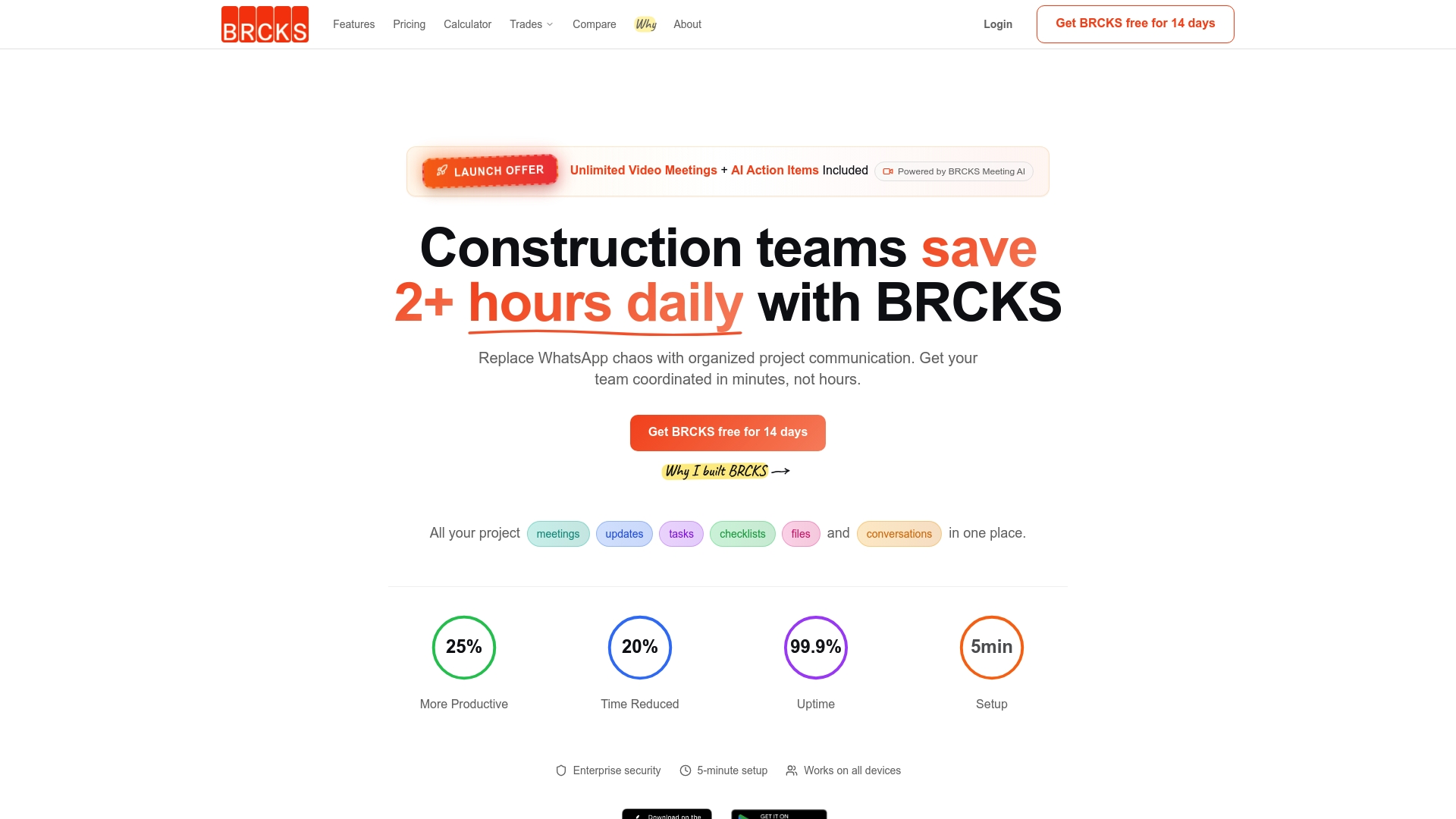
Whether you run a building firm, electrical contracting business, or plumbing company, BRCKS provides tailored software that supports the communication management, risk tracking, and digital documentation practices outlined in this guide. Our platform replaces fragmented WhatsApp groups and email chains with a unified system that saves teams over two hours daily whilst improving project outcomes.
Explore construction software for builders, construction software for electricians, or construction software for plumbers to discover how BRCKS helps small to medium construction teams implement best practices efficiently and consistently across all projects.
FAQ
What is a communication management plan in residential construction?
A communication management plan is a documented strategy detailing communication channels, frequency, responsibilities, and protocols to ensure efficient information flow throughout a construction project. It helps align all stakeholders, minimises misunderstandings, and reduces project delays by eliminating assumptions about who needs what information and when they need it.
How does building information modelling improve project efficiency?
Building Information Modelling is a digital modelling tool enabling 3D visualisation and coordination to prevent design clashes before construction begins. It reduces costly rework by up to 20% and improves cost predictability by allowing teams to identify and resolve conflicts between building systems during the planning phase rather than discovering problems on site.
Why is early subcontractor involvement important?
Early involvement fosters better coordination, reduces change orders by up to 10%, and improves overall project efficiency by incorporating specialist trade knowledge into design decisions. Subcontractors can identify constructability issues, suggest value-engineering alternatives, and commit to project timelines before designs become fixed, preventing expensive modifications later in construction.
What are the key elements of effective risk management in residential construction?
Effective risk management includes early risk identification through site assessments, regular probability and impact evaluations, contingency planning for high-priority threats, and proactive mitigation strategies. Ongoing monitoring through scheduled site meetings with digital documentation helps reduce cost overruns by 12% and delays by 25% by enabling rapid response to emerging challenges.
Recommended
- Construction Project Management Insights | BRCKS Blog
- BRCKS | Construction Project Communication Software
- BRCKS | Construction Project Communication Software
- BRCKS | Construction Project Communication Software
- Modern Apartment Living: Why It Matters in 2026
- Residential vs Commercial Pest Control – Key Differences That Matter
How BRCKS Can Help
Adopting these best practices will ensure your residential projects remain competitive and profitable as the industry evolves towards 2026. BRCKS is designed to simplify this transition by centralising your project data and streamlining communication across every site. By integrating our intuitive management tools into your daily workflow, you can reduce costly delays and focus on delivering high-quality homes. We invite you to explore how BRCKS can transform your operational efficiency and help your business thrive in the years ahead. Learn more at BRCKS.