Remote team collaboration in construction: UK guide 2026
A comprehensive guide for UK project managers on bridging the gap between site and office teams using digital frameworks and real-time communication tools.
By James Shorter ·
Remote team collaboration in construction: UK guide 2026
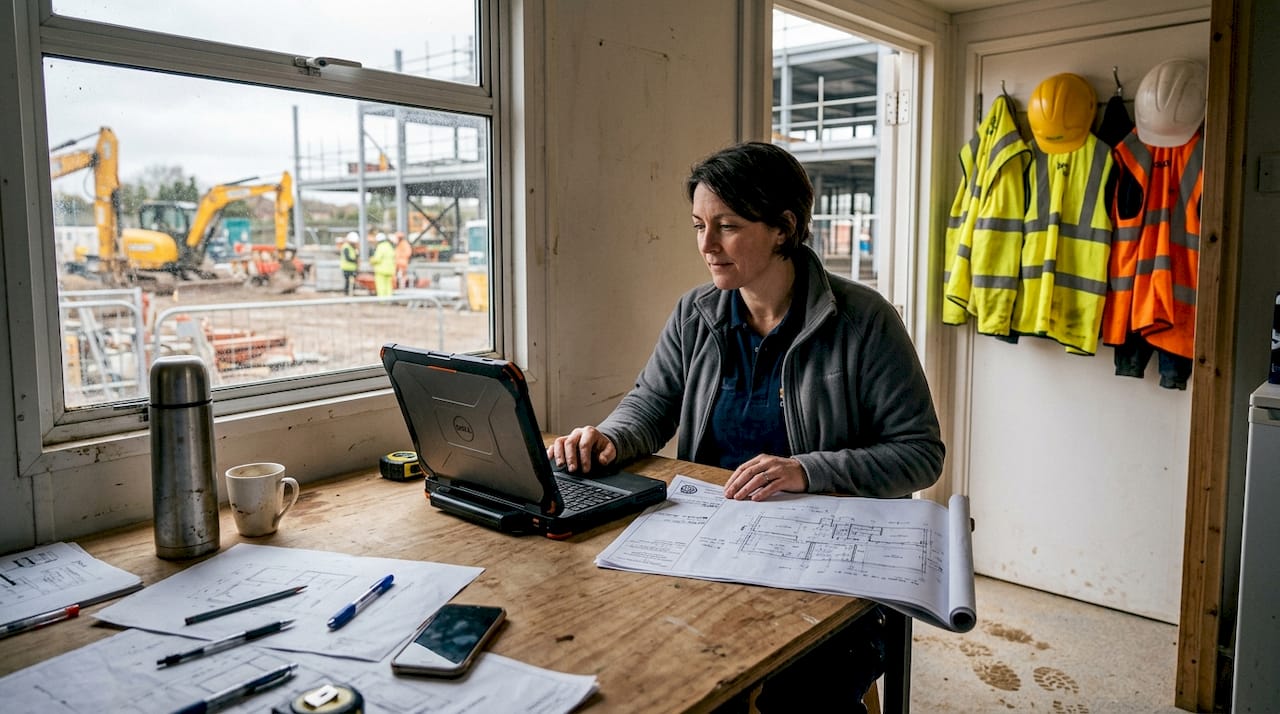
Remote collaboration in construction is not simply about working from home. It is about connecting on-site workers, Project managers, engineers, and subcontractors through digital platforms that enable real-time communication and oversight across multiple locations simultaneously. UK construction teams face a unique challenge: the workforce is split between those physically on site and those managing projects remotely, and bridging that gap requires more than a group chat. This guide breaks down the frameworks, tools, and practical strategies that UK project managers need to make remote collaboration work effectively, without the confusion or miscommunication that derails so many projects.
Table of Contents
- Understanding remote team collaboration in UK construction
- Core frameworks and tools driving collaboration
- Human challenges and expert solutions
- Application in UK construction: Real-world strategies and case studies
- What most experts overlook about remote collaboration in construction
- Streamline remote collaboration with tailored construction software
- Frequently asked questions
Key Takeaways
| Point | Details |
|---|---|
| Remote collaboration basics | Remote collaboration bridges site and office teams using digital tools for project success. |
| Frameworks and tools | Integrated Project Delivery, BIM, and cloud platforms are essential for UK construction workflows. |
| Human and management challenges | Clear communication and protocols are vital to prevent breakdowns and site-office divides. |
| UK compliance and impact | BIM Mandate and HSE requirements drive adoption and measurable improvements in UK projects. |
| Practical software solutions | Construction software streamlines remote collaboration and helps unify on-site and office teams. |
Understanding remote team collaboration in UK construction
Remote team collaboration in construction is a distinct discipline. It is not the same as a software developer working from a home office. It involves coordinating real-time communication and document sharing between people who are physically on a building site and those who are office-based or working from another location entirely.
The core participants in this model include:
- Project managers overseeing timelines, budgets, and compliance from a remote or office location
- Site engineers and foremen who are physically present and need instant access to updated plans and instructions
- Subcontractors who move between multiple sites and require clear task assignments
- Clients who expect transparency and progress updates without needing to visit the site
Understanding construction concepts and how they translate into digital workflows is essential before selecting any platform or process. The workflows on site and in the office are fundamentally different. Site teams need fast, mobile-friendly updates. Office teams need structured data, audit trails, and reporting.
“Remote collaboration in construction is not a luxury. It is a structural necessity for any project running across multiple locations or involving distributed stakeholders.”
One of the most common remote collaboration failures happens when teams treat digital tools as optional add-ons rather than core infrastructure. When communication is fragmented across emails, phone calls, and paper-based processes, version control breaks down and costly errors follow. Establishing a clear digital foundation is the starting point for any UK project manager serious about remote collaboration.
Now that we have set the context, let us explore the specific components and frameworks powering remote collaboration.
Core frameworks and tools driving collaboration
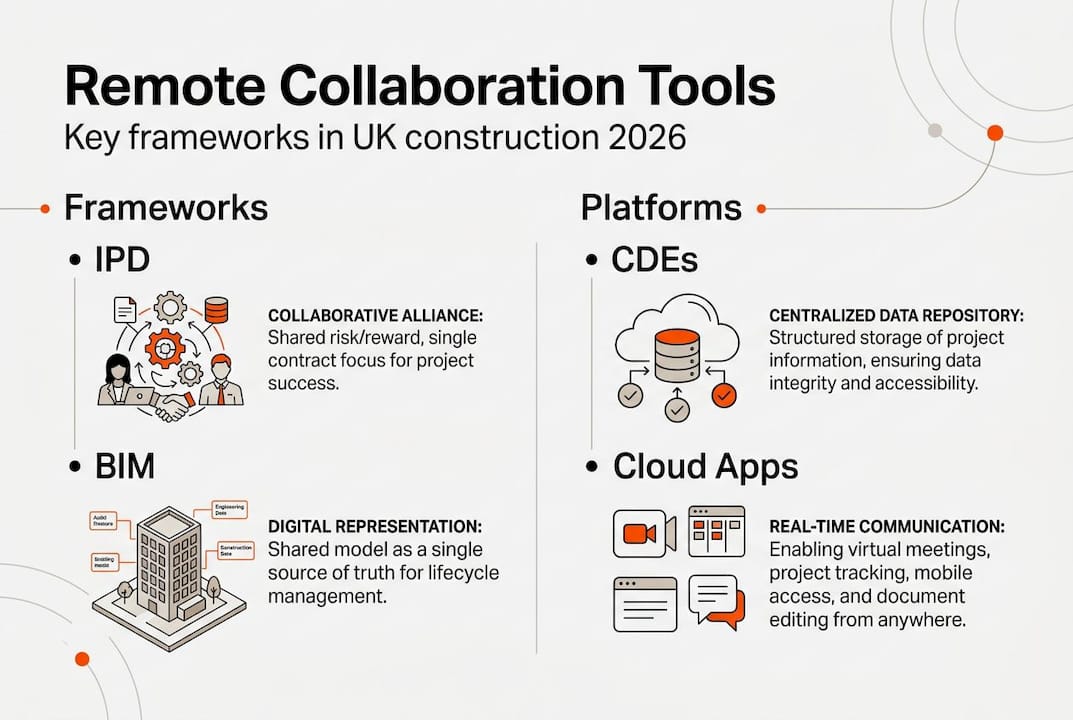
Successful remote collaboration in UK construction relies on proven methodologies, not just software. The three most important frameworks are Integrated Project Delivery, Building Information Modelling, and Common Data Environments.
Integrated Project Delivery fosters early stakeholder collaboration through multi-party agreements and shared risks and rewards, enhanced by BIM and cloud tools for remote coordination. IPD is particularly relevant in the UK, where large infrastructure projects involve dozens of contractors and consultants working simultaneously.
Building Information Modelling, or BIM, is central to remote workflows. The UK BIM mandate requires Level 2 BIM compliance on publicly funded projects, meaning teams must share structured digital models rather than flat drawings. This creates a shared source of truth accessible to remote and on-site teams alike.
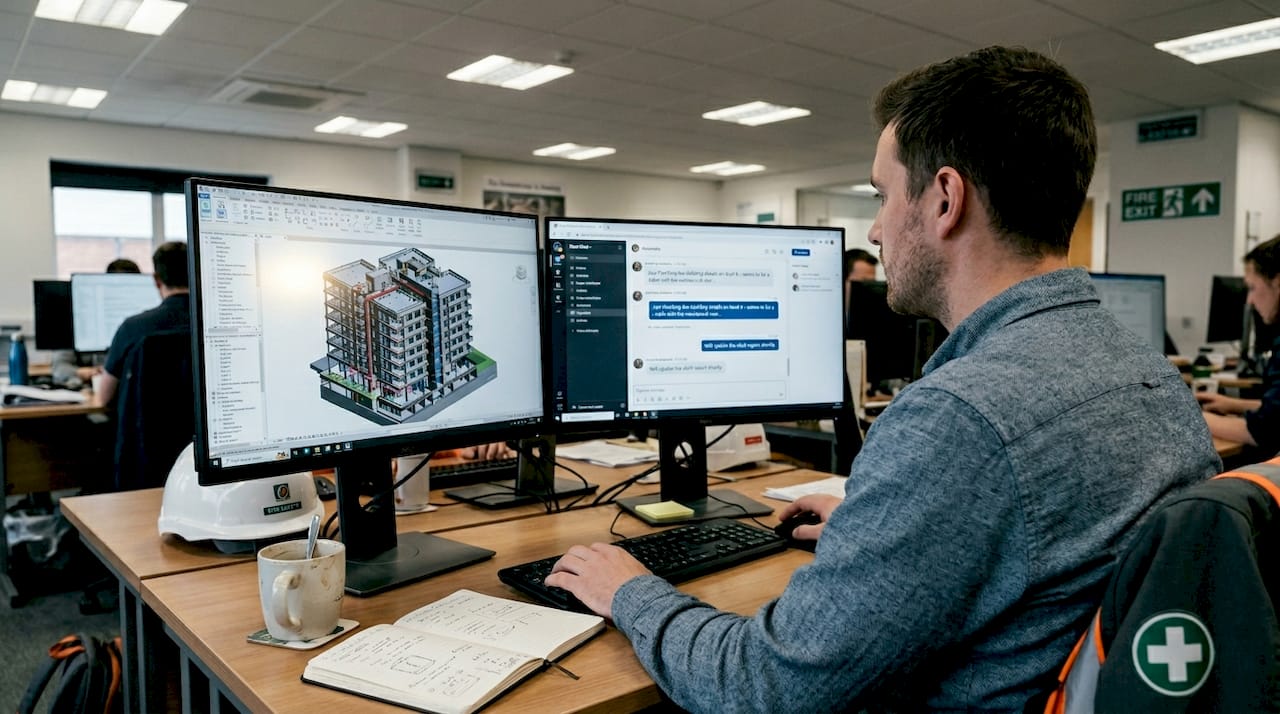
Common Data Environments, or CDEs, governed by ISO 19650, provide the secure repository where all project information lives. They enforce version control and access permissions, reducing the risk of teams working from outdated documents.
| Feature | Traditional workflow | Remote workflow |
|---|---|---|
| Document sharing | Physical drawings, email | Cloud CDE with version control |
| Communication | Phone calls, site meetings | Instant messaging, video calls |
| Progress tracking | Manual site visits | Real-time dashboards and updates |
| Compliance records | Paper-based | Digital audit trails |
Practical communication tools and mobile collaboration apps sit on top of these frameworks, giving teams the day-to-day interface they need. Mobile apps are particularly important for site workers who cannot be expected to access a desktop during working hours.
Key enablers for remote collaboration include:
- Cloud-based project management platforms
- Mobile apps with offline capability for poor signal areas
- Video conferencing tools for virtual site walkthroughs
- AI-powered search to locate documents and updates instantly
Pro Tip: Before selecting any platform, map your team’s actual workflow first. Identify where information currently gets lost or delayed, then choose tools that solve those specific gaps rather than adding complexity.
With a clear sense of core tools and frameworks, let us address how teams deal with real-world obstacles and human factors.
Human challenges and expert solutions
Technology alone does not solve remote collaboration problems. The human side is where most projects struggle. Communication breakdowns, team isolation, and a two-tier workforce dynamic between site and office are real and documented challenges in UK construction.
The “lazy versus efficient” debate around remote working is particularly sharp in construction. Site workers often view office-based colleagues as disconnected from the physical realities of a project. Office teams, in turn, may not fully appreciate the constraints that site workers face. This tension, if unaddressed, erodes trust and slows decision-making.
Common human challenges include:
- Role ambiguity: Without clear accountability, tasks fall through the gaps between remote and on-site teams
- Version control errors: Multiple people editing BIM models without a review process leads to conflicts and rework
- Data security risks: Sharing sensitive project files across personal devices or unsecured networks creates vulnerabilities
- Mental health pressures: Isolation and stress affect remote workers in construction just as in any other industry
Expert guidance on BIM and remote workflows recommends clear protocols, defined roles such as BIM coordinators, and a “review before merge” process to prevent model conflicts. Matrix management structures, where team members report to both a project manager and a discipline lead, also help clarify accountability.
Improving workflow efficiency starts with addressing these human factors before optimising technology. And communication problem solving requires both structural fixes and cultural change within the team.
Pro Tip: Implement a “review before merge” rule for all BIM model updates. Assign a named BIM coordinator who approves changes before they are published to the CDE. This single step eliminates the majority of version control conflicts.
Having tackled team and management challenges, it is time to highlight practical applications and UK case examples.
Application in UK construction: Real-world strategies and case studies
The UK construction industry has specific compliance requirements that shape how remote collaboration is implemented in practice. Understanding these is not optional for project managers.
- BIM Mandate compliance: All publicly funded UK projects must meet Level 2 BIM standards, requiring structured digital models shared via a CDE
- HSE digital tools: The Health and Safety Executive encourages digital risk assessments and method statements, which integrate naturally into remote workflows
- Data protection: GDPR applies to project data, particularly when sharing client information across cloud platforms
- Audit trails: Contracts increasingly require digital records of decisions, approvals, and communications
- Subcontractor access: Free or low-cost access for subcontractors is essential for full adoption across the supply chain
Case studies demonstrate the tangible impact of getting this right. Digital collaboration platforms used by firms like Ferrovial in partnership with Procore have shown measurable reductions in site travel, improved risk management, and fewer document errors. These are not marginal gains. They represent significant cost savings on large-scale projects.
| Benefit | Impact |
|---|---|
| Reduced site travel | Lower carbon footprint and time savings |
| Fewer document errors | Less rework and reduced costs |
| Better risk management | Earlier identification of issues |
| Improved client transparency | Fewer disputes and faster sign-off |
Digital twins and AI are the next frontier. A digital twin creates a live virtual replica of a physical asset, allowing remote teams to monitor progress and identify issues without being on site. struction-errors-70-in-uk-projects">Information sharing at this level can cut construction errors by up to 70% on UK projects. Understanding the hidden costs of project management software is equally important when evaluating platforms for long-term use.
We have now built a practical understanding. Let us explore some contrarian wisdom and what most guides miss.
What most experts overlook about remote collaboration in construction
Most guides focus on tools and technology. They list software options, explain BIM compliance, and recommend communication protocols. What they rarely address is the cultural and relational dimension of remote collaboration in construction.
The hybrid divide is real. Standardised ISO 19650 CDEs and RBAC security protocols are essential, but they do not resolve the underlying tension between site expertise and remote planning. Site workers carry knowledge that no digital model fully captures: the texture of the ground, the behaviour of materials in specific weather, the practical constraints of a cramped working area. Remote teams that ignore this expertise make worse decisions, regardless of how sophisticated their tools are.
Trust in remote relationships is earned differently than in person. It comes from consistent communication, following through on commitments, and genuinely valuing the input of site teams. A project manager who responds quickly to site queries and acts on feedback builds more trust remotely than one who is physically present but disengaged.
The practical lesson here is to invest as much in project communication culture as in platform selection. The best tools fail without the right habits behind them.
Streamline remote collaboration with tailored construction software
If you are managing construction projects across multiple sites or coordinating remote and on-site teams, the right platform makes a measurable difference. BRCKS is built specifically for construction teams in the UK, consolidating communication, task management, file sharing, and client updates into one place.
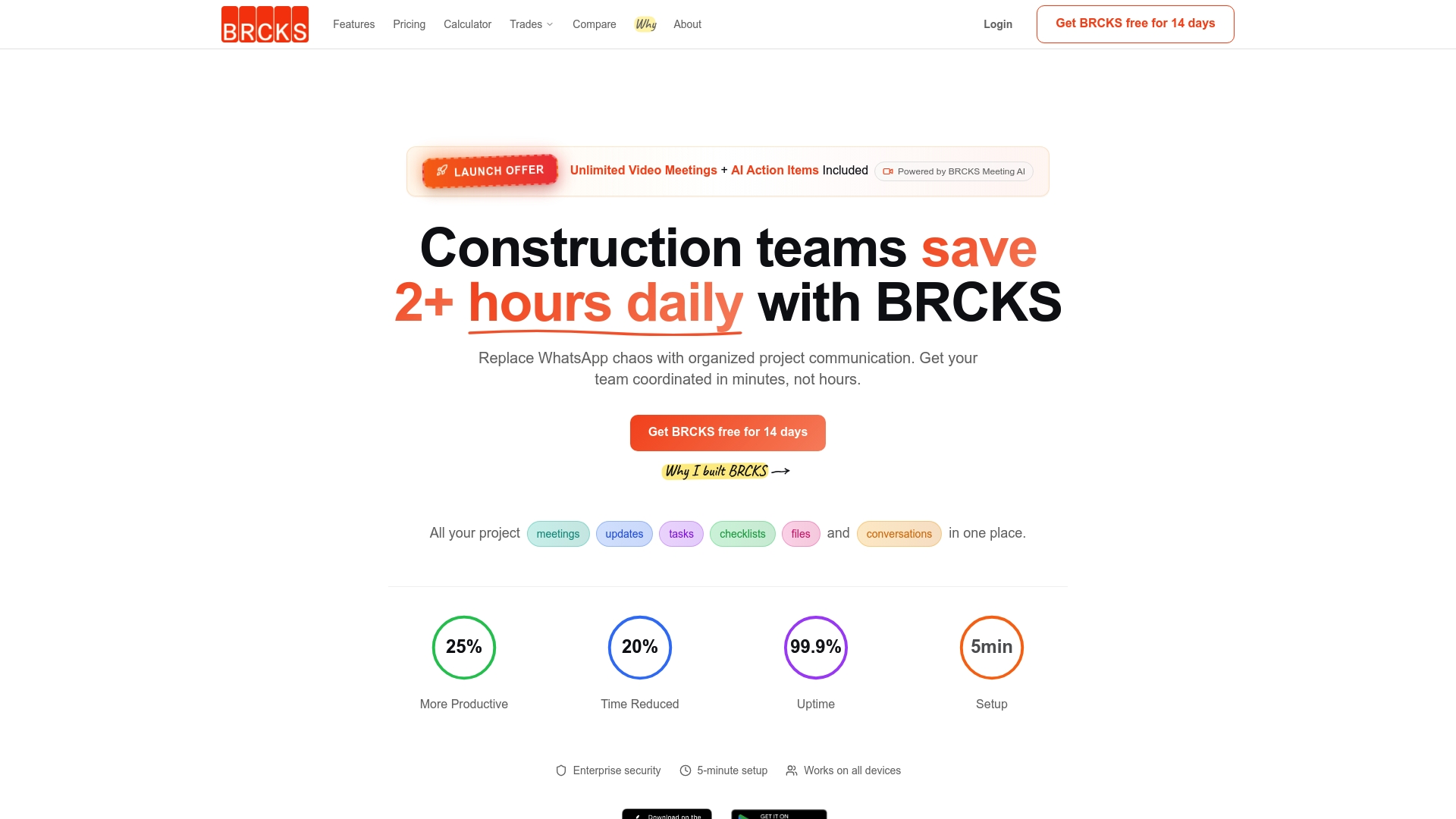
Whether you are a builder managing a small team or a project manager overseeing a large programme, BRCKS for builders gives your team the tools to stay aligned without the chaos of scattered messages and missed updates. The construction communication platform integrates with WhatsApp, supports AI-powered search, and saves teams over two hours daily. If you are currently using multiple tools and wondering whether there is a better way, the BRCKS comparison shows exactly what you gain by switching. Try BRCKS free for 14 days and see the difference for your team.
Frequently asked questions
How do UK project managers ensure secure remote collaboration in construction?
Project managers use ISO 19650 CDEs and RBAC protocols to enforce version control, manage access permissions, and protect sensitive project data across distributed teams.
What are typical software tools used for remote construction collaboration?
BIM solutions, cloud platforms, mobile apps, and digital twins are the most widely used tools, providing real-time project oversight and structured data sharing for remote teams.
How does remote collaboration affect site-office relationships?
Remote collaboration improves planning and oversight but can create a two-tier workforce dynamic between site and office teams, which requires deliberate protocols and cultural investment to manage effectively.
What compliance measures matter for remote collaboration in UK construction?
UK project managers must meet the BIM Mandate and HSE requirements, alongside GDPR obligations for data protection when sharing project information across cloud-based platforms.
Are remote teams in construction more efficient than traditional teams?
Case studies show reduced travel and better risk management with remote teams, but strong communication protocols are essential to prevent the efficiency gains from being offset by coordination failures.
Recommended
- BRCKS | Construction Project Communication Software
- BRCKS | Construction Project Communication Software
- Construction Mobile Apps: Reduce Material Waste by 25% | BRCKS
- BRCKS | Construction Project Communication Software
- Fire safety in wall cladding explained for UK contractors
- Mental Health in Construction: Support for Tough Jobs – WorkWearComfort
How BRCKS Can Help
As the UK construction landscape evolves towards 2026, mastering remote collaboration is no longer optional for firms aiming to stay competitive. BRCKS simplifies this transition by providing a centralised platform that bridges the gap between the site and the office, ensuring real-time data remains accessible to every stakeholder. By integrating these digital tools into your daily workflow, you can eliminate communication silos and keep your projects moving forward with total transparency. We invite you to explore how BRCKS can transform your team’s connectivity and streamline your management processes today. Learn more at BRCKS.