How to manage project updates for construction success
Poor communication in UK construction causes budget overruns and strained relationships. Discover how structured templates and digital platforms ensure consistent project updates.
By James Shorter ·
How to manage project updates for construction success
TL;DR:
- Poor communication in UK construction causes budget overruns and strained relationships.
- Using structured templates and digital platforms ensures consistent, traceable project updates.
- Cultivating openness and accountability is crucial for effective update processes and project success.
Poor project updates cost UK construction teams more than time. Miscommunication, missed milestones, and unclear handovers contribute to significant budget overruns and strained client relationships on sites across the country. If you’ve ever watched a project stall because a subcontractor didn’t receive a revised schedule, or had a client ring in a panic over something that was already resolved, you know exactly how damaging fragmented updates can be. This article walks you through a structured, practical approach to managing project updates, from preparation and execution through to monitoring and refinement, so your teams and clients stay informed, aligned, and confident.
Table of Contents
- Preparing your project update process
- Executing project updates: Step-by-step guide
- Communicating updates effectively across teams and clients
- Monitoring, troubleshooting, and refining your update process
- What most managers miss about project update success
- Take your project updates to the next level with BRCKS
- Frequently asked questions
Key Takeaways
| Point | Details |
|---|---|
| Structured preparation | Organise your update framework and select tools before project communication begins. |
| Step-by-step execution | Follow a clear, repeatable process for delivering updates using digital platforms and templates. |
| Collaborative communication | Sharing updates openly across teams and clients reduces errors and enhances trust. |
| Continuous improvement | Monitor, troubleshoot, and refine your process with feedback and analytics for optimal results. |
| Empowerment via technology | Leveraging AI and sensor data accelerates risk detection and project delivery. |
Preparing your project update process
Before you send a single update, you need a solid foundation. That means deciding what information gets shared, who receives it, when it goes out, and in what format. Without this groundwork, even well-intentioned updates create confusion rather than clarity.
Start with your information structure. The ISO 19650 golden thread helps manage health and safety risks throughout the project lifecycle, and it provides a useful framework for organising your documentation and update protocols. Aligning your update process to this standard means your records are traceable, consistent, and compliant.
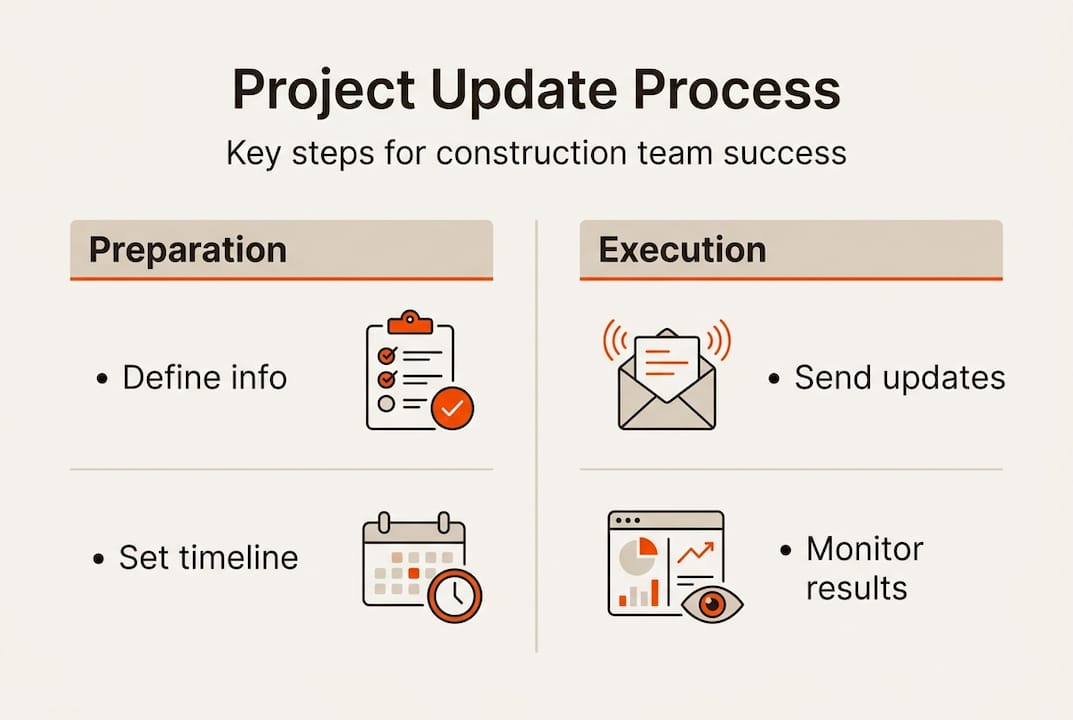
Next, choose your update tools carefully. The method you use shapes how quickly and accurately information reaches your team. Here’s a quick comparison:
| Method | Speed | Traceability | Collaboration | Best for |
|---|---|---|---|---|
| Paper records | Slow | Low | Poor | Small, simple jobs |
| Moderate | Moderate | Limited | Small teams | |
| Digital CDE platforms | Fast | High | Strong | Mid to large projects |
| AI-enabled platforms | Real-time | Very high | Excellent | Complex, multi-team sites |
For most UK construction projects today, a digital common data environment (CDE) is the minimum you should be working with. AI-enabled platforms go further, automating routine notifications and flagging risks before they escalate. Our project managers communication guide covers how to select the right tools for your team size and project complexity.
Team buy-in is equally important. If your site managers or subcontractors don’t trust the update process, they’ll bypass it. Hold a short briefing at project kick-off to explain why structured updates matter and what everyone’s responsibilities are. Encourage questions and make it clear that updates flow both ways.
- Define who is responsible for each update type
- Set clear deadlines for submitting progress information
- Agree on a single source of truth for project documentation
- Train all team members on whichever platform you use
Pro Tip: Choose platforms that use open data schemas and support interoperability with other tools your supply chain uses. This protects your investment as your projects scale and prevents costly data migration later.
Addressing construction communication problems early in the preparation phase is far less costly than fixing them mid-project.
Executing project updates: Step-by-step guide
Once your structure and tools are in place, execution is where the real discipline kicks in. Consistency matters more than perfection here. A reliable, predictable update rhythm builds trust across your team and with your clients.
Follow these steps to run a structured update process:
- Define your update triggers. Decide what prompts an update: milestone completions, risk events, client queries, or schedule changes. Don’t wait for problems to escalate before communicating.
- Use standardised templates. A consistent format means recipients know exactly where to find key information. Include progress status, upcoming tasks, risks, and any decisions required.
- Integrate BIM and schedule data. Where possible, link your updates to your building information model and programme so that changes are reflected automatically rather than manually re-entered.
- Deliver updates through your chosen platform. Whether that’s a CDE, a project management app, or a client portal, keep all updates in one place. Avoid splitting information across email and WhatsApp.
- Confirm receipt and understanding. A brief acknowledgement step, even a simple read-receipt or a tick on a checklist, confirms that updates have been seen and acted upon.
Here’s a sample weekly update schedule:
| Day | Update type | Tool | Owner |
|---|---|---|---|
| Monday | Weekly programme review | CDE/platform | Project manager |
| Wednesday | Risk and issue log refresh | BIM/platform | Site manager |
| Friday | Client progress summary | Client portal | Project manager |
| As needed | Urgent risk notifications | AI alerts/radio | All leads |
The CIOB client empowerment guide recommends giving clients structured, accessible summaries rather than raw data dumps. Keep client-facing updates concise and focused on decisions they need to make.
A well-structured workflow management guide can help you map these steps to your specific project type. Evidence also shows that a structured communication workflow cuts rework significantly on UK projects.
Pro Tip: Digital twins and AI can drive a 20 to 35% efficiency gain in early risk detection. If your project scale justifies it, explore sensor-driven monitoring to automate progress tracking and reduce manual data entry.
Communicating updates effectively across teams and clients
Drafting a thorough update is only half the job. The other half is making sure it lands correctly with every audience. What works for your site foreman won’t necessarily work for your client’s finance director.

For internal teams, updates should be direct, action-oriented, and brief. Use bullet points, task assignments, and clear deadlines. Face-to-face briefings or short video calls work well for complex changes where nuance matters. For day-to-day communication on site, radio systems remain vital for real-time safety coordination alongside your digital tools.
For clients, the tone shifts. They need context, not jargon. Frame updates around outcomes: what’s been completed, what’s coming next, and what (if anything) they need to decide. Digital client portals make this far easier, giving clients 24/7 access to progress summaries without requiring you to field constant calls.
“Structured information management is vital for meeting regulatory and sustainability demands across UK construction projects.” This is particularly relevant as clients and regulators increasingly expect documented, traceable communication trails.
Building a genuinely collaborative update culture requires more than good tools. It requires openness. Here’s what that looks like in practice:
- Encourage team members to flag problems early without fear of blame
- Share lessons learned from previous projects openly across the team
- Invite client feedback on the clarity and usefulness of updates
- Make it easy for subcontractors to submit progress information digitally
- Review update quality in project retrospectives, not just outcomes
Evidence shows that information sharing cuts construction errors dramatically in UK projects. The cultural shift towards openness is as important as the technical infrastructure you put in place.
Monitoring, troubleshooting, and refining your update process
Even a well-designed update process will drift over time if you don’t actively monitor it. Teams get busy, shortcuts creep in, and before long your carefully structured workflow has reverted to ad-hoc emails and missed notifications.
Set up a simple feedback loop from the start. After each project phase, ask your team and clients a few direct questions: Were updates clear? Did they arrive on time? Was any critical information missing? Use the answers to make targeted adjustments rather than overhauling the whole process.
Follow these steps to troubleshoot common update failures:
- Identify the breakdown point. Is information not being captured, not being shared, or not being understood? Each problem has a different fix.
- Check your tool adoption rate. If team members are bypassing your platform, find out why. Usability issues are usually the culprit.
- Review your template effectiveness. If recipients frequently ask for clarification, your format may be too complex or missing key fields.
- Audit your update frequency. Too many updates cause fatigue; too few leave gaps. Adjust based on project phase and risk level.
- Escalate persistent issues. If a specific team or subcontractor consistently fails to submit updates, address it directly rather than working around it.
Analytics built into modern platforms can show you who is opening updates, when, and whether they’re taking the required actions. This data is genuinely useful for identifying weak points in your process. Be aware of the hidden costs of project management softwaree when evaluating platforms, and understand why digital collaboration fails before committing to a new tool.
Key statistic: Real-time sensor data can accelerate project delivery by up to four weeks compared to manual workflows. For larger projects, this alone justifies the investment in sensor-driven monitoring.
Pro Tip: Schedule a 30-minute update review session at the end of each project phase. Treat it like a mini-retrospective focused specifically on communication quality, not just project outcomes.
What most managers miss about project update success
Here’s something worth saying plainly: most update failures aren’t tool failures. They’re culture failures. You can implement the most sophisticated CDE on the market, but if your team doesn’t feel safe raising problems early, or if your client feels like they’re being managed rather than informed, the technology won’t save you.
The projects that consistently deliver on time and within budget tend to share one characteristic: genuine openness. Teams that share bad news quickly, invite challenge, and treat updates as a two-way conversation rather than a reporting obligation outperform those that treat communication as a compliance exercise.
The numbers back this up. Open and collaborative cultures can cut construction errors by 70% in UK projects. Separately, workflow improvements in update management reduce rework by 52%. These aren’t marginal gains. They’re project-defining outcomes.
The lesson we’ve drawn from working with construction teams across the UK is this: invest in your culture first, then your tools. Process and technology amplify whatever culture already exists. If your team is open and accountable, better tools make them exceptional. If they’re not, no platform will fix it.
Take your project updates to the next level with BRCKS
With a clear framework in place, the right platform makes all the difference in how consistently your team executes it. BRCKS is built specifically for construction teams who need structured, reliable communication without the complexity of stitching together multiple tools.
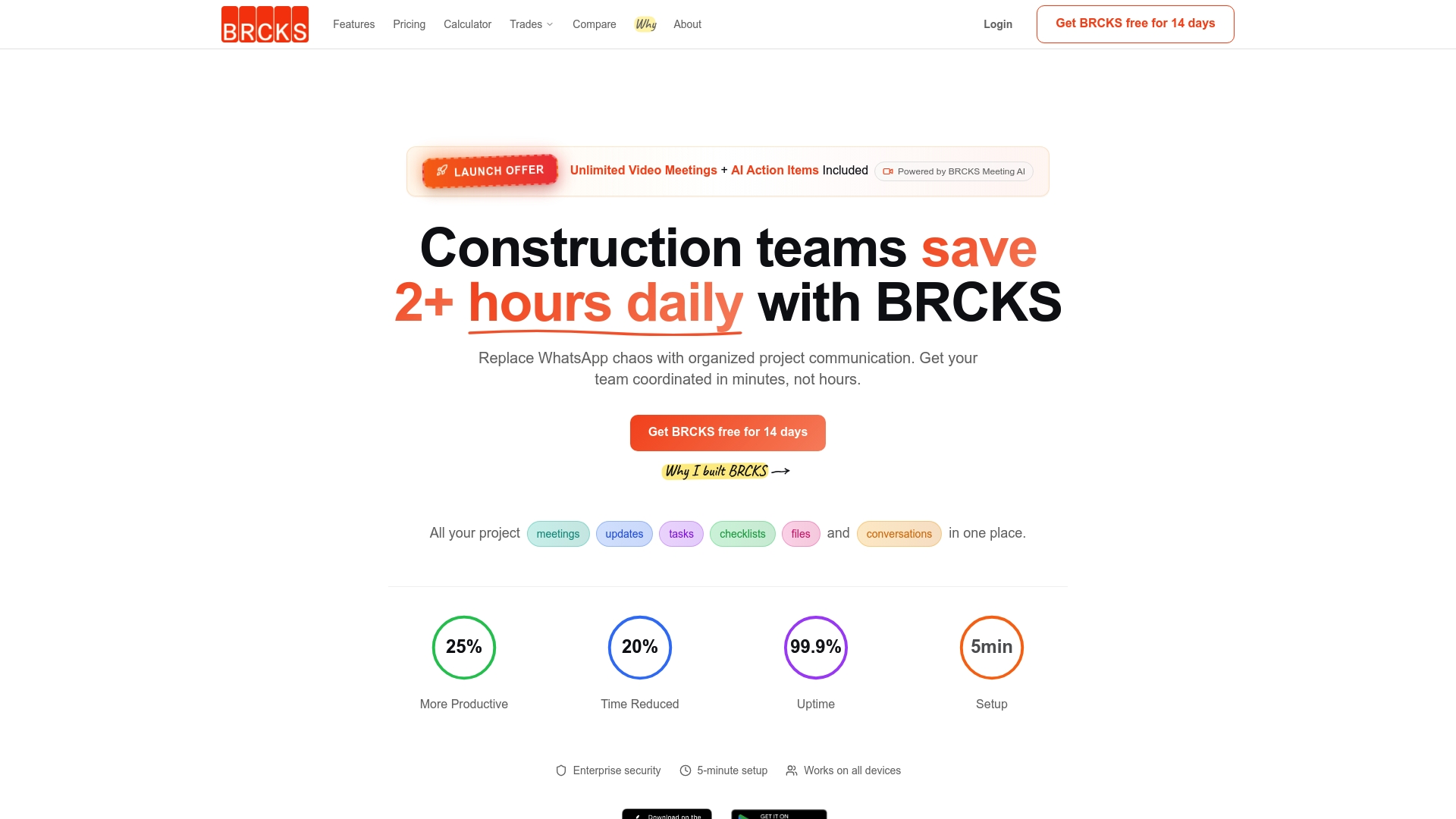
From client portals and real-time project updates to team chat and automated workflows, BRCKS brings everything into one place. Whether you’re a builder managing a single site or a project manager overseeing multiple contracts, explore software built for builders or see how our construction communication software supports clearer, faster updates. Read our case studies to see how UK teams are already saving over two hours daily with BRCKS.
Frequently asked questions
What is the best format for construction project updates?
Structured, standardised templates with milestone-tracked information and integrated risk details work best. Project updates should follow structured information management practices such as ISO 19650 to ensure traceability and compliance.
How often should project updates be delivered?
Weekly or milestone-based updates are standard practice, but urgent risks warrant immediate notification. Digital twins and sensor-driven tools enable real-time risk alerts alongside your regular update schedule.
How can clients be empowered in the update process?
Give clients access to transparent, structured summaries through a dedicated portal and actively encourage their feedback. Client empowerment is driven by structured information management that meets both regulatory and sustainability expectations.
Is digital project update management safer than paper or email?
Yes. Digital platforms provide full traceability, faster risk detection, and alignment with standards like ISO 19650. Interoperable digital platforms consistently outperform traditional methods on safety, sustainability, and early issue identification.
Recommended
- BRCKS | Construction Project Communication Software
- Construction Project Management Insights | BRCKS Blog
- Construction Software for Builders | BRCKS
- BRCKS | Construction Project Communication Software
How BRCKS Can Help
Effective communication is the cornerstone of any successful build, and mastering your project updates ensures that every stakeholder remains aligned from ground-break to completion. BRCKS simplifies this process by providing a centralised platform where real-time data and seamless reporting replace manual tracking and fragmented emails. By integrating these streamlined workflows into your daily routine, you can reduce errors and keep your projects moving forward with absolute confidence. We invite you to explore how BRCKS can transform your project management and help your firm achieve greater operational excellence today. Learn more at BRCKS and explore our full feature set.