How to manage construction projects efficiently in 2026
Discover practical strategies for UK residential builders to streamline project management, from RIBA planning stages to implementing BIM and dedicated software.
By James Shorter ·
How to manage construction projects efficiently in 2026

Managing residential construction projects often feels like juggling multiple balls while walking a tightrope. Communication gaps between site teams and office staff create confusion, unexpected costs spiral beyond initial budgets, and delays cascade through carefully planned schedules. You’re not alone in facing these challenges. Small to medium UK residential builders consistently report that fragmented communication and poor coordination are their biggest obstacles to profitability. This comprehensive guide walks you through practical, proven strategies to streamline your project management from initial planning through successful completion, helping you deliver projects on time and within budget.
Table of Contents
- Preparing Your Construction Project For Success
- Executing The Project With Effective Communication And Technology
- Avoiding Common Mistakes And Managing Risks During Your Project
- Verifying Project Completion And Ensuring Client Satisfaction
- Discover BRCKS Construction Software Solutions
- Frequently Asked Questions
Key takeaways
| Point | Details |
|---|---|
| Structured planning reduces costs | Using frameworks like RIBA stages and realistic budgeting with 50% contingency prevents costly surprises |
| Communication cuts errors by 30% | Regular team meetings and dedicated project software significantly reduce miscommunication and rework |
| BIM technology saves 20% | Building Information Modelling improves accuracy and reduces project costs substantially |
| Avoid cheap quotes | Selecting contractors solely on price typically leads to unexpected expenses and timeline overruns |
| Quality checks ensure satisfaction | Thorough inspections and client walkthroughs secure successful project completion and payment |
Preparing your construction project for success
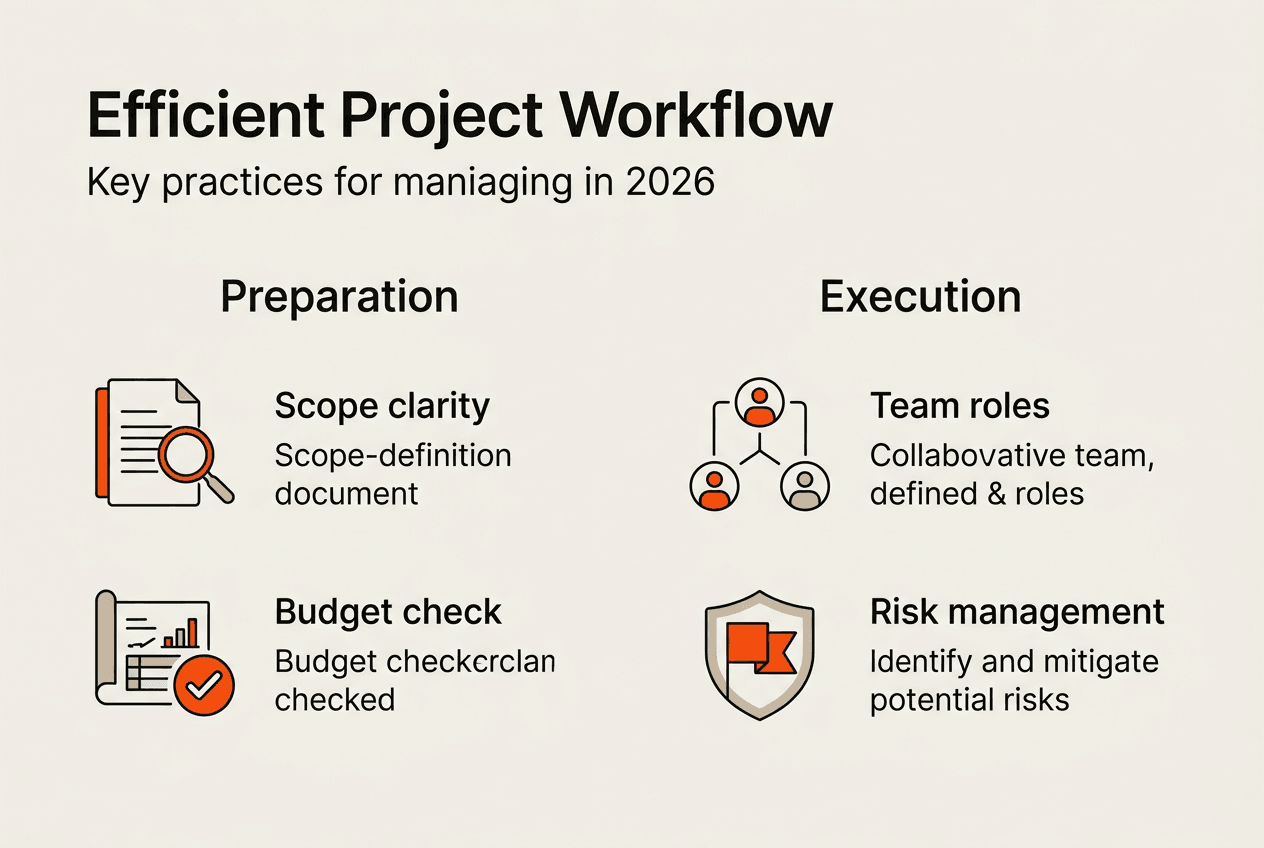
Solid preparation separates successful projects from costly disasters. Before breaking ground, you need a clear roadmap that accounts for realistic timelines, comprehensive budgets, and established communication channels. The RIBA Plan of Work stages provide an excellent framework for organising residential projects into manageable phases from strategic definition through handover.
Start by defining your project scope with precision. Vague specifications invite disputes and change orders that drain budgets. Document every detail: materials, finishes, dimensions, and quality standards. Share these specifications with all stakeholders so everyone works from identical information. This upfront clarity prevents the “I thought you meant” conversations that derail schedules.
Budgeting requires brutal honesty about costs. Experienced builders recommend adding at least 50% contingency above initial contractor quotes. This buffer accounts for unforeseen site conditions, material price fluctuations, and design modifications that inevitably arise. Track your construction project planning and budgeting meticulously from day one, categorising expenses to identify where money flows.
Establish communication protocols before work starts. Decide how often you’ll hold site meetings, who attends, and how you’ll document decisions. Create templates for reporting progress, logging issues, and requesting changes. Standardised processes eliminate confusion about who needs what information and when.
Assign clear roles and responsibilities across your team. Who approves material purchases? Who communicates with clients? Who manages subcontractor schedules? Write down these assignments and share them widely. Ambiguity about authority creates bottlenecks that halt progress.
Pro Tip: Create a project kick-off checklist covering permits, insurance certificates, utility notifications, and neighbour communications. Ticking these boxes before mobilisation prevents embarrassing delays and maintains good community relations.
Consider this preparation timeline for a typical residential extension:
| Phase | Duration | Key activities |
|---|---|---|
| Strategic definition | 2 weeks | Client brief, feasibility, budget outline |
| Preparation and briefing | 3 weeks | Detailed requirements, site surveys, initial designs |
| Concept design | 4 weeks | Design development, planning application preparation |
| Spatial coordination | 3 weeks | Technical design, building regulations, contractor selection |
This structured approach transforms chaotic projects into controlled, predictable workflows that deliver results.
Executing the project with effective communication and technology
Execution demands constant vigilance and proactive communication. Your preparation creates the foundation, but daily discipline determines whether you build on it or watch it crumble. Schedule regular team meetings at consistent times, whether daily toolbox talks or weekly progress reviews. These gatherings align everyone on priorities, surface problems early, and build team cohesion.
Dedicated construction project management software outperforms generic tools dramatically. WhatsApp groups and email threads scatter critical information across platforms where it gets lost or overlooked. Purpose-built platforms centralise conversations, files, tasks, and schedules in searchable, organised structures. Research shows that effective communication strategies reduce errors by 30%, directly impacting your bottom line through less rework and faster completion.

Building Information Modelling represents a game changer for residential projects. BIM reduces costs by 20% while improving delivery times by 15% through accurate 3D modelling that identifies clashes before they become expensive site problems. Even small projects benefit from basic BIM workflows that coordinate architectural, structural, and MEP elements digitally.
Follow these execution essentials:
- Hold brief daily site meetings to review progress and address immediate issues
- Update project schedules weekly, adjusting for actual progress versus planned
- Photograph site conditions regularly to document progress and resolve disputes
- Maintain open channels with clients, sharing updates proactively rather than waiting for questions
- Address subcontractor concerns immediately before they impact other trades
Transparent communication with clients prevents nasty surprises. When problems arise, explain them quickly with proposed solutions rather than hiding issues until they explode. Clients appreciate honesty and collaborate better when they understand challenges. Similarly, maintain strong relationships with subcontractors by paying promptly, respecting their expertise, and giving reasonable notice for schedule changes.
Pro Tip: Implement a simple traffic light system for task status. Green means on track, amber signals potential delays, red indicates problems requiring immediate attention. This visual system lets everyone grasp project health instantly.
Digital tools excel at tracking multiple moving parts:
- Centralise all project documents in cloud storage accessible on site via mobile devices
- Use task management features to assign responsibilities with clear deadlines
- Enable real-time messaging that keeps conversations linked to specific tasks or files
- Generate automated progress reports that save hours of administrative work
- Archive everything for future reference and dispute resolution
Your construction communication approach determines whether teams work in harmony or constant friction. Invest time in establishing clear channels and watch productivity soar. Remember that preventing construction communication problems saves far more time than fixing them after they derail your schedule.
Avoiding common mistakes and managing risks during your project
Even experienced builders fall into predictable traps that inflate costs and extend timelines. Learning to spot and sidestep these pitfalls protects your margins and reputation. The biggest mistake? Choosing the cheapest contractor quote without scrutinising what’s included. Low bids often exclude critical work or use substandard materials, leading to disputes and cost escalation.
Vet contractors thoroughly before signing contracts. Check recent project references, verify insurance coverage, and review detailed breakdowns of their quotes. A slightly higher bid from a reliable contractor delivers better value than a bargain price from someone who cuts corners or disappears mid-project.
Timeline optimism plagues construction projects universally. Contractors provide best-case scenarios that assume perfect weather, no material delays, and zero complications. Reality rarely cooperates. Industry veterans advise expecting delays around double the projected time for residential projects. Build this buffer into client expectations and your own planning.
Document design changes meticulously as they occur. Verbal agreements about modifications create disputes during final accounts when memories differ about what was agreed. Use formal change order processes that specify exactly what’s changing, the cost impact, and timeline adjustments. Both parties sign before proceeding.
Risk management requires proactive thinking:
- Identify potential threats early through systematic review of project elements
- Assess likelihood and impact of each risk to prioritise attention
- Develop mitigation strategies before problems materialise
- Allocate contingency resources to address unforeseen issues quickly
- Review and update risk registers weekly as circumstances evolve
Weather represents an uncontrollable variable that demands respect. Schedule weather-sensitive work during favourable seasons when possible. Have backup tasks ready for wet days so teams stay productive. Protect materials and partially completed work from water damage that creates expensive remediation.
Material availability fluctuates based on supply chain disruptions and demand spikes. Order long lead items early and maintain relationships with multiple suppliers. When shortages threaten schedules, having alternatives sourced quickly keeps projects moving.
“The cheapest quote rarely represents the best value. Quality contractors price work realistically based on proper specifications and proven methods. Cutting corners during procurement creates exponentially larger problems during delivery.”
Labour shortages affect residential construction significantly. Skilled tradespeople command premium rates and book months ahead. Secure your preferred subcontractors early with clear schedules and fair payment terms. Treat them as partners rather than commodities and they’ll prioritise your projects.
Financial management extends beyond tracking costs. Ensure you have adequate working capital to maintain cash flow during the project. Late payments to suppliers and subcontractors damage relationships and can halt work. Conversely, structure client payment schedules to align with your expenditure curve, avoiding situations where you’re funding projects from your own resources.
Understanding budgeting and avoiding cost overruns requires constant vigilance and honest assessment of where you stand financially throughout the project lifecycle.
Verifying project completion and ensuring client satisfaction
Successful completion requires methodical verification that work meets specifications and client expectations. Quality inspections throughout the project catch issues while they’re easy to fix. Final inspections confirm everything’s ready for handover. Create detailed checklists based on your original specifications and work through them systematically.
Conduct inspections in proper lighting conditions that reveal defects. Bring your specifications documents and compare actual work against promised standards. Test all systems: plumbing, electrical, heating, ventilation. Operate windows, doors, and fixtures to verify smooth function. Check finishes for consistency, damage, and proper installation.
Schedule a comprehensive walkthrough with your client before declaring the project complete:
- Walk through every space methodically, allowing time for close examination
- Demonstrate how systems operate and provide maintenance guidance
- Address any concerns immediately or schedule prompt remediation
- Collect feedback on their experience and satisfaction levels
- Obtain formal sign-off that work meets contractual requirements
Documentation at completion protects everyone. Compile as-built drawings showing final configurations, especially hidden elements like pipe runs and cable routes. Gather warranties, certificates, and operating manuals for installed equipment. Create a handover pack that helps clients maintain their investment properly.
Lessons learned sessions improve future projects dramatically. Gather your team shortly after completion while experiences remain fresh. Discuss what worked well and what you’d change. Document these insights and incorporate improvements into your standard processes.
Contract close-out involves final accounts, retention release, and formal completion certificates. Ensure all payments flow correctly to subcontractors and suppliers before requesting final payment from clients. Tie up loose ends professionally to maintain relationships for future opportunities.
Pro Tip: Modular construction techniques reduce on-site time by 50% while minimising waste. Consider prefabricated elements for bathrooms, kitchens, or structural components to accelerate delivery and improve quality control.
Quality metrics worth tracking:
| Metric | Target | Benefit |
|---|---|---|
| Defects per project | Under 5 | Reduces remediation costs and client frustration |
| Schedule variance | Within 10% | Maintains client confidence and resource planning |
| Budget variance | Within 5% | Protects margins and demonstrates control |
| Client satisfaction | Above 4.5/5 | Generates referrals and repeat business |
Strong final project communication reduces disputes and builds lasting client relationships that fuel business growth through recommendations and testimonials.
Discover BRCKS construction software solutions
Managing all these moving parts manually overwhelms even experienced project managers. BRCKS streamlines your entire workflow into one organised platform built specifically for construction teams. Instead of juggling WhatsApp groups, email threads, and scattered documents, you access everything through a unified interface that saves over two hours daily.
Whether you’re a builder coordinating multiple trades or a plumber managing your own projects, BRCKS centralises meetings, updates, tasks, files, and conversations. AI-generated action items from video meetings ensure nothing falls through cracks. Mobile apps keep site teams connected with office staff seamlessly. See how BRCKS compares to generic communication tools and discover why construction-specific software delivers superior results. Start your 14-day free trial today and experience organised, efficient project management.
Frequently asked questions
How can the RIBA Plan of Work help me manage a small residential project?
The RIBA Plan of Work breaks projects into stages from strategic definition through use, providing clear milestones that structure your activities. Each stage has defined outputs and decision points that keep projects organised and stakeholders aligned. This framework helps you schedule tasks appropriately and allocate resources efficiently, preventing the chaos that derails poorly planned projects.
What are the benefits of using BIM in residential construction projects?
BIM reduces project costs by 20% while improving delivery times by 15% through accurate 3D modelling that coordinates all building elements digitally. This technology identifies clashes between architectural, structural, and services elements before construction starts, eliminating expensive on-site corrections. BIM also improves accuracy in quantity take-offs and progress tracking, giving you better control throughout the project lifecycle.
How can I avoid unexpected costs and delays from contractor quotes?
Never select contractors based solely on price. Cheap quotes often lead to unexpected costs because they exclude work or use inferior materials that create problems later. Review detailed breakdowns, check recent references, and verify insurance before signing contracts. Budget at least 50% above initial quotes as contingency and expect timelines to extend beyond original estimates, protecting yourself from nasty financial surprises.
What communication strategies best reduce errors on construction projects?
Regular team meetings and project management software reduce communication errors by 30% by ensuring everyone accesses current information and understands priorities. Hold brief daily site meetings to address immediate issues and weekly progress reviews for broader coordination. Use dedicated construction software rather than generic messaging apps to keep conversations, files, and tasks organised in searchable, centralised locations that prevent information from getting lost.
Recommended
- BRCKS | Construction Project Communication Software
- BRCKS | Construction Project Communication Software
- Construction Software for Builders | BRCKS
- BRCKS | Construction Project Communication Software
How BRCKS Can Help
As construction projects become increasingly complex in 2026, staying ahead of the curve requires a seamless blend of innovation and organisation. BRCKS simplifies this transition by centralising your project data and streamlining communication across every site. By integrating these advanced tools into your daily workflow, you can reduce costly delays and ensure your team remains focused on high-quality delivery. We invite you to explore how BRCKS can transform your operational efficiency and help your business thrive in this evolving landscape. Learn more at BRCKS.