Effective team communication in construction: real examples
Learn how to transform site productivity using proven communication strategies like the eight-flow model and digital protocols tailored for UK construction teams.
By James Shorter ·
Effective team communication in construction: real examples
TL;DR:
- Effective construction communication focuses on clarity, inclusivity, speed, adaptability, and auditability.
- Workshops like the eight-flow model help identify and resolve information and resource blockages collaboratively.
- Digital tools support ongoing communication but require protocols, training, and documentation to be truly effective.
Choosing the right communication methods for your construction team is harder than it looks. You’re managing subcontractors, clients, site operatives, and suppliers, often across multiple locations, all at once. Get it wrong and you risk delays, disputes, and costly rework. Get it right and your project runs with the kind of clarity and momentum that keeps everyone accountable. This article walks through proven, real-world examples of team communication strategies used on UK construction sites, from workshop-based approaches to digital tools, so you can make informed decisions for your own team.
Table of Contents
- Key criteria for efficient team communication
- Workshop-driven collaboration: the eight-flow model in action
- Digital platforms: WhatsApp, task boards, and collaborative apps
- Handling multicultural teams and weather disruptions
- Documentation and feedback: preventing disputes and driving results
- A fresh perspective on team communication in construction
- Upgrade your team’s communication toolkit
- Frequently asked questions
Key Takeaways
| Point | Details |
|---|---|
| Align methods to site needs | Effective communication means choosing strategies and tools that fit the realities of UK construction teams. |
| Workshops drive real change | Hands-on sessions like the eight-flow model uncover and fix barriers faster than passive meetings. |
| Digital records prevent disputes | Routinely documenting updates and feedback protects your team and supports compliance. |
| Support multicultural teamwork | Adapting communication to address language and cultural barriers leads to stronger, more innovative teams. |
Key criteria for efficient team communication
Before choosing any tool or method, it helps to know what you’re actually measuring against. Efficient communication in construction is not simply about sending more messages. It’s about the right information reaching the right people at the right time, in a format they can act on.
The most effective communication methods share a few common traits:
- Clarity: Instructions and updates are unambiguous and confirmed as understood
- Inclusivity: Every team member, regardless of role or background, can access and contribute to communications
- Speed: Information moves quickly enough to prevent delays or safety incidents
- Adaptability: The method works across different site conditions, team sizes, and project phases
- Auditability: There is a clear record of what was communicated, when, and by whom
Site complexity adds pressure to all of these. A large mixed-trade site with rotating subcontractors is far harder to keep aligned than a small residential project. Research into UK construction communication highlights the need to prioritise clear protocols and structured feedback, especially when teams include workers from different cultural backgrounds. The Buildings Journal confirms that cultural diversity requires common communication standards and targeted training to function well.
Documentation expectations also matter. Any method you adopt should support a paper trail, whether that’s for compliance, dispute resolution, or simply reviewing what was agreed on site last Tuesday.
Pro Tip: Run a five-minute morning briefing at the start of each shift. Keep it structured: what’s planned, what’s at risk, who owns what. Teams that do this consistently report fewer surprises by mid-afternoon. You can find more practical communication steps in our dedicated guide.
Workshop-driven collaboration: the eight-flow model in action
One of the most evidence-backed approaches to improving site communication is the eight-flow model, a structured workshop method developed to identify and remove barriers across eight key flows of information and resources on a construction project.
These flows include information, materials, equipment, workforce, preceding work, support, space, and external conditions. When any one of these is blocked or delayed, the knock-on effect to the rest of the project can be significant.
Here’s how a typical eight-flow workshop runs on a UK site:
- Gather a cross-functional group of site operatives, foremen, and project managers
- Map out the current state of each flow using visual boards or printed sheets
- Identify where blockages are occurring and who owns them
- Prioritise the top constraints by impact on programme and cost
- Agree on specific actions, owners, and deadlines for each constraint
- Follow up using a digital task board to track progress between sessions
The most commonly identified constraints in UK studies include missing or late information, delayed material deliveries, and unclear task ownership. Eight-flow workshops with site operatives consistently surface these issues and give teams a structured way to resolve them collaboratively.
“Teams that used workshop-led planning alongside digital task boards reported measurable improvements in productivity and a reduction in last-minute firefighting on site.”
The workshop model works because it involves the people closest to the problem. Operatives often know exactly where the blockages are. They just haven’t been given a structured forum to say so. Pairing running eight-flow workshops with good digital collaboration practices closes the loop between planning and execution. For teams managing remote or dispersed workers, remote team management advice can also support the follow-up process.
Pro Tip: After each workshop, assign every action to a named individual with a due date. Vague ownership kills momentum. A simple task board, digital or physical, keeps accountability visible to everyone.
Digital platforms: WhatsApp, task boards, and collaborative apps
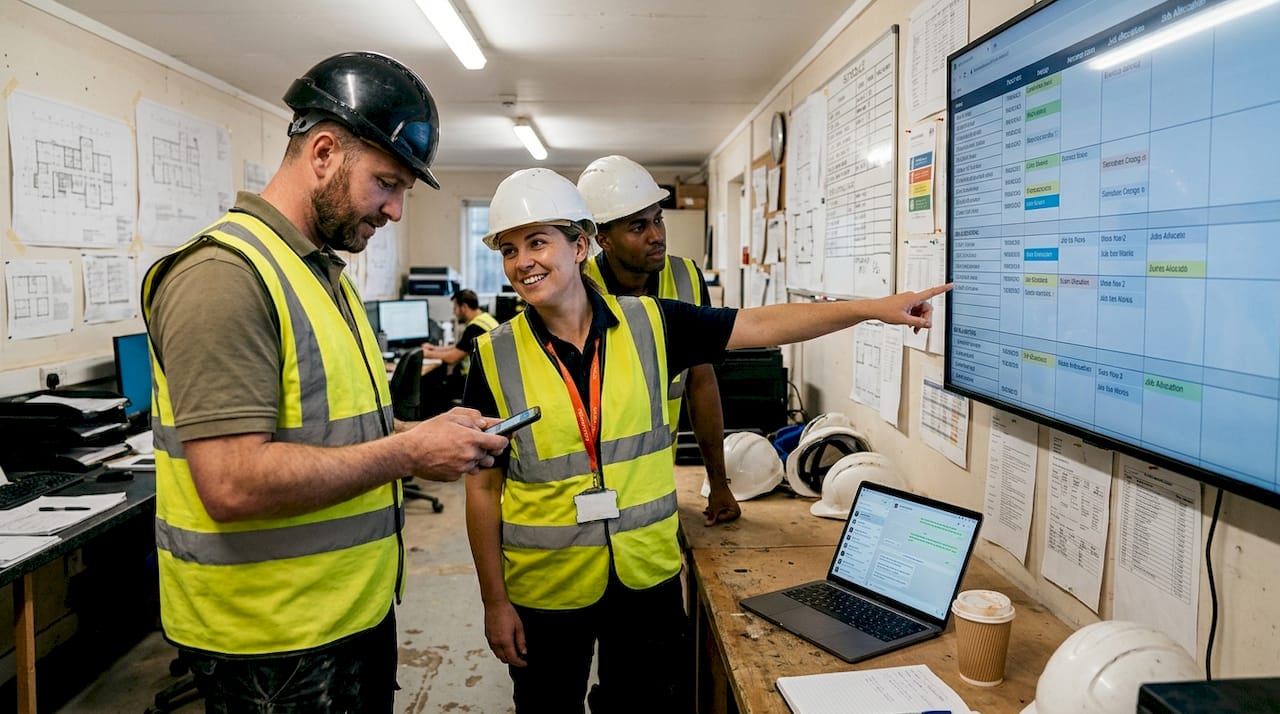
Alongside workshops, digital tools now form the backbone of fast and transparent construction communication. The challenge is choosing the right combination for your team’s size, technical confidence, and workflow.
Here’s a comparison of the most commonly used platforms on UK construction sites:
| Platform | Key features | Benefits | Drawbacks |
|---|---|---|---|
| Group messaging, file sharing, voice notes | Fast, familiar, free | No audit trail, messages get buried | |
| Trello-style task boards | Visual task cards, deadlines, checklists | Clear ownership, progress tracking | Not built for construction workflows |
| BRCKS | Project updates, checklists, file sharing, client portals, WhatsApp integration | Construction-specific, full audit trail, saves 2+ hours daily | Requires team onboarding |
WhatsApp and task boards support ongoing communication after workshops and help sustain the productivity gains achieved in collaborative planning sessions.
Key considerations when choosing a digital platform:
- Integration: Does it connect with the tools your team already uses, such as WhatsApp or email?
- Audit trail: Can you retrieve a full record of decisions, file versions, and approvals?
- Ease of use: Will site operatives with varying digital literacy actually use it?
- Client visibility: Can clients access relevant updates without being overwhelmed by internal detail?
Overcoming digital platform challenges is often about adoption as much as functionality. The best platform is the one your team will actually use consistently. Pairing the right digital task management tools with a clear protocol dramatically reduces miscommunication. Evidence also shows that mobile apps reduce waste by keeping information accessible on site in real time.
Handling multicultural teams and weather disruptions
Even the best tools need adaptation when your team spans multiple languages and your site is subject to the unpredictable British weather. Both factors create communication risks that standard protocols often underestimate.
Research from The Buildings Journal shows that cultural diversity creates barriers but also drives innovation when clear standards and training are in place. The key is building communication systems that account for difference from the outset, not as an afterthought.
| Scenario | Communication risk | Recommended adjustment |
|---|---|---|
| Multilingual site team | Misunderstood instructions | Visual aids, translated briefings |
| Weather disruption | Delayed updates, unsafe decisions | Pre-agreed escalation protocols |
| Supply chain delay | Reactive rather than planned response | Early-warning notification systems |
| High subcontractor turnover | Inconsistent information | Standardised onboarding packs |
For multilingual teams, consider these protocols:
- Use visual task cards and diagrams alongside written instructions
- Appoint bilingual team leads or use translation tools for critical safety briefings
- Standardise terminology across the site so that key terms mean the same thing to everyone
- Run short, structured check-ins rather than relying on long written updates
For weather and supply chain disruptions, the priority is speed and clarity. Pre-agreed escalation routes mean that when a delivery is delayed or a section of site becomes unsafe, the right people are notified immediately without confusion about who should act. Good communication for dispute reduction starts with these kinds of structured protocols, not reactive conversations after something has already gone wrong.
Documentation and feedback: preventing disputes and driving results
Communication only counts if it’s recorded and reviewed. On a busy site, verbal agreements and informal messages disappear quickly. When a dispute arises weeks later, the absence of documentation becomes a serious problem.
Key reasons to document and share feedback consistently:
- Dispute prevention: A clear record of decisions, changes, and approvals removes ambiguity when disagreements arise
- Compliance: Many UK contracts and CDM regulations require evidence of communication around safety and design changes
- Continuous improvement: Structured feedback reveals patterns, repeated delays, recurring misunderstandings, that you can address before they escalate
- Team accountability: When actions are recorded and reviewed, ownership becomes visible and performance improves
Paul Gandy’s guidance for construction project managers is direct: noreferrer" target="_blank">document everything to avoid disputes, and treat the success of the team as more important than individual performance. This mindset shift, from protecting yourself to building shared records, changes how teams communicate.
Real disputes are often resolved or avoided entirely when one party can produce a dated message, a signed-off checklist, or a recorded site meeting. Without that, it becomes one person’s word against another’s. Proper communication for dispute prevention is not bureaucratic overhead. It’s practical protection. Teams that adopt structured information sharing also see significant reductions in errors, with information sharing cutting errors by up to 70% on UK projects. For further reference on structuring communication protocols, clear frameworks apply across many operational contexts.
Pro Tip: Use a digital site diary updated daily by the site manager. Even a short entry covering weather, progress, and any issues creates an invaluable record over the course of a project.
A fresh perspective on team communication in construction
Most articles on construction communication focus on which tool to use. That’s understandable, but it misses the bigger picture. Tools are only as effective as the culture and protocols behind them.
We’ve seen teams invest in sophisticated platforms only to find that operatives revert to informal WhatsApp groups within a week. The technology wasn’t the problem. The absence of clear expectations, leadership buy-in, and structured training was.
The teams that communicate best aren’t necessarily using the most advanced software. They’ve built a habit of structured, documented, inclusive communication at every level. That means foremen who run consistent briefings, project managers who follow up in writing, and clients who receive regular, honest updates.
Training and clear standards matter more than the latest app. Continuous feedback loops, where teams regularly review what’s working and what isn’t, create the kind of adaptive communication culture that survives disruption. A solid communication guide for project managers can help you build that foundation systematically. Compliance and adaptation are ongoing processes. The best communicators treat them that way.
Upgrade your team’s communication toolkit
Having explored what makes construction communication work, the next step is putting the right infrastructure in place for your team.
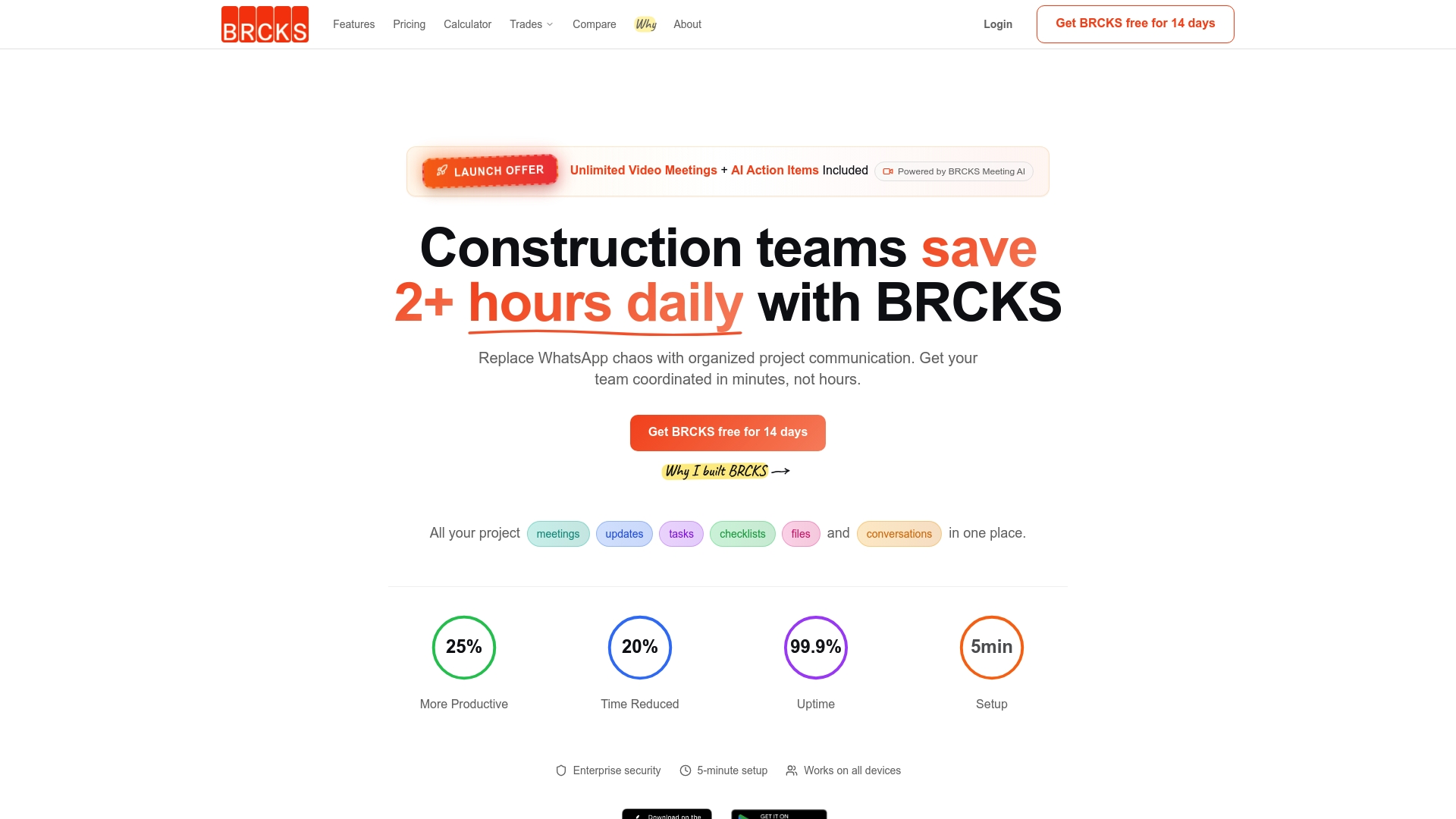
BRCKS is built specifically for construction teams in the UK, bringing together WhatsApp integration, task boards, file sharing, client portals, and meeting records into a single platform. It removes the friction of juggling multiple tools and gives your team a clear, auditable record of every project decision. Whether you’re managing a small site or a large enterprise programme, BRCKS scales to fit. Explore construction communication software designed for the way your team actually works, or see specific solutions for builders that match your project type. Get BRCKS free for 14 days and see the difference structured communication makes.
Frequently asked questions
What is the eight-flow model in construction communication?
The eight-flow model is a workshop-based approach where site teams identify and solve barriers to information and resource flow, improving overall project productivity. Eight-flow workshops consistently surface constraints that individuals alone would not flag.
How do multicultural teams communicate efficiently on UK construction projects?
Set clear communication protocols, provide language training, and use digital tools that support visual instructions to turn diversity into an advantage. Cultural diversity fosters innovation but requires clear shared standards to function effectively.
Why is documentation important in team communication?
Documenting discussions and feedback helps prevent disputes, supports compliance, and enables continuous improvement on site. As Paul Gandy advises, document everything to protect your team and your project.
Can WhatsApp really improve construction site communication?
Yes, when used with clear protocols, WhatsApp supports fast, ongoing team updates and information sharing alongside other tools. WhatsApp and task boards work best when they complement structured planning sessions rather than replace them.
Recommended
- BRCKS | Construction Project Communication Software
- BRCKS | Construction Project Communication Software
- Construction Project Management Insights | BRCKS Blog
- Real-Time Updates in Construction: Boosting Project Success | BRCKS
- Remote Team Management Tips for Logistics Leaders - Worldwide Express, Inc.
How BRCKS Can Help
Effective communication is the cornerstone of every successful project, but managing these complex information flows requires the right digital infrastructure. BRCKS simplifies this process by providing a centralised platform where site updates, task assignments, and team queries live in one accessible place. By reducing the friction between the office and the field, our software ensures your workforce stays aligned and informed from start to finish. We invite you to discover how BRCKS can transform your project coordination by exploring our features today. Learn more at BRCKS and explore our full feature set.