Construction collaboration explained for residential teams
UK residential construction teams lose over two hours daily to fragmented communication. Discover how centralised collaboration platforms eliminate inefficiencies and reduce errors.
By James Shorter ·
Construction collaboration explained for residential teams
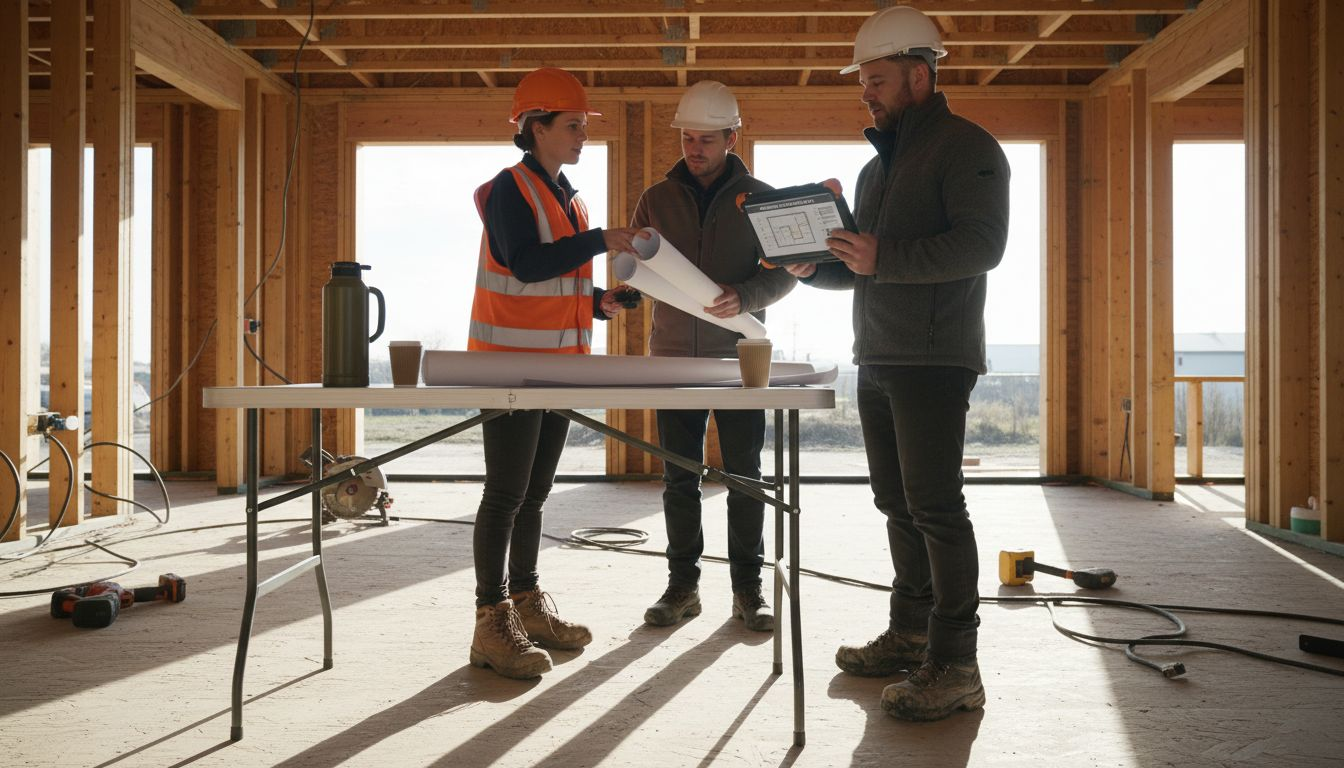
Residential construction teams in the UK lose over two hours daily to fragmented communication across WhatsApp, email, and multiple apps. This guide explains how centralised construction collaboration platforms eliminate these inefficiencies, reduce errors by 40%, and improve on-time delivery by 15%. You’ll discover practical frameworks for evaluating tools, debunked myths about adoption, and actionable steps to transform your team’s workflow.
Table of Contents
- Understanding Construction Collaboration: Definitions And Importance
- Challenges Of Fragmented Communication In Residential Construction
- Benefits Of Centralised Communication Platforms For Construction Teams
- Common Misconceptions About Construction Collaboration Tools
- Framework For Evaluating And Implementing Construction Collaboration Solutions
- Real-World Examples: Success Stories From Residential Construction
- Implementing Construction Collaboration In Your Team: Practical Steps
- Explore Construction Collaboration Software Solutions
- Frequently Asked Questions
Key takeaways
| Point | Details |
|---|---|
| Centralised platforms reduce errors | Integrated collaboration software cuts construction errors by 40% and improves delivery by 15%. |
| Fragmented channels waste time | Teams lose over two hours daily switching between WhatsApp, email, and disconnected apps. |
| Modern tools setup quickly | Setup times under 10 minutes enable rapid onboarding with minimal disruption. |
| Mobile access is essential | On-site coordination requires real-time updates and file access via dedicated mobile apps. |
| Measurable productivity gains | Centralised communication demonstrably reduces delays and improves team accountability. |
Understanding construction collaboration: definitions and importance
Construction collaboration in residential projects means coordinating all project communication, tasks, files, and updates through unified systems rather than scattered channels. For small to medium teams in London, effective collaboration directly reduces disputes and keeps projects on schedule. When your site manager, subcontractors, and office staff share the same real-time information, costly misunderstandings vanish.
Residential construction demands constant coordination. You’re juggling client requests, supplier deliveries, inspection schedules, and crew assignments simultaneously. Every decision impacts multiple stakeholders. Construction collaboration improves communication and reduces delays by ensuring everyone accesses the same current project state.
Common collaborative activities include:
- Sharing daily progress photos and site updates
- Coordinating material deliveries with installation schedules
- Tracking punch list items and inspection results
- Managing client change requests and approvals
- Assigning tasks to subcontractors with clear deadlines
- Storing architectural drawings and specifications accessibly
Without proper collaboration infrastructure, these activities fragment across WhatsApp threads, email chains, and verbal conversations. Information gets lost. Teams duplicate effort. Communication problems multiply as project complexity grows. The solution starts with recognising collaboration as a deliberate system, not an accidental byproduct of messaging apps.
Challenges of fragmented communication in residential construction
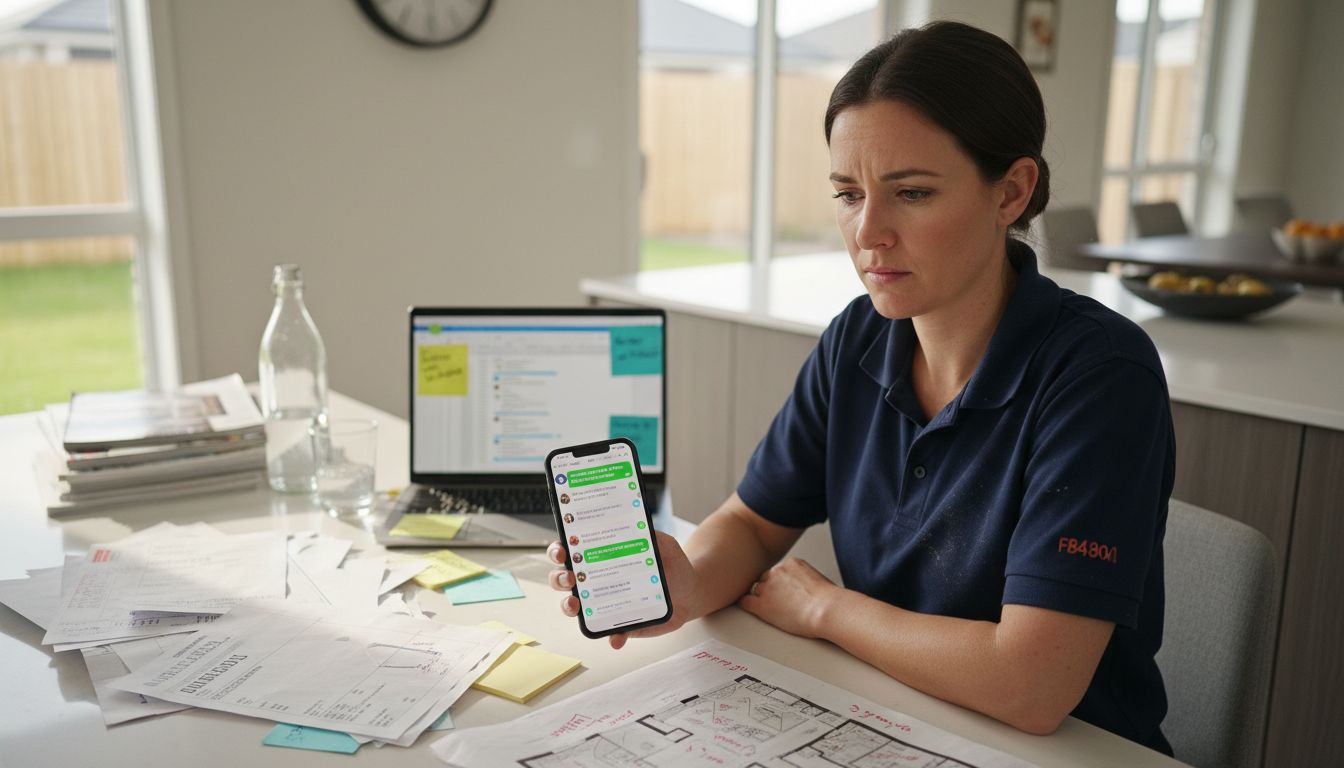
Fragmented communication creates a productivity nightmare for residential builders. When your team uses WhatsApp for quick messages, email for formal updates, shared drives for files, and phone calls for urgent issues, critical information scatters. You spend hours daily hunting for that specification detail, that client approval, or that subcontractor’s availability.
Teams lose over 2 hours daily per person switching between disconnected apps and recreating context. That’s 10 hours weekly per team member, equivalent to hiring an extra person just to compensate for communication inefficiency. The math is brutal: a five-person team wastes 50 hours weekly, over 2,400 hours annually.
Typical communication breakdowns include:
- Site managers missing client change requests buried in email
- Subcontractors working from outdated drawings because revisions lived in WhatsApp
- Duplicate material orders when different team members don’t see existing requests
- Delayed responses to urgent issues because notifications scatter across platforms
- Lost project history when team members leave and take WhatsApp conversations
Ineffective communication drives costly errors and disputes that damage client relationships and profit margins. Consider this reality:
Construction teams using fragmented communication channels report over 25% of their workday spent searching for information, clarifying misunderstandings, and correcting avoidable errors caused by disconnected systems.
WhatsApp alone cannot handle complex residential projects. Group chats become chaotic with hundreds of messages daily. Finding that critical detail from three weeks ago requires endless scrolling. Files shared in chats get buried. Tasks mentioned casually get forgotten. The platform simply wasn’t designed for structured project coordination.
Benefits of centralised communication platforms for construction teams
Centralised platforms transform construction collaboration by unifying chats, files, tasks, and updates in one accessible system. Your entire team sees the same current information whether they’re on-site, in the office, or meeting with clients. This transparency eliminates the guesswork and information gaps that plague fragmented communication.
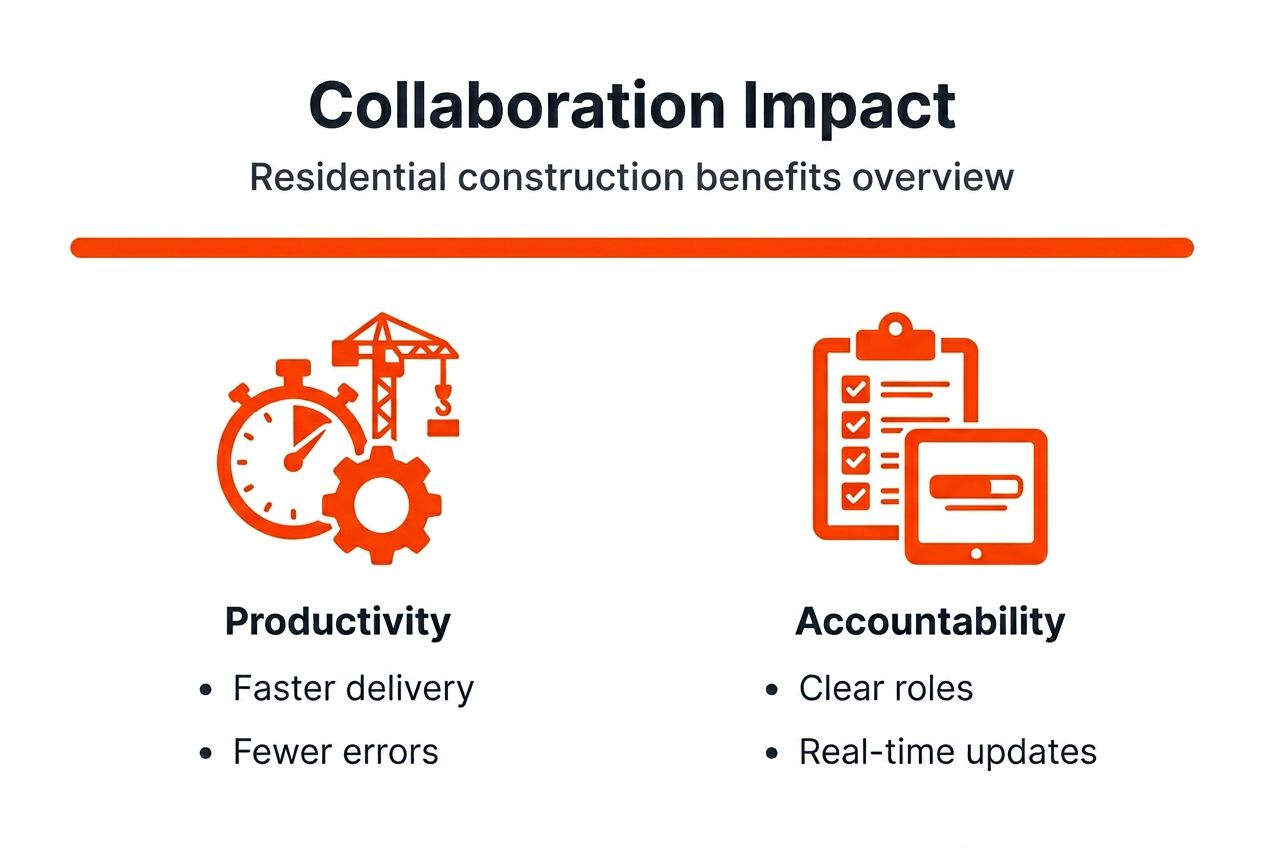
Teams using integrated collaboration software report 15% increase in on-time delivery and 40% fewer errors. These aren’t marginal improvements; they represent substantial competitive advantages. Completing projects on schedule protects your reputation and cash flow. Fewer errors mean less rework, happier clients, and better margins.
Measurable benefits include:
15% improvement in on-time delivery rates through better coordination and fewer miscommunication delays. 40% reduction in construction errors by ensuring all team members work from current information. 2+ hours daily saved per person by eliminating app switching and information hunting.
Modern platforms incorporate AI features that automatically generate action items from video meetings, saving coordination time. When your morning site meeting ends, tasks are already assigned with clear owners and deadlines. No manual note-taking. No follow-up emails asking who committed to what.
Real-time updates prevent costly misunderstandings. When a client approves a change order, your site manager sees it immediately on their mobile device. When your supplier confirms a delivery window, affected subcontractors receive instant notifications. The streamlined communication workflow keeps everyone synchronised.
Transparency and accountability improve dramatically. Everyone sees who’s responsible for each task, when it’s due, and its current status. No more “I didn’t know” or “Nobody told me.” Clear visibility into project status helps you identify bottlenecks early and adjust resources proactively.
Common misconceptions about construction collaboration tools
Many residential construction teams hesitate to adopt modern collaboration platforms based on outdated assumptions. Let’s address the most common myths preventing teams from improving their communication efficiency.
Misconception 1: Messaging apps like WhatsApp suffice for project communication. WhatsApp works brilliantly for quick personal messages but fails for structured project coordination. You cannot effectively manage tasks, store searchable files, or maintain organised project history in chat threads. WhatsApp falls short for construction client communication because it lacks the structure residential projects demand.
Misconception 2: Setup takes weeks and disrupts ongoing projects. Modern platforms have setup times under 10 minutes, despite beliefs about complexity. You can start a new project in a collaboration platform faster than creating a WhatsApp group. The difference is you gain structured communication, task management, and file organisation from day one.
Misconception 3: Centralised platforms are expensive and require IT expertise. Dedicated construction collaboration software typically costs less than the productivity losses from fragmented communication. Simple per-user pricing models mean you pay only for active team members. Most platforms require zero IT expertise; if your team can use WhatsApp, they can use modern collaboration tools.
Misconception 4: Our team is too small to need dedicated software. Small teams actually benefit most from centralised communication. When you’re managing multiple projects with limited people, communication efficiency becomes critical. The solutions that fix communication problems scale from solo builders to large firms.
Pro Tip: Start with a free trial on a single project rather than migrating everything immediately. This low-risk approach lets your team experience benefits firsthand and build confidence before full adoption.
Framework for evaluating and implementing construction collaboration solutions
Selecting the right collaboration platform requires evaluating three essential pillars: centralised communication, real-time updates, and integrated task management. These capabilities work together to eliminate fragmentation and keep your team synchronised.
Centralised communication means all project conversations, whether with clients, subcontractors, or internal team members, live in one searchable system. You should find any discussion, decision, or detail within seconds, not hunt through multiple apps and email folders.
Real-time updates ensure everyone sees current information immediately. When a client approves a change, when a supplier confirms delivery, when an inspection gets scheduled, affected team members receive instant notifications on their mobile devices.
Integrated task management connects conversations directly to actionable items. When you discuss a punch list issue, you can assign it to a subcontractor with a deadline right there in the conversation. No separate task tracking app needed.
Key evaluation criteria:
- Mobile app quality for both iOS and Android
- File storage with version control and easy search
- Video meeting capabilities with recording and action item extraction
- Intuitive interface requiring minimal training
- Setup time under 10 minutes for rapid deployment
- Simple per-user pricing without hidden costs
| Feature | Traditional methods | Centralised platform |
|---|---|---|
| Communication channels | Centralised |
Mobile access deserves special attention for residential construction. Your site managers and trades spend most of their day on-site, not at desks. They need full platform functionality on smartphones and tablets. Check that the mobile apps aren’t stripped-down versions but offer complete access to conversations, files, tasks, and updates.
Implementation typically follows this timeline: Sign up and create your first project (5 minutes). Invite team members and set permissions (10 minutes). Upload initial project files and create task structure (20 minutes). Train team on core features (30 minutes). Total time investment: about one hour to go live.
Pro Tip: Evaluate software by actually using it on a small project, not just watching demos. The user experience matters far more than feature lists. Understanding why digital collaboration fails helps you avoid platforms that look impressive but frustrate daily use.
Real-world examples: success stories from residential construction
A London-based residential builder managing six simultaneous renovation projects faced constant communication chaos. Their team of 12 relied on four WhatsApp groups, personal email accounts, and phone calls to coordinate work. Critical information regularly got lost. Subcontractors missed updates. Client change requests sat unnoticed in email threads.
After implementing a centralised collaboration platform, they measured dramatic improvements:
- Project delays decreased by 25% within the first three months
- Rework from miscommunication dropped by 35%
- Daily coordination time reduced from 3 hours to 45 minutes per project manager
- Client satisfaction scores increased as response times improved
The firm replaced their fragmented approach with a single system for all project communication, file sharing, and task management. Site managers accessed current drawings and specifications on their phones. Subcontractors received clear task assignments with deadlines and attached reference materials. Clients saw transparent project updates without constant phone calls.
Key lessons from their experience:
- Start with your most organised project manager as the internal champion
- Migrate one active project completely rather than partially adopting across all projects
- Establish clear protocols for where different types of communication belong
- Measure specific metrics like response times and rework incidents to quantify improvements
Another small builder specialising in loft conversions struggled with three-person team coordination. Despite their size, they juggled multiple suppliers, subcontractors, and client communications daily. Switching to improved construction communication practices eliminated their information silos.
They particularly valued mobile-first design. Their site supervisor no longer needed to return to the office to file reports or check updated specifications. Everything happened in real-time on his phone. This immediate access prevented several potential errors where he would have proceeded with outdated information.
Both firms emphasised that successful adoption required leadership commitment. When project managers consistently used the new platform and stopped responding to random WhatsApp messages, team members adapted quickly. Within two weeks, the new communication patterns became habitual.
Implementing construction collaboration in your team: practical steps
Transitioning from fragmented communication to centralised collaboration follows a straightforward six-step process. This methodical approach minimises disruption while maximising adoption success.
-
Assess your current communication fragmentation. Document every channel your team currently uses: WhatsApp groups, email threads, phone calls, text messages, shared drives. Map where different types of information live. Identify specific pain points like lost messages, unclear task ownership, or inaccessible files.
-
Define required features for your platform. Based on your assessment, list essential capabilities. Most residential teams need: unified project feeds, mobile apps, file storage with search, task management with assignments, video meetings, and client portal access. Prioritise must-haves versus nice-to-haves.
-
Evaluate and select software with fast setup. Research platforms designed for construction teams. Setup times are minimal, enabling quick onboarding with limited disruption. Take advantage of free trials to test usability with your actual team on a real project.
-
Train team members with clear guidelines. Provide hands-on training sessions covering core workflows: creating updates, assigning tasks, sharing files, and using mobile apps. Establish communication protocols defining what belongs in the platform versus what still uses email or phone. Make expectations explicit.
-
Launch with a pilot project. Choose one active project for full migration rather than partially adopting everywhere. This focused approach lets you refine processes and build confidence before expanding. Document lessons learned and success stories to motivate broader adoption.
-
Monitor metrics and iterate improvements. Track specific indicators like response times, task completion rates, and time spent on communication. Survey team members monthly about pain points and suggestions. Addressing communication problems systematically turns initial wins into sustained improvements.
Pro Tip: Designate a platform champion on your team, someone enthusiastic about improving communication who can answer questions and encourage consistent use. Peer support accelerates adoption far more effectively than management mandates.
Common implementation mistakes to avoid: Don’t run parallel systems long-term. Maintaining both old and new communication channels creates more chaos than the original fragmentation. Set a clear cutover date (typically 2 weeks after launch) when you stop using the old methods. Don’t skip training. Assuming team members will figure it out independently guarantees frustration and resistance.
Explore construction collaboration software solutions
If you’re ready to eliminate communication chaos and reclaim those lost hours, purpose-built collaboration software transforms residential construction workflows. BRCKS offers a comprehensive platform designed specifically for teams like yours, replacing fragmented WhatsApp groups and email threads with organised project communication.
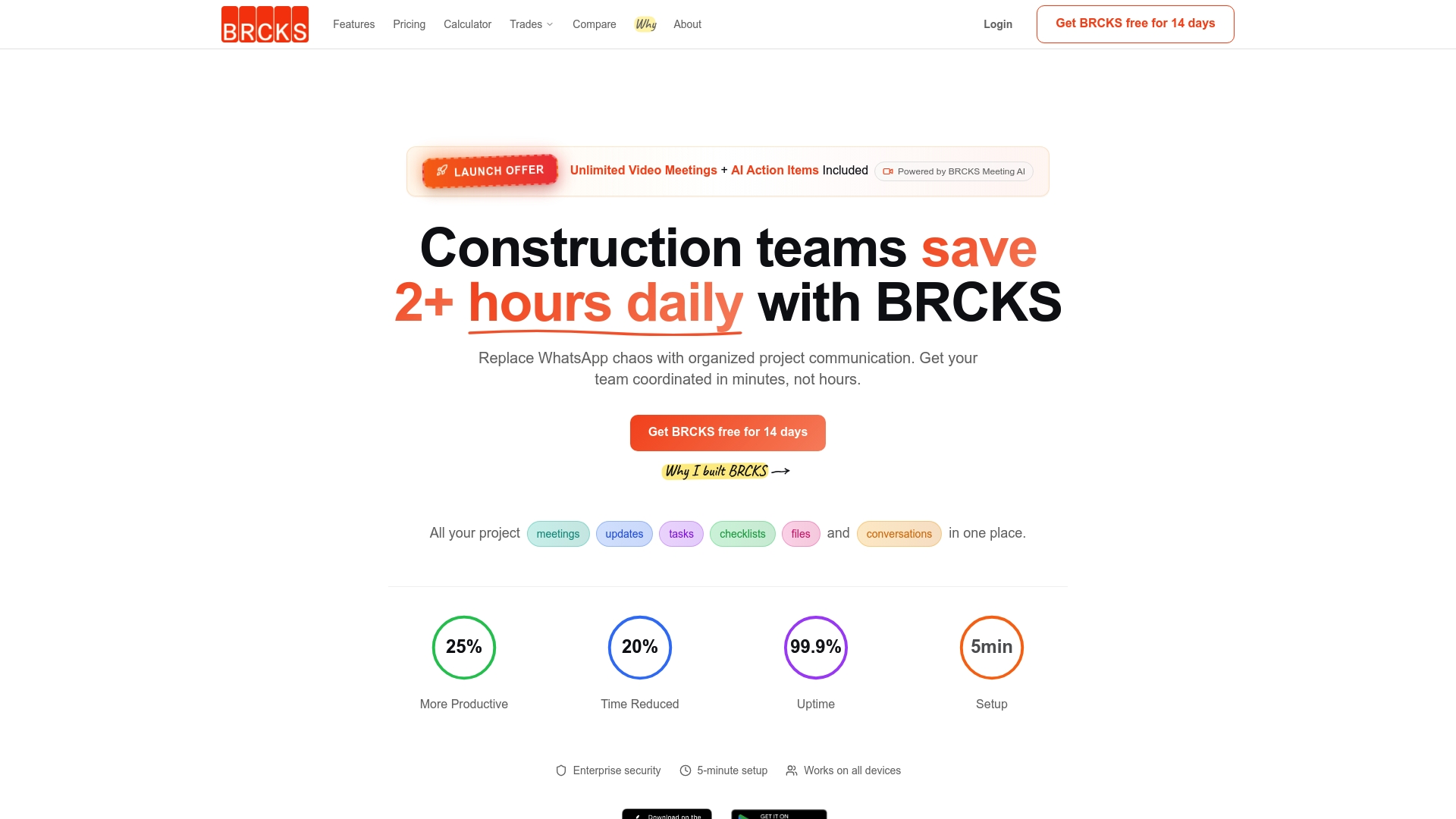
Discover how construction software built for builders centralises your meetings, updates, tasks, and files in one intuitive system. With setup taking just five minutes and mobile apps for iOS and Android, your team can start collaborating more effectively today. Explore the detailed comparison showing advantages over WhatsApp to understand exactly how dedicated collaboration platforms deliver measurable productivity gains for residential construction teams.
Frequently asked questions
What is construction collaboration in residential projects?
Construction collaboration means coordinating all project communication, tasks, files, and updates through unified systems rather than scattered channels. For residential teams, this involves centralising conversations between project managers, subcontractors, suppliers, and clients in one accessible platform. Effective collaboration ensures everyone works from current information, reducing errors and keeping projects on schedule.
Why is WhatsApp insufficient for construction communication?
WhatsApp creates fragmented information overload without structured task management or searchable file storage. Important details get buried in endless chat threads. You cannot effectively assign tasks with deadlines, maintain organised project history, or ensure all team members see critical updates. The platform works for quick personal messages but fails for complex residential project coordination requiring accountability and structure.
How quickly can my team adopt a new collaboration platform?
Setup times typically under 10 minutes enable rapid deployment with minimal workflow disruption. Most teams go live on their first project within one hour, including member invitations and initial file uploads. The learning curve is gentle; if your team uses smartphones and messaging apps, they can master construction collaboration platforms quickly with basic hands-on training.
What features are essential in construction collaboration software?
Essential features include centralised chats combining all project conversations, integrated file storage with version control and search, and task management with clear assignments and deadlines. Real-time mobile notifications keep on-site teams synchronised with office staff. Quality mobile apps for iOS and Android provide full functionality away from desks. Video meeting capabilities with AI-generated action items save coordination time and ensure nothing gets missed in discussions.
Recommended
- BRCKS | Construction Project Communication Software
- Construction Software for Builders | BRCKS
- Construction Project Management Insights | BRCKS Blog
- BRCKS | Construction Project Communication Software
- Kaihtimet vastuullisessa rakentamisessa – Kestävä valinta Etelä-Pohjan – Nordic Blinds Oy
- Painter & Home Renovation in Belgium : Why Choose Eutradesmen?
How BRCKS Can Help
Effective collaboration is the backbone of every successful residential project, ensuring that site teams and stakeholders remain perfectly aligned from start to finish. By centralising communication and streamlining workflows, BRCKS removes the common bottlenecks that often lead to costly delays and misunderstandings on site. Our platform is purpose-built to help you manage these moving parts with ease, allowing you to focus on delivering high-quality homes. We invite you to explore how BRCKS can transform your team's efficiency and simplify your next build. Learn more at BRCKS.